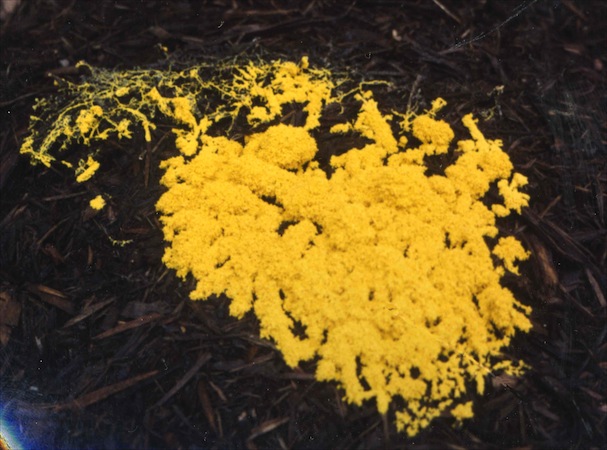
I seem to have developed a reputation for hating networks, but really, it's just tough love. Complex, adaptive, self-organizing networks are fascinating (and inspired the title of this blog), and they deserve a rigorous scientific treatment. Decentralized control mechanisms are incredible, and, although they're all around us, they go completely against our instincts for good, hierarchical design for control systems. How does a cell adapt to environmental signals, in the absence of a brain or CPU? And how do we make our own, human-built networks as self-adaptive and robust as biological ones? In other words (for those of you who've endured lengthy lectures on the subject in physiology class), how do you effectively engineer homeostasis?
So, I was going to blog about the
new baby giant octopus (complete with
webcam!) at the Smithsonian. But, it's not really a squid.
Then I was going to talk about
sperm whales collectively hunting squid, and point out that the BBC made a geographic error. (The study was conducted in the Gulf of California, on the Pacific side, not in the Gulf of Mexico, which is on the Atlantic side.) But that's really about mammals, which is just not what I do here.
Naked Beauty On Paradise Island
Did you notice that I posted this article under 'geology'. That's because it's about geology. You know - rocks and fossils. This article is also about one of the last unspoiled regions on Earth - Antarctica. So sorry to disappoint.
John Timmer comments on the problem of modern biomedical research and statistics: we can now measure so much more than our statistics can handle. In a typical genome-wide association study, you're testing so many hypotheses that the favored 0.05, 0.01, and 0.001 p-values from Stats 101 just don't cut it anymore.
"We're so good at medical studies that most of them are wrong:"
A new study in Environmental Science and Technology reports that soil microbes have become progressively more resistant to antibiotics over the last 60 years, despite more stringent rules on the use of antibiotics in medicine and agriculture.
The study involved an analysis of 18 different antibiotic resistance genes (ARGs) to four different classes of antibiotics in soil samples collected in the Netherlands from 1940 to 2008.
A low-cost water purification technique that uses seeds from the Moringa oleifera tree can produce a 90.00% to 99.99% bacterial reduction in previously untreated water, according to a paper published in Current Protocols in Microbiology. The method could help drastically reduce the incidence of waterborne disease in the developing world.
"Moringa oleifera is a vegetable tree which is grown in Africa, Central and South America, the Indian subcontinent, and South East Asia. It could be considered to be one of the world's most useful trees," said Michael Lea, a researcher at Clearinghouse, a Canadian organization dedicated to investigating and implementing low-cost water purification technologies.
Scientists writing this week in Geophysical Research Letters say they have pinpointed six spots on the remote Pacific Antarctic Ridge, 1,000 miles from the west coast of Antarctica, where they think hydrothermal vents are likely to be found.
Two pieces of evidence tipped researchers off to the location of the hidden vents. First, the ocean is stratified with layers of lighter water sitting on top of layers of denser water. Second, when a seafloor vent erupts, it spews gases rich in rare helium-3, an isotope found in earth's mantle and in the magma bubbling below the vent. As helium-3 disperses through the ocean, it mixes into a density layer and stays there, forming a plume that can stretch over thousands of kilometers.
Just as they would in face-to-face dating, people who lie about themselves on internet dating services probably are people-pleasers who want to present themselves in the most favorable light to get someone to like them, according to a study in the Journal of Social and Personal Relationships.
More than 5,000 participants in a national Internet matchmaking service were surveyed to determine what kinds of people are most likely to lie during the online dating process. They were asked how likely they were to lie about topics such as assets, relationship goals, personal interests, personal attributes, past relationships, age and weight.
A newly discovered species that shared many characteristics with dinosaurs but fell just outside of the dinosaur family lived 10 million years earlier than the oldest known dinosaurs. Researchers writing in Nature say the discovery of Asilisaurus kongwe means that dinosaurs and their close relatives such as pterosaurs (flying reptiles) might have also lived much earlier than previously thought.
The research also suggests that at least three times in the evolution of dinosaurs and their closest relatives, meat-eating animals evolved into animals with diets that included plants. These shifts all occurred in less than 10 million years, a relatively short time by geological standards.
Astronomers have discovered a star that may have been among the second generation of stars to form after the Big Bang.
Located in the dwarf galaxy Sculptor some 290,000 light-years away, S1020549 has a remarkably similar chemical make-up to the Milky Way's oldest stars. Its presence supports the theory that our galaxy underwent a "cannibal" phase, growing to its current size by swallowing dwarf galaxies and other galactic building blocks. The discovery of the new star is detailed in Nature.
Dwarf galaxies are small galaxies with just a few billion stars, compared to hundreds of billions in the Milky Way. In the "bottom-up model" of galaxy formation, large galaxies attained their size over billions of years by absorbing their smaller neighbors.