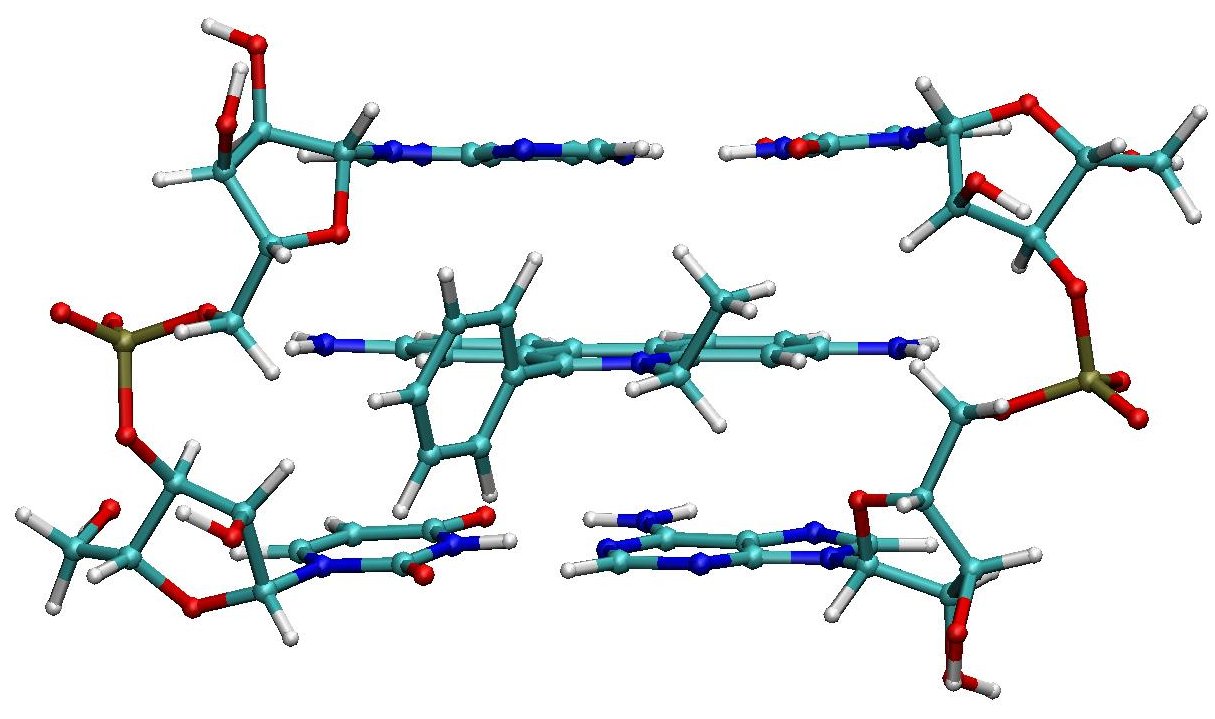





A team of Georgia Institute of Technology scientists are reporting that molecules they term "unselfish" may have midwifed the birth of life's original (sometimes called "selfish") genes. The Georgia Tech scientists are investigating the possibility that intercalator molecules such as ethidium could have assisted life's non-living building blocks in forming complex organic chains and might have entered into the selection of DNA double helix base pairs.
If you want to have staying power on the Internet, you need to have turnover, says a new analysis published in the Proceedings of the 2010 ACM conference on Computer supported cooperative work.

Not only do you need to be 'heterogeneous', you need to be diverse.   
A new study that was just released on Sunday and published online in Nature Neuroscience has found that Ritalin, a popular medication to treat ADD/HD, helps improve learning not only by improving focus, but also by increasing plasticity of neural connections.

The player involved in this new discovery is none other than that magical little neurotransmitter, one of my good friends, dopamine. As well as giving insight into to the nature of attention deficit disorders, providing new avenues to pursue for treatment, this study brings to light a few important facts about dopamine.


ESA’s Herschel Space Observatory has revealed the chemical fingerprints of potential life-enabling organic molecules in the Orion Nebula, a nearby stellar nursery in our Milky Way galaxy. This detailed spectrum, obtained with the Heterodyne Instrument for the Far Infrared (HIFI) - one of Herschel's three innovative instruments - demonstrates the gold mine of information that Herschel-HIFI will provide on how organic molecules form in space. Several German Institutes contributed essential parts to the HIFI instrument: the Universität zu Köln and two Max Planck Institutes: Radioastronmie (Bonn) and Sonnensystemforschung (Lindau).
Social Scientist have contended for much of the last century that we cannot approach the study of human behavior with the same tools that we would use to study the natural world.  This is hogwash.  And I think Karl Popper, the great 20th century philosopher, would agree with me. Humans are animals, they are made up of chemicals and cells, their behavior is determined by a complex interaction of chemical processes and their lives are a network of cause and effect relations with other animals (some of which we’d call human).   If we are ever going to get a solid grasp on our own behavior, we’ll need to use the items from the large and well developed toolbox of natural science.
Godfrey Bloom Demands Re-evaluation Of IPCC Re-evaluation


Godfrey Bloom MEP bemoans the fact that:

"There appears to be a woeful lack of candour and commonsense in modern day politicians."

UK Parliament Debates Climate Science Report


If somebody is in favor of making our planet a better place to live, you can bet your life that somebody with a louder voice is against it. 

Demonstrating that, at least in political attitudes to science, there really is
'nothing new under the sun', I present highlights of a UK Parliament debate on the undesirability of pollution controls.
-----------------
March 14th is Pi Day, and that's official! This tradition was started at the Exploratorium, in San Francisco, and 2010 will be their 22nd year of irrational exuberance. It also coincides with Einstein's date of birth – which was on 14 March 1879 – so it's a double celebration for geeks around the world.
Wealthy consumers in the United States and Europe need to take the lead in efforts to prevent devastating climate change because they outsource their weather breaking carbon emissions to developing nations, according a new study in PNAS.

Researchers at the Carnegie Institution's Department of Global Ecology write that over a third of carbon dioxide emissions associated with consumption of goods and services in many developed countries are actually emitted outside their borders. Most of these emissions are outsourced to developing countries like China.
 A new study in the Archives of Internal Medicine suggests that adults tend to eat less pizza and drink less soda as the prices of these items increase, and their body weight and overall calorie intake also appear to decrease.

The authors point out that such manipulation of food prices has been the foundation of agricultural and food policy for many years and should also be used as a "a mechanism to promote public health and chronic disease prevention efforts."

