What makes Hollywood blockbusters? Scientists writing in Psychological Science may have the answer. Using the sophisticated tools of modern perception research to deconstruct 70 years of film, shot by shot, the Cornell researchers say that successful movies follow a particular mathematical pattern.
The team of psychologists measured the duration of every shot in every scene of 150 of the most popular films released from 1935 to 2005. The films represented five major genres—action, adventure, animation, comedy and drama. Using a complex mathematical formula, they translated these sequences of shot lengths into "waves" for each film.
A new study published this week in PLoS Biology suggests that seasonal changes in absolute humidity are the apparent underlying cause of wintertime influenza outbreaks. The study also found that the onset of outbreaks might be encouraged by anomalously dry weather conditions, at least in temperate regions.
New research from Tel Aviv University and MIT suggests that magnesium, a key nutrient for the functioning of memory, may be even more critical than previously thought. The multi-center experiment focused on a new magnesium supplement, magnesium-L-theronate (MgT), and found that the synthetic compound enhances memory or prevents its impairment in young and aging animals. The research was carried out over a five-year period and may have significant implications for the use of over-the-counter magnesium supplements.
Patients diagnosed with clinical depression may respond better to medical treatment as a result of belief in a personal God, say researchers at Rush University Medical Center writing in the Journal of Clinical Psychology.
136 adults diagnosed with major depression or bipolar depression at inpatient and outpatient psychiatric care facilities in Chicago participated in the study. The patients were surveyed shortly after admission for treatment and eight weeks later, using the Beck Depression Inventory, the Beck Hopelessness Scale, and the Religious Well-Being Scale – all standard instruments in the social sciences for assessing intensity, severity and depth of disease and feelings of hopelessness and spiritual satisfaction.
Researchers have found a new oncogenic signaling pathway by which arsenic exposure may lead to adverse health effects, including bladder cancer. The results appear in Cancer Research.
While the correlation between arsenic exposure and cancer tumors such as those derived from bladder, lung and skin is well established, the molecular mechanisms driving this connection has remained unclear.
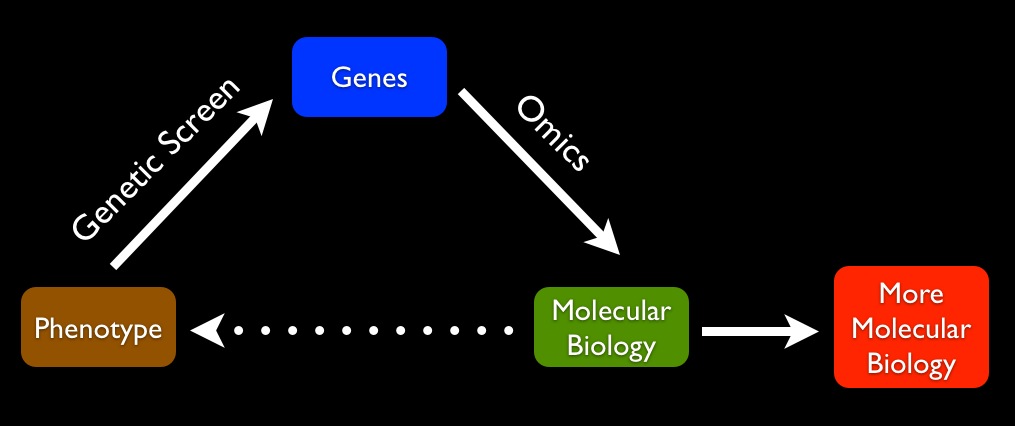
Most science talks I listen to, even good ones, leave me dissatisfied because the stories I hear never come to a complete resolution. The issue is this: we can get from traits to genes, and from genes to molecular biology. But we have largely failed at getting from molecular biology back to the characteristics of organisms. We don't do a good job explaining organismal traits with molecular biology.
How to sell a broken hockey stickIf there exists a scientist who can prove to the satisfaction of the world's leaders that global warming - anthropogenic or not - is a myth, he or she will get a Nobel prize and a medal from every government on Earth. Why? Because it will stifle all opposition to the 'business as usual' economic model. Sorry, but I don't think that person exists.
How plausible are AGW theories in general?
I will address that question using the sort of logic that can be programmed into a computer to simulate human intelligence:
semantic logic.
Question:
Life can be brutal for yeast in the wild. You don't know where your next meal is coming from or what form it's going to take. The key to being a successful yeast is to be metabolically agile, able to switch your metabolic state quickly based on the food source that's currently available on the bark of an oak tree or in the leaf litter of a forest floor.
For those who have not entered the world of Twitter, it is hard to fathom why people feel compelled to stream their lives to strangers 140 characters at a time. And such non-Twitter folk are also unlikely to fathom the purpose of blogging, especially in a world with more than 170 million blogs. Imagine the non-tweeting non-blogger’s disbelief, then, when they read story after story about how Twitter, Facebook, Wordpress, Posterous and the other “Social Web 2.0” heavyweights are changing the world as we know it.
UCL (University College London) scientists studying face recognition in identical twins say the essential skill is largely determined by our genetics. Published today in the Proceedings of the National Academy of Sciences, the study found that identical twins were twice as similar to each other in terms of their ability to recognize faces, compared to non-identical twins.
Researchers also found that the genetic effects that allow people to recognize faces are linked to a highly specific mechanism in the brain, unrelated to other brain processes such as the ability to recognize words or abstract art.