



The controversy surrounding prescription drug advertising is immense. Advocates for prescription drug direct-to-consumer advertising (DTCA) claim that it educates consumers, improves the quality of care and contributes to better patient adherence. While opponents argue that it leads to inappropriate prescribing and portrays non-medical problems as treatable medical illnesses.

Thanks to a new paper calling for stricter federal regulation of DTCA, the policy debate over the practice is certain to intensify even more. Soon to appear in the American Journal of Public Health, the study suggests that while there are some benefits stemming from (DTCA), there are significant risks that are magnified by its prominence.
Enhancing the effects of dopamine influences how people make life choices by affecting expectations of pleasure, according to new research from the UCL Institute of Neurology.

 Published today in Current Biology, the study confirms an important role for dopamine in how human expectations are formed and how people make complex decisions. It also contributes to an understanding of how pleasure expectation can go awry, for example in drug addiction.

The study builds on earlier research which used brain imaging as participants imagined holiday destinations. An area of the brain called the straitum tracked expectations and the
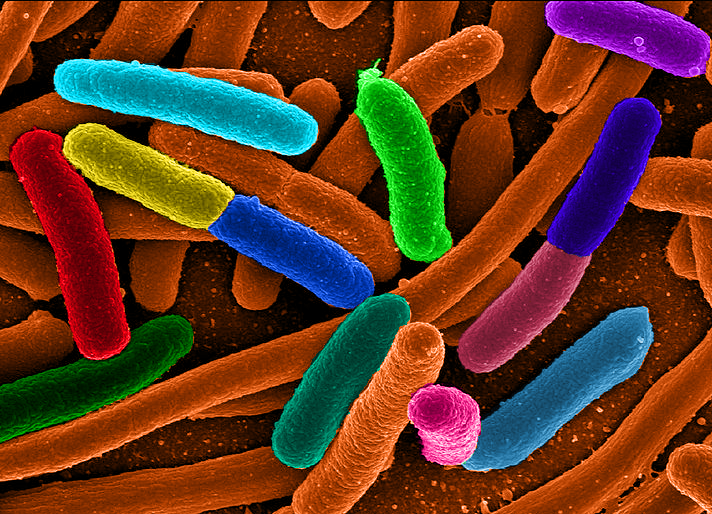
Cooperation is seen in every corner of life from microbes to humans, many times with no obvious advantages to those that provide it at high costs. Given the existence of “freeloading cheaters” ready to exploit the resources of those cooperating, why is it that cooperation persist? In an article now published in the journal Current Biology Nogueira and colleagues suggest that in bacteria this can result from highly mobile genes that “jump” from one cell to the next carrying the cooperative traits, effectively turning everyone into a cooperator. They also show that, at least in Escherichia coli (E. coli), this new population remains stable through “punisher” genes that impose a mafia-like strategy of “cooperation or death”, ensuring that the new cooperators do not revert to freeloading.
Today's scapegoat for my rant about the place of cephalopods in society is, as I predicted, Squidward Quincy Tentacles, of Spongebob Squarepants fame:


What IS that? Six appendages, a misplaced mouth, and a floppy nose? Where'd the nose come from? Where are his fins and tentacles? But oh, it turns out Squidward isn't even meant to be a squid. The Spongebob wiki quotes Squidward's voice actor: He's an octopus, but they call him Squidward. I never understood. I guess Octoward just never worked for a name, though.
The word on the street is that Jesus is pretty t'd off at NASA.1 What mortal sin2 did the space agency allegedly commit? The non-biological reproduction of an RNA component in a laboratory, of course.

NASA scientists reproduced uracil in a lab under conditions found in space, according to Astrobiology. Uracil is one of the components of the genetic code that makes up ribonucleic acid (RNA); RNA is mainly known for its role in protein synthesis. In other words, NASA was able to create a building block of life in the lab.

Energy is fungible and nothing is certain but death and taxes.

All energy is like all other energy and interchangeable through one means or another.  But, all energy is not created equal.  Some energy is better than other energy.  Hot energy is higher quality than cold energy.  The more heat that your energy can make with a smaller package of stuff the higher the

I found the premise of Barbara Bradley Hagerty's new book "Fingerprints of God" quite intriguing.  The author, raised as a Christian Scientist, attempts to look into alternative religions and science to see if her faith is justified.  There is nothing really new here - in terms of topics that have been covered in many other popular books.  

But what I found interesting was her interpretation of her experiences and investigations.  She chronicles her struggles and revelations in an autobiographical format - and I'm usually a sucker for autobiographies.
It's hard to make a good cartoon cephalopod, I guess. Yesterday I was disappointed about the Squidbillies. Tomorrow I may despair of Spongebob's pal Squidward. Today, I sigh over Nemo's little octopus friend Pearl.

I was profoundly impressed with the combination of scientific accuracy and aesthetic appeal achieved by the writer and animators of Finding Nemo. I mean, that song Mr. Ray sings about naming the zones of the ocean? Total brilliance!
The concept of altruism, a selfless concern for the welfare of others, a traditional virtue in many cultures and a core aspect of various religious traditions,  has long been debated in philosophical circles.  More recently, evolutionary biologists have joined the debate, saying that altruism may have evolved because any action that improves the likelihood of a relative's survival and reproduction increases the chance of an individual's DNA being passed on.
There have been many discussions relating to transhumanism and augmenting intelligence as well as just intelligence itself.  However, at the heart of many of these discussions the subject of Artificial Intalligence (AI) emerges.  This raises the question of whether AI is possible and what it actually means.

There is no question that machines can be built to perform many intelligent-like acts and simulate human intelligence, but I would argue that there is a fundamental difference that isn't often mentioned.

