One of the hallmarks of the brain of an individual with Alzheimer disease is the accumulation of amyloid-beta peptide (A-beta), something that is believed to be toxic to many brain cells (specifically neurons) and to therefore contribute to the underlying cause of disease.
Berislav Zlokovic and colleagues, at the University of Rochester Medical School, have now generated data in mice that mechanistically links a genetic risk factor for Alzheimer disease with accumulation of A-beta in the brain.
There may be less than 20,000 rhinoceros in the world, with one species perhaps already extinct and another with possibly only four animals remaining in the wild. As the populations of these animals age and become infirm, successful breeding becomes increasingly difficult. In an article scheduled for publication in Theriogenology, researchers from the Leibniz Institute for Zoo and Wildlife Research, Berlin, Zoo Budapest and the University of Veterinary Medicine, Vienna, report on the first live birth of a rhinoceros resulting from artificial insemination (AI) with frozen and thawed semen.
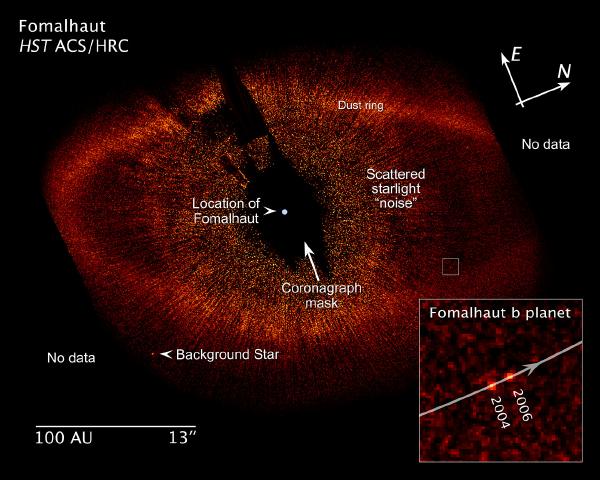
Estimated to be no more than three times Jupiter's mass, the planet, called Fomalhaut b, orbits the bright southern star Fomalhaut, located 25 light-years away in the constellation Piscis Austrinus (the Southern Fish). Fomalhaut has been a candidate for planet hunting ever since an excess of dust was discovered around the star in the early 1980s by the US- UK-Dutch Infrared Astronomy Satellite (IRAS).
In 2004, the coronagraph in the High Resolution Camera on Hubble's Advanced Camera for Surveys produced the first-ever resolved visible light image of a large dust belt surrounding Fomalhaut. It clearly showed that this structure is in fact a ring of protoplanetary debris approximately 34.5 billion kilometres across with a sharp inner edge.
In the future, polymethyl methacrylate (PMMA) could be made from natural raw materials such as sugars, alcohols or fatty acids.
PMMA is a synthetic plastic developed in 1928 and today produced in great quantities. While PMMA is often known colloquially as acrylic glass, as it is mainly used as a shatterproof, lightweight alternative to glass - for example, in protective goggles or vehicle lights. PMMA has many applications, including prosthetics, paints and adhesives.
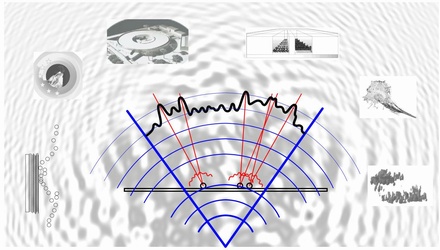
A major milestone has been achieved in the completion of the U's next-generation particle accelerator, ALICE, which is set to produce an intense beam of light that will revolutionize the way in which accelerator based light source research facilities will be designed in the future.
ALICE is an acronym standing for Accelerators and Lasers In Combined Experiments. Financed by the Science and Technology Facilities Council with seed funding from the North West Development Agency, the project is designed to produce light from both the accelerator and advanced lasers that can be used simultaneously in cutting edge experiments.
Observations from satellites now allow scientists to monitor changes to water levels in the sea, in rivers and lakes, in ice sheets and even under the ground. As the climate changes, this information will be crucial for monitoring its effects and predicting future impacts in different regions.
Sea level rise in one of the major consequences of global warming, but it is much more difficult to model and predict than temperature. It involves the oceans and their interaction with the atmosphere, the ice sheets, the land waters and even the solid Earth, which modifies the shapes of ocean basins. Measurements from tidal gauges show that for most of the twentieth century, sea levels rose by 1.8 mm per year on average.
AAAS isn't usually regarded as fans of science journalism (well, unless it's people writing for Science) but that hasn't always been the case. Since 1945 they have honored science reporting for print and radio and later expanded that to television and now online reporting.
This year, an ambitious series on memory and the brain, a look at whether research supports widespread use of anti-cholesterol medications, and a broadcast account of the contentious battle over intelligent design in Dover, Pennsylvania, are among the winners of the 2008 AAAS Science Journalism Awards.
Panels of science journalists chose the winners of the awards, which are sponsored by Johnson & Johnson Pharmaceutical Research & Development, L.L.C.
As any good beer brewer knows, the yeast used in fermentation stick together in large clumps consisting of thousands of cells that settle out where they are easily removed. Brewers had even traced this behavior to a gene that encodes a sticky protein that sits on the surface of yeast cells. But despite the fact that yeast are a major laboratory "workhorse," any further exploration of their social lives had remained almost entirely neglected. Indeed, the "domesticated" yeast commonly studied in genetics labs have had any social tendencies bred out of them.
Researchers at MIT's Center for Energy and Environmental Policy Research have produced a report concerning key design issues of proposed
"cap-and-trade" programs that are under consideration in the United States as a way of curbing
greenhouse gas emissions. The first contribution of the three-part study found that, based on an examination of the European Union's system and of similar U.S. programs for other emissions, such a program can indeed be effective in reducing emissions without having a significant economic impact.
Developed more than 200 years ago and found in households around the world, chlorine bleach is among the most widely used disinfectants, yet scientists never have understood exactly how this familiar product actually kills bacteria. New research from the University of Michigan reveals key details in the process by which bleach works its antimicrobial magic.
In a study published in the Nov. 14 issue of Cell, a team led by molecular biologist Ursula Jakob describes a mechanism by which hypochlorite, the active ingredient of household bleach, attacks essential bacterial proteins, ultimately killing the bugs.