It sounds like a science fiction movie: A killer contagion threatens the Earth, but scientists save the day with a designer drug that forces the virus to mutate itself out of existence. The killer disease? Still a fiction. The drug? It could become a reality thanks to a new study by Rice University bioengineers.
The study, which is available online and slated for publication in the journal Physical Review E, offers the most comprehensive mathematical analysis to date of the mechanisms that drive evolution in viruses and bacteria. Rather than focusing solely on random genetic mutations, as past analyses have, the study predicts exactly how evolution is affected by the exchange of entire genes and sets of genes.
Children with heart defects may someday receive perfectly-matched new heart valves built using stem cells from their umbilical cord blood, according to research presented at the American Heart Association's Scientific Sessions 2008.
When infants are born with malfunctioning heart valves that can't be surgically repaired, they rely on replacements from animal tissue, compatible human organ donations or artificial materials. These replacements are lifesaving, but don't grow and change shape as a child develops; so two or more surgeries may be needed to replace outgrown valves. The animal tissue may also stiffen over time as well and be less durable than a normal human valve.
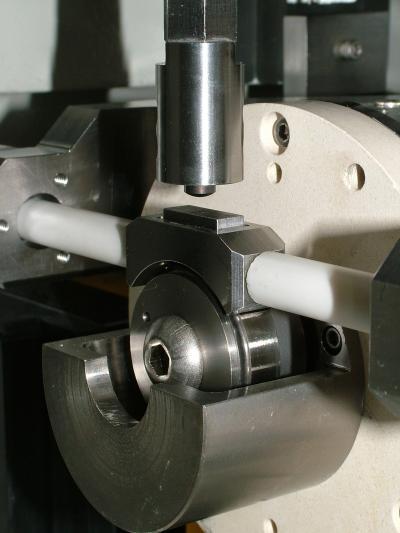
We rarely think about the electricity impact of something like a conveyor belt at an airport. When our luggage goes on , or we step on one, numerous gears with ball- and slide-bearings go to work.
The power consumption is tremendous, in the range of several gigawatt hours per annum. A substantial amount of this is lost through friction. In wind turbines and in cars, too, a percentage of the energy is spent on friction – reducing the efficiency factor accordingly. Novel lubricants that almost eliminate the effect of friction could be the answer. Once they have been set in motion, the bearings run and run and run.
About 10 million people in the United States alone—from troops returning from war to students with music blasting through headphones—are suffering from impairing noise-induced hearing loss.
The rising trend is something that researchers and physicians at the University of Michigan Kresge Hearing Research Institute are hoping to reverse, with a cocktail of vitamins and the mineral magnesium that has shown promise as a possible way to prevent hearing loss caused by loud noises. The nutrients were successful in laboratory tests, and now researchers are testing whether humans will benefit as well.
Ewing sarcoma is the second most common type of primary bone cancer seen in children and young adults. Patients with relapsed or refractory Ewing sarcoma have a poor outcome with conventional therapies.
Cytarabine decreases the levels of a certain key protein in Ewing sarcoma cells and has demonstrated preclinical activity against Ewing sarcoma cell lines in the laboratory. A new study published in Pediatric Blood&Cancer evaluated a phase II clinical trial of a potential new treatment approach for relapsed Ewing sarcoma using cytarabine.
Chandrayaan-1, the Indian Space Research Organisation’s (ISRO) lunar orbiter, was captured into orbit around the Moon on 8 November. One day later, the spacecraft performed a manoeuvre that lowered the closest point of its orbit down to 200 km from the Moon.
The spacecraft’s liquid-fuel propelled engine was fired at 12:21 CET (16:51 Indian Standard Time) when it was at a distance of about 500 km from the Moon. This reduced the spacecraft’s velocity, enabling the Moon’s gravitational field to capture Chandrayaan-1 into lunar orbit. In this configuration, the orbit’s point closest to the lunar surface was at 504 km and the spacecraft circled the Moon in 11 hours.
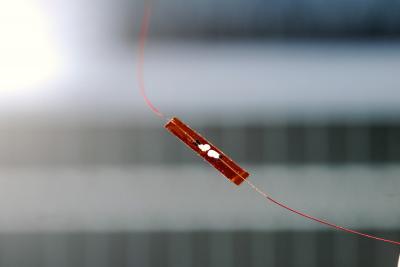
Researchers have developed a new type of small-scale electric power generator able to produce alternating current through the cyclical stretching and releasing of zinc oxide wires encapsulated in a flexible plastic substrate with two ends bonded.
The new "flexible charge pump" generator is the fourth generation of devices designed to produce electrical current by using the piezoelectric properties of zinc oxide structures to harvest mechanical energy from the environment, the authors write in Nature Nanotechnology.
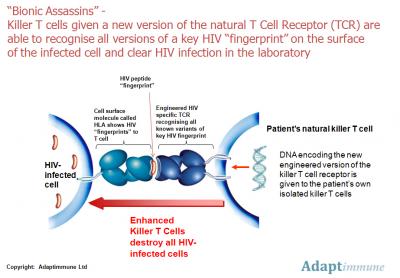
HIV is a master of disguise, able to rapidly change its identity and hide undetected in infected cells. But now, in a long-standing collaborative research effort partially-funded by the Wellcome Trust, scientists from Oxford-based Adaptimmune Limited, in partnership with the Universities of Cardiff and Pennsylvania have engineered immune cells to act as "bionic assassins" that see through HIV's many disguises.
From the Tour de France to NASCAR, competitors and fans know that speed is only part of the equation. Strategy, including the ability to use elements like aerodynamic drafting, which makes it easier to follow closely behind a leader than to be out in front, is also critical.
But in some cases, drafting happens in reverse: It's the leader of a pack who experiences reduced drag, while the followers encounter more resistance -- and have to expend more energy to keep up.
Researchers have taken the first critical steps in unraveling the mysteries of brain aneurysms, the often fatal rupturing of blood vessels that afflicts 500,000 people worldwide each year.