









Hot, young planets may be easier to spot because they stay that way longer than astronomers have thought, according to new work by MIT planetary scientist Linda Elkins-Tanton.

For a few million years after their initial formation, planets like Earth may maintain a hot surface of molten rock that would glow brightly enough to make them stand out as they orbit neighboring stars. Elkins-Tanton, Mitsui Career Development Professor of Geology in the Department of Earth, Atmospheric and Planetary Sciences, says the “magma ocean” stage for Earth-sized planets may last a few million years, much longer than previously estimated. “That means we may actually see them elsewhere, as detection systems get better,” she said.

Schoolchildren, families and citizen scientists around the world will gaze skyward after dark from Oct. 20 to Nov.3, 2008, looking for specific constellations and then sharing their observations through the Internet.

The Great World Wide Star Count, now in its second year, helps scientists map light pollution globally while educating participants about the stars.

The event, which is open to everyone who wants to participate, is organized by the Windows to the Universe project at the University Corporation for Atmospheric Research (UCAR) in Boulder, Colo., in conjunction with planetariums and scientific societies across the country and abroad.

Yale Cancer Center researchers have identified a genetic biomarker that may help to determine why some people are at an increased risk of developing lung cancer.

The findings, published in the journal Cancer Research, could help identify smokers who should be carefully screened for lung cancer.

“Only 10% of smokers will develop lung cancer in their lifetime and genetic testing to determine the population of smokers who are most predisposed to develop the disease is needed to help guide better evaluation for these people,” explained Joanne B. Weidhaas, MD, PhD, assistant professor of therapeutic radiology at Yale School of Medicine and senior author on the study in collaboration with Frank Slack, PhD, associate professor in the department of molecular, cellular and developmental biology at Yale University.

I have a secret; as much as I enjoy reading about the latest advancements in biology and physics, I sometimes like reading about the darker side of experimentation.

Most scientists have a fundamental basis for experimentation and results but then there were (and are - we'll get to them in future installments) others who ran with their own rules and avoided opposition by keeping the results mostly secret. These are the people I am referring to as 'Mad Scientists' rather than using the more colloquial 'crazy' meaning of the term.

We all know most doctors are around to help patients, for example, but those who perform their own twisted experimentation make this list. Some will be more controversial (you may not think they are mad at all) but they made my list of "World's Maddest Scientists" and we can discuss it. (dun dun dun...)

Mad Scientist.... (see, he's CRAZY!)

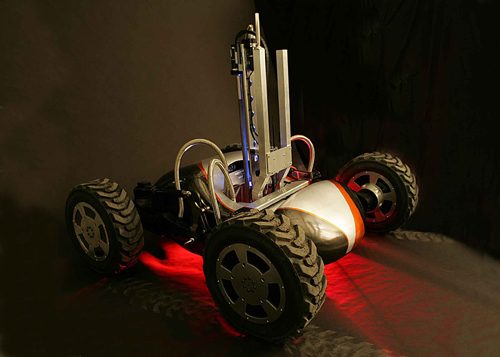
Sitting atop the Big Island of Hawaii is majestic Mauna Kea, Hawaii’s largest volcano and also the site of the latest test site for NASA’s new moon probe, Scarab. Its mission: lunar prospecting.

Although the inactive volcano may not seem to resemble the moon, Mauna Kea does provide a similar environment to field test the robot for a mission to the moon. Mauna Kea has rocky slopes and, due to its elevation, cold temperatures. Mauna Kea is a paradise to many a migrating astronomer and, with its 14,000-foot summit, is often covered in snow. NASA will field test Scarab at 9,000 feet, where it will encounter rain, fog and daily temperatures of 40 degrees.


The four-wheeled Scarab will travel to different sites and obtain geologic core samples by drilling; the samples will be tested by on-board instruments to determine a chemical analysis of the sample. This allows Scarab to evaluate the site for possible mining of materials.


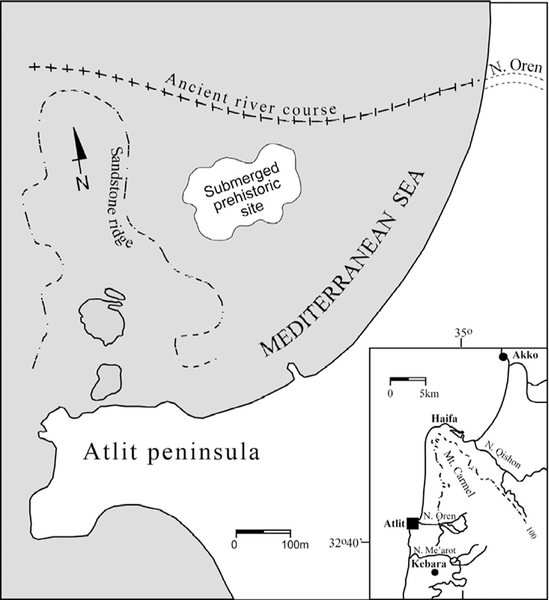
The discovery of the earliest known cases of human tuberculosis (TB) in bones found submerged off the coast of Israel shows that the disease is 3000 years older than previously thought. Direct examination of this ancient DNA confirms the latest theory that bovine TB evolved later than human TB.

The new research sheds light on how the TB bacterium has evolved over the millennia and increases our understanding of how it may change in the future.

The bones, thought to be of a mother and baby, were excavated from Alit-Yam, a 9000 year-old Pre-Pottery Neolithic village, which has been submerged off the coast of Haifa, Israel for thousands of years. Professor Israel Hershkovitz, from Tel-Aviv University's Department of Anatomy, noticed the characteristic bone lesions that are signs of TB in skeletons from the settlement, one of the earliest with evidence of domesticated cattle.

A new study sheds light on the lives of teenage boys who abuse their girlfriends. In their own words, the young men often describe facing challenges such as growing up with troubled family lives, having little or no support when they began to fail at school, and witnessing violence in their own homes and communities. The study advocates broadening the view of abusive behaviors within dating relationships to explore the myriad environments — school, home and community — that affect boys' lives and actions.

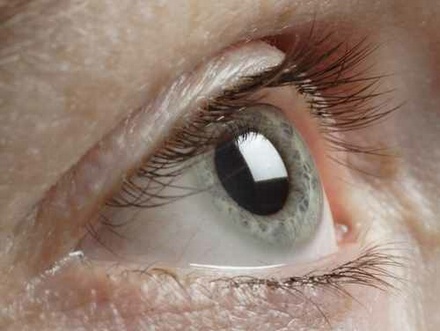
'Blindsight' is a phenomenon in which patients with damage in the primary visual cortex of the brain can tell where an object is although they claim they cannot see it.

A research team led by Prof. Tadashi Isa and Dr. Masatoshi Yoshida of the National Institute for Physiological Sciences, Japan, provides compelling evidence that blindsight occurs because visual information is conveyed bypassing the primary visual cortex.

Hershey's Center for Health and Nutrition announced the publication of a study that shows resveratrol, the compound often associated with the health benefits of red wine, is also found in cocoa and dark chocolate products. In the September 24 edition of the Journal of Agricultural and Food Chemistry, Hershey scientists conducting a report that cocoa powder, baking chocolate and dark chocolate all have significant levels of resveratrol, a naturally occurring antioxidant.

"This study shows that the levels of resveratrol found in cocoa and chocolate products is second to red wine among known sources of resveratrol and forms yet another important link between the antioxidants found in cocoa and dark chocolate to other foods," says David Stuart, PhD, Director of Natural Product Science at The Hershey Company who partnered with Planta Analytica to conduct this study.

Cellular damage due to stress is an important factor in aging processes. It is therefore strange that starving, which is stressful, decelerates aging processes and extends the lifespan of organisms.

Proteins from the sirtuin family contribute to this mechanism but the exact function of the seven members of the sirtuin family in mammals has not yet been clarified. Results obtained in studies performed by protein research scientists in Bochum and Dortmund under the auspices of Assistant Professor Dr. Clemens Steegborn (Institute for Physiological Chemistry at RUB) have supplied first insights into this phenomenon.

The scientists identified initial functions of the two human sirtuins Sirt3 and Sirt5 that reside in mitochondria, the energy supplying “cellular power stations.”

