Plants in a forest respond to stress by producing significant amounts of a chemical form of aspirin, scientists have discovered. The finding, by scientists at the National Center for Atmospheric Research (NCAR), opens up new avenues of research into the behavior of plants and their impacts on air quality, and it also has the potential to give farmers an early warning signal about crops that are failing.

For years, scientists have known that plants in a laboratory may produce methyl salicylate, which is a chemical form of acetylsalicylic acid, or aspirin. But researchers had never before detected methyl salicylate in an ecosystem or verified that plants emit the chemical in significant quantities into the atmosphere.

A hormone found at higher levels when the body produces its own "home grown" fat comes with considerable metabolic benefits, according to a report in Cell. The newly discovered signaling molecule is the first example of a lipid-based hormone; most are made up of proteins.

The findings in mice raise the notion that boosting the body's fat production might actually be one solution to the growing epidemic of obesity and related metabolic diseases. Likewise, diets supplemented with the fat hormone, a fatty acid known as palmitoleate, might also come with long-term benefits.

The results also reveal that, as with most things, when it comes to fat it's not good to generalize.

It drives me mad when I hear a guy complain that he eats and eats but can’t gain weight, and that he resorts to drinking protein shakes to “bulk up.” [Insert world’s smallest violin playing here.] Excuse me? Did I hear him right? He gorges himself when I’ve sworn off pasta, meat, birthday cake--my only nutritional intake: a bottle of water and a carrot stick between classes, all so I can decrease my bulk?

Argh. But really, Pfizer (and those men) take the cake even when it comes to Lipitor.

 If there is a poster child sport for our favorite phrase, "Sports Are 80 Percent Mental", it must be golf. Maybe its the slow pace of play that gives us plenty of time to think between shots. Maybe its the "on stage" performance feeling we get when we step up to that first tee in front of our friends (or strangers!) Maybe its the "high" of an amazing approach shot that lands 3 feet from the cup followed by the "low" of missing the birdie putt. From any angle, a golf course is the sport psychologist's laboratory to study the mix of emotions, confidence, skill execution and internal cognitive processes that are needed to avoid buying rounds at the 19th hole. In Putt With Your Brain - Part 1, we looked at some of the recent research on putting mechanics but, as promised, we now turn to the mental side of putting. Sian Beilock and her team at the University of Chicago's Human Performance Lab recently released the latest of a string of research studies on sports performance, or more specifically, how not to choke under pressure. Lucky for us, they chose putting as their sport skill of choice. This ties in with Dr. Beilock's theory of embodied cognition that we featured in Watching Sports Is Good For Your Brain.

An underlying theme to this work is the concept of automaticity, or the ability to carry out sport skills without consciously thinking about them. Performing below expectations (i.e. choking) starts when we allow our minds to step out of this automatic mode and start thinking about the steps to our putting stroke and all of those "swing thoughts" that come with it ("keep your elbows in", "head down", "straight back"). Our brain over analyzes and second-guesses the motor skills we have learned from hundreds of practice putts.


 If there is a poster child sport for our favorite phrase, "Sports Are 80 Percent Mental", it must be golf. Maybe its the slow pace of play that gives us plenty of time to think between shots. Maybe its the "on stage" performance feeling we get when we step up to that first tee in front of our friends (or strangers!) Maybe its the "high" of an amazing approach shot that lands 3 feet from the cup followed by the "low" of missing the birdie putt. From any angle, a golf course is the sport psychologist's laboratory to study the mix of emotions, confidence, skill execution and internal cognitive processes that are needed to avoid buying rounds at the 19th hole. In Putt With Your Brain - Part 1, we looked at some of the recent research on putting mechanics but, as promised, we now turn to the mental side of putting. Sian Beilock and her team at the University of Chicago's Human Performance Lab recently released the latest of a string of research studies on sports performance, or more specifically, how not to choke under pressure. Lucky for us, they chose putting as their sport skill of choice. This ties in with Dr. Beilock's theory of embodied cognition that we featured in Watching Sports Is Good For Your Brain.

An underlying theme to this work is the concept of automaticity, or the ability to carry out sport skills without consciously thinking about them. Performing below expectations (i.e. choking) starts when we allow our minds to step out of this automatic mode and start thinking about the steps to our putting stroke and all of those "swing thoughts" that come with it ("keep your elbows in", "head down", "straight back"). Our brain over analyzes and second-guesses the motor skills we have learned from hundreds of practice putts.

The National Academy of Sciences has created a policy report outlining some of our national challenges, including economic ones, and sent it to both John McCain and Barack Obama with guidance for whomever is elected president in November. The report provides suggestions on filling key science appointments after the election.

The report lists approximately 80 high-level science and technology appointees who will be crucial in advising the new president on issues that range from energy to health care to economic growth. It also urges members of the scientific community to serve in these positions, and suggests ways to make it more attractive for well-qualified people to do so.

Researchers at the University of North Carolina at Chapel Hill School of Medicine have transformed cells from human skin into cells that produce insulin, the hormone used to treat diabetes.

The breakthrough may one day lead to new treatments or even a cure for the millions of people affected by the disease, researchers say.

The approach involves reprogramming skin cells into pluripotent stem cells, or cells that can give rise to any other fetal or adult cell type, and then inducing them to differentiate, or transform, into cells that perform a particular function – in this case, secreting insulin.

The skeleton of a man discovered by archaeologists in a shallow grave on a construction site at the University of York could be one of one of Britain’s earliest victims of tuberculosis. He was interred in a shallow scoop in a flexed position, on his right side. Radiocarbon dating suggests that he died in the fourth century.

He was aged 26-35 years, suffered from iron deficiency anemia during childhood and was shorter than the average Roman male at 5 feet 4 inches.

Detailed analysis of the skeleton by Malin Holst, of York Osteoarchaeology Ltd, revealed that a likely cause of death was tuberculosis which affected the man’s spine and pelvis. She says that it is possible that he contracted the disease in childhood from infected meat or milk or the infection could have been inhaled into the lungs. The disease then lay dormant until adulthood when the secondary phase took its toll.

Fannie Mae and Freddie Mac, Bear Stearns, Lehman Brothers: As the dominoes of the financial sector continue to fall at an alarming rate and the Federal Reserve attempts to forestall a systemic meltdown of the domestic financial network, University of Arkansas economists find that a network approach to the study of financial “contagion” – the transmission and impact of financial crises – may be applied to understand the current turmoil in the U.S. banking sector and the need for a systemwide response by the Fed.

A new study by Raja Kali and Javier Reyes, economics professors in the Sam M. Walton College of Business at the University of Arkansas, reveals that integration in the global financial network is a double-edged sword. On one hand, being well connected to the network can make a country more vulnerable to systemic shocks. However, this same connectedness also is associated with an increased ability to dissipate economic shocks to the system. Kali and Reyes reached these conclusions by studying how international financial crises travel though the network of global trading relationships.

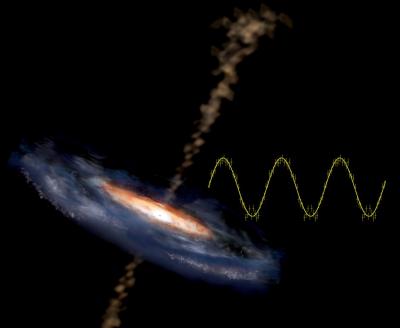
A group of scientists from Durham University say they have found the "missing link" between small and super-massive black holes. The researchers have discovered that a strong X-ray pulse is emitting from a giant black hole in a galaxy 500 million light years from Earth.

The pulse has been created by gas being sucked by gravity on to the black hole at the centre of the REJ1034+396 galaxy.

X-ray pulses are common among smaller black holes, but the Durham research is the first to identify this activity in a super-massive black hole. Most galaxies, including the Milky Way, are believed to contain super-massive black holes at their centers.

St. Jude Medical today announced the first patient implant of an Eon Mini, what they are billing as 'the world’s smallest, longest-lasting, rechargeable neurostimulator' to treat chronic pain of the trunk or limbs and pain from failed back surgery.

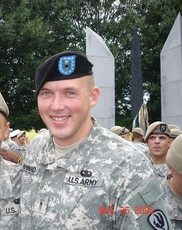
Adam Hammond, the 26-year-old patient, was implanted with the Eon Mini neurostimulator which is slightly larger than a U.S. silver dollar. Similar in function and appearance to a cardiac pacemaker, the neurostimulator delivers mild electrical pulses to the spinal cord, which interrupt or mask the pain signals’ transmission to the brain.

Hammond is a former member of the U.S. Army “Golden Knights” Parachute Team. Hammond was skydiving while on leave in 2006 when his parachute did not deploy correctly. He hit the ground in excess of 45 miles an hour.