








Have a Facebook account? Laura Buffardi, doctoral student in psychology, and associate professor W. Keith Campbell from the University of Georgia says it may tell them you are a narcissist.

Narcissism is not just attention-seeking or wanting to be liked. Clearly everyone who signs up for a social media site wants to interact with others. It is more severe and characterized by an inability to form healthy, long-term relationships.

The tremendous growth of social networking sites (Facebook now has 100 million users, for example) has led psychologists to explore how personality traits are expressed online. Buffardi and Campbell chose Facebook because it's the most popular networking site among college students and because it has a fixed format that makes it easier for researchers to compare user pages.

Timothy Judge, PhD, and Beth Livingston from the University of Florida say that sexism still exists and it has positive effects on income ... if you're a man. Their study says men who believe in what they call traditional roles for women (whether they believed a woman's place is in the home, whether employing wives leads to more juvenile delinquency, whether a man should be the primary earner and if the woman should take care of the home and family) earn more money than men who don't, though women with more traditional outlooks don't make much(edited) more than women with more egalitarian views.

Is your life worth more than $130,000? In Holland, it isn't. The Council for Public Health and Healthcare (RVZ) recently advised that only those treatments which cost less than €80,000 to keep a patient alive in good health for a year longer should be eligible for reimbursement.

But the use of an explicit 'value' for lifesaving health care is a controversial discussion in the Netherlands, just like it would be anywhere, and that's wrong, according to health economist professor Han Bleichrodt.

Global corporations view climate change as a driver of risk and opportunity but they'd like to know what works, what doesn't work and what the regulations will be before they make strategic investment decisions, according to this year's findings from the Carbon Disclosure Project (CDP), which includes exclusive data from 1550 of the world's major companies on greenhouse gas emissions and climate change related strategies.

Senior managers are calling for greater visibility on climate change related policy in order to better anticipate the impact of regulation driven carbon markets and carbon prices.

Despite the uncertainty with regard to regulation the majority of global companies are acting to reduce their emissions. 74% are now reporting emissions reduction targets, showing companies are increasingly taking climate change seriously.

Scientists in Spain are reporting an advance toward a new method for determining the purity of heroin that could save lives by allowing investigators to quickly identify impure and more toxic forms of the drug being sold on the street. Unlike conventional tests, it does not destroy the original drug sample, according to their report.

In the new study, Salvador Garrigues and colleagues point out that the purity of heroin can vary widely, since pushers often mix it with chalk, flour, or other "cutting agents." Because heroin users do not know the exact purity of the drug, they are more at risk for overdose and even death. Conventional tests for determining the purity of street heroin involve destructive and time-consuming sample preparation, the scientists say.

Acupuncture is as effective and longer-lasting in managing the common debilitating side effects of hot flashes, night sweats, and excessive sweating (vasomotor symptoms) associated with breast cancer treatment and has no treatment side effects compared to conventional drug therapy, according to a study presented September 24, 2008, at the American Society for Therapeutic Radiology and Oncology's 50th Annual Meeting in Boston.

Findings also show there were additional benefits to acupuncture treatment for breast cancer patients, such as an increased sense of well being, more energy, and in some cases, a higher sex drive, that were not experienced in those patients who underwent drug treatment for their hot flashes.

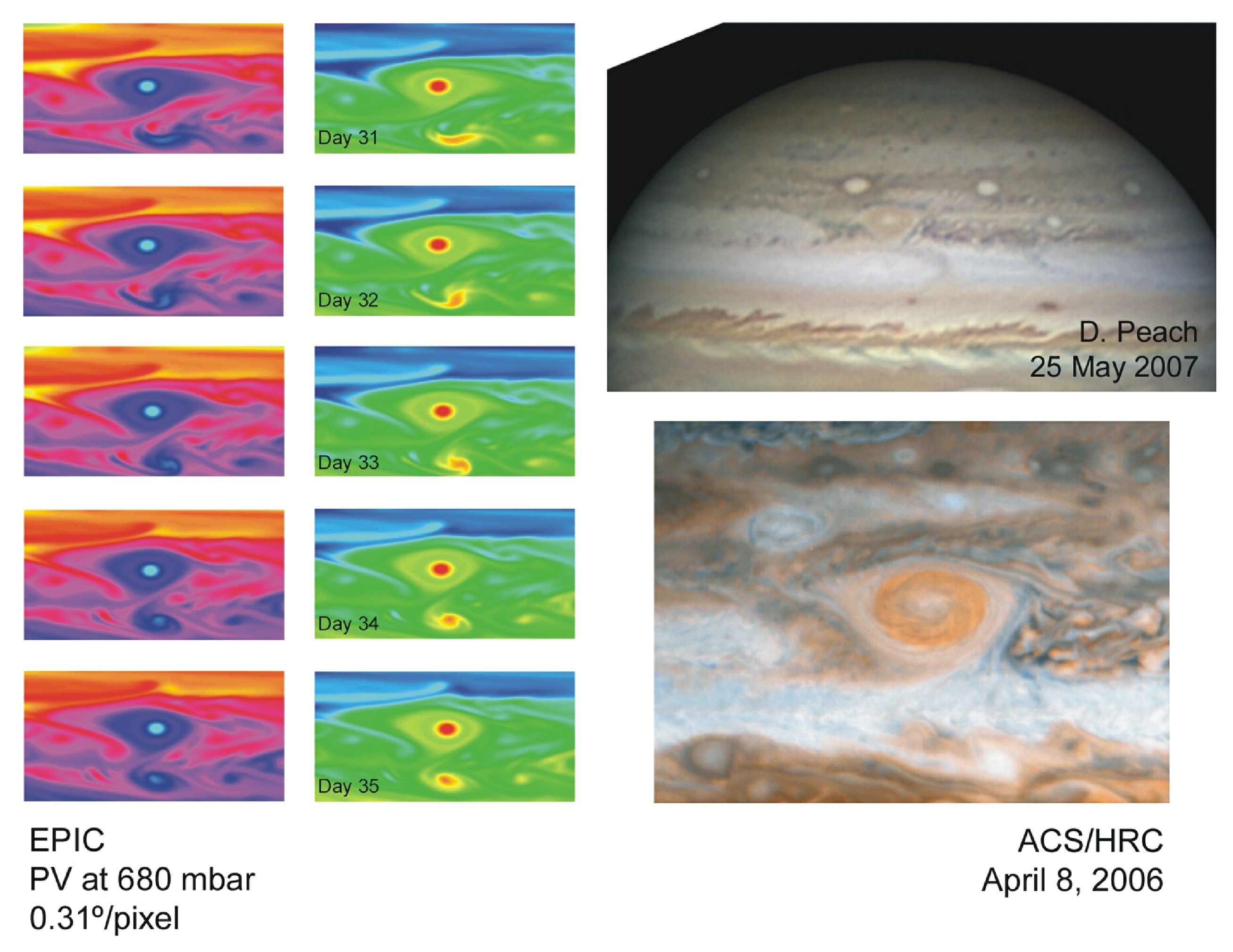
A study has given new insights into why Oval BA, a giant anticyclone on Jupiter also known as Red Spot Junior, suddenly turned from white to red in a period of just a few months.

The Oval BA is an enormous anticyclone (high-pressure system) that may be compared to a colossal hurricane in the Earth’s atmosphere. Oval BA is half the size of the Great Red Spot and is large enough to contain the Earth inside it.

Oval BA was formed in 2000 by the merger of smaller vortices called the White Ovals in a chain of collisions that started back in 1998. The apparent reddening was first reported by amateur astronomers in early 2006, but it was not until April that professional astronomers were able to image the impressive alteration of the second largest storm in the Solar System after the Great Red Spot (GRS).

There are more bacteria in our bodies than there ever have been people on the Earth. In fact, there are more bacteria in the colon than there are human cells in our bodies. Most of the bacteria in our guts are harmless and many are beneficial to our health. However, for several decades scientists have thought that some microbes living in the gut may play a role in the formation of sporadic colorectal cancer.

Research published in the October issue of the Journal of Medical Microbiology says they have discovered that a molecule produced by a common gut bacterium activates signalling pathways that are associated with cancer cells.

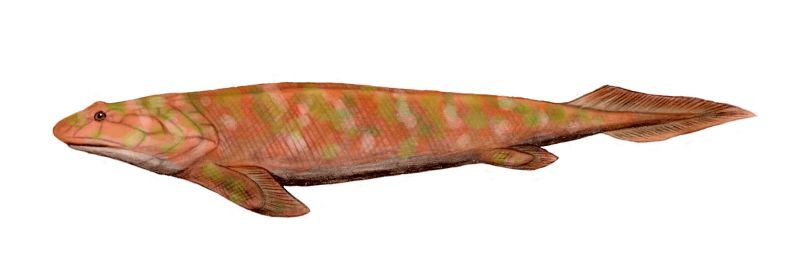
Tetrapods, the first four-legged land animals, have also been considered the first organisms that had fingers and toes but researchers at Uppsala University say that is not the case.

Using medical x-rays, they found rudiments of fingers in the fins in fossil Panderichthys, the “transitional animal,” which indicates that rudimentary fingers developed considerably earlier than was previously thought.

Our fish ancestors evolved into the first four-legged animals, tetrapods, 380 million years ago. They are the forerunners of all birds, mammals, crustaceans, and batrachians (Editor - and reptiles! We have the most eagle-eyed readers anywhere.) Since limbs and their fingers are so important to evolution, researchers have long wondered whether they appeared for the first time in tetrapods or whether they had evolved from elements that already existed in their fish ancestors.

Scientists have decoded the genome of the Pristionchus pacificus nematode and gained valuable insight into the evolution of parasitism.

In their work, the scientists have shown that the genome of the nematode consists of a surprisingly large number of genes, some of which have unexpected functions. These include a number of genes that are helpful in breaking down harmful substances and for survival in a strange habitat: the Pristionchus uses beetles as a hideout and as means of transport, and feeds on the fungi and bacteria that spread out on their carcasses once they have died. It thus provides the clue to understanding the complex interactions between host and parasite.

