Truls Thorstensen (EFS Consulting Vienna), Karl Grammer (Ludwig Boltzmann Institute for Urban Ethology) and other researchers at the University of Vienna say that people make lots of assumptions about sex, age, emotions, and intentions by looking at human faces - and we do it with cars as well.

They're not the first ones to come up with this idea; five year olds have been finding personalities in inanimate objects for thousands of years and my kid has been saying "Ka-chow!" ever since he saw Cars, but they are the first ones to tackle it in a systematic fashion.

How did they do it? They asked people to describe car grills anthropomorphically. Then they used geometric morphometrics to calculate the corresponding shape information, whatever that means. One-third of the respondents associated a human or animal face with over 90 percent of the cars and everyone noted eyes (headlights), a mouth (air intake/grill), and a nose in 50 percent of the cars. Yep, that means people think cars have a personality.

It sounds like an episode of MacGyver. What can you make from a lump of graphite, a piece of Scotch tape and a silicon wafer?

Cornell researchers didn't fly out off a cliff or blow up a door, they created the world's thinnest balloon - a membrane that is just one atom thick but strong enough to contain gases under several atmospheres of pressure without popping.

Unlike your average party balloon or even a thick, sturdy glass container, this membrane is ultra-strong, leak-proof and impermeable to even nimble helium atoms.

In a horror movie of the future, the villain could very well be someone who hijacks your GPS system and sends you to that lonely cabin in the woods.

Global positioning system (GPS) technology is becoming something people can't imagine living without, so if such a ubiquitous system were to come under attack, what could be done?

It's an uncomfortable question, but one that a group of Cornell researchers have considered with their research into "spoofing" GPS receivers.

A team of researchers has identified the active compounds that contribute to the health benefits of pre-germinated brown rice; the healthy components are a related set of sterol-like molecules known as acylated steryl-beta-glucosides (ASGs).

Pre-germinated rice (PR) is an emerging health food whereby brown rice is soaked in warm water prior to cooking; the warm bath induces germination, or sprouting, which stimulates rice enzymes to produce more nutrients. One such nutrient is the important brain chemical GABA (PR is thus often referred to as "GABA rice"), and animal studies have shown that a PR-rich diet can improve cognitive function. Other studies have found that PR can also act as an anti-diabetic.

Have you ever seen a giraffe wait in line? We haven't either. But if you go to an Olive Garden on a Sunday at 5:00 PM and see the line waiting patiently for a Never-Ending Pasta Bowl (and, let's face it, you can't eat more than one anyway) you may wonder if we're really the smartest species.

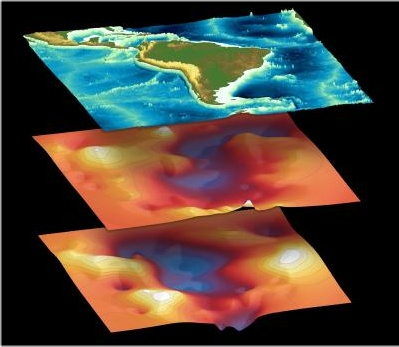
An international team of earth scientists report movement of warmed sea water through the flat, Pacific Ocean floor off Costa Rica. The movement is greater than that off midocean volcanic ridges. The finding suggests possible marine life in a part of the ocean once considered barren.

With about 71 percent of the Earth's surface being ocean, much remains unknown about what is under the sea, its geology, and the life it supports. A new finding reported by American, Canadian and German earth scientists suggests a rather unremarkable area off the Costa Rican Pacific coast holds clues to better understand sea floor ecosystems.

If your lover's singing is sometimes sexy and sometimes annoying, a change in hormones may be the reason.

A songbird study led by Donna Maney,assistant professor of psychology and a member of the Graduate Program in Neuroscience at Emory University, says it sheds new light on this issue, showing that a change in hormone levels may alter the way we perceive social cues by altering a system of brain nuclei, common to all vertebrates, called the "social behavior network."

Their research examines how genes, hormones and the environment interact to affect the brain, using songbirds as a model and helps provide an understanding of the basic principles underlying brain structure and function common to many species, including humans.

A gamma-ray burst is, in a sense, a look back in time. Scientists have now seen one that happened farther back in time than any other seen before. Even before the existence of the Milky Way.

Gamma-ray bursts (GRBs) are the most powerful and brightest explosions of energy in our universe. They last only a few milliseconds to several minutes and they outshine all other sources of gamma rays combined. Astronomers now think that most GRBs are associated with the explosive deaths of massive stars. These stars collapse and explode when they run out of nuclear fuel.

Imagine you can never do the simplest memory orientation task, like finding your way home from the grocery store. In a world where most of us take our ability to do 'cognitive mapping' of our environment for granted, being lost all of the time like that can be terrifying.

Writing in Neuropsychologia, a study led by Giuseppe Iaria, a University of British Columbia Faculty of Medicine and Vancouver Coastal Health Authority postdoctoral fellow, used functional magnetic resonance imaging (fMRI) together with behavioral studies to assess and characterize the navigational deficiencies of a patient who is completely unable to orient within any environment, getting lost even within the neighborhood where the patient lived for many years.

With all the hype surrounding the Large Hadron Collider, it's easy to forget that there are lots of other puzzles in physics still being tackled every day.

The Kondo effect, one of the few examples in physics where many particles collectively behave as one object (a single quantum-mechanical body), has intrigued scientists around the world for decades.

When a single magnetic atom is located inside a metal, the free electrons of the metal 'screen' the atom. That way, a cloud of many electrons around the atom becomes magnetized. Sometimes, if the metal is cooled down to very low temperatures, the atomic spin enters a so-called 'quantum superposition' state. In this state its north-pole points in two opposite directions at the same time. As a result, the entire electron cloud around the spin will also be simultaneously magnetized in two directions.