







Scientists at the Science and Technology Facilities Council have developed a system that measures the individual layers of cloud above us which will make answering weather questions possible in the future. This Cloud Radar will not only allow forecasters to predict the weather more precisely, the information gathered will also enable aircraft pilots to judge more accurately whether it is safe to take off and land in diverse weather conditions, offering a powerful safety capability for civil airports and military air bases.

Developed over 10 years by researchers and engineers at the STFC Rutherford Appleton Laboratory, in collaboration with the Met Office, the Cloud Radar can take a complete and accurate profile of cloud or fog up to 5 miles overhead. Operating at 94 GHz, 50 times higher in frequency than most mobile phones, the radar measures the cloud base height, its thickness, density and internal structure as well as providing similar information on cloud layers at higher altitudes.

The fatter the world gets, the more extreme thinness is popular on the internet, according to an analysis of nearly three million random URLs. The study revealed that websites promoting anorexia and bulimia have jumped in number since 2007.

If you've been reading all those studies on the benefits of chocolate and salivating at the thought of milk-chocolating your way to health and longevity, you're going to be disappointed. But if you aren't a choco-holic and just want to know if it can help you stay heart healthy, there is good news.

6.7 grams of chocolate per day (that's 1/15th of a chocolate bar) represents the ideal amount for a protective effect against inflammation and subsequent cardiovascular disease, say the results of a population study being conducted by the Research Laboratories of the Catholic University in Campobasso in collaboration with the National Cancer Institute of Milan.

The findings, published the Journal of Nutrition, come from one of the largest epidemiological studies ever conducted in Europe, the Moli-sani Project, which has enrolled 20,000 inhabitants of the Molise region(1).

The effect of global climate change on the planet's ecosystems is one of the key issues scientists are currently focusing on and, while there isn't a lot of good news, there is some; the main source of food for many fish, including cod, in the North Atlantic appears to adapt in order to survive climate change.

Billions of Calanus finmarchicus, a plankton species, which are just a few millimeters in size, live in the waters of the North Atlantic where the research was carried out. It showed they responded to global warming after the last Ice Age, around 18,000 years ago, by moving north and maintaining large population sizes and also suggests that these animals might be able to track the current change in habitat.

Calanus finmarchicus, a zooplankton species, is considered one of the most important components of the regional marine food web.

Investigations at CERN(1) following a large helium leak into sector 3-4 of the Large Hadron Collider (LHC) tunnel have indicated that the most likely cause of the incident was a faulty electrical connection between two of the accelerator’s magnets.

Before a full understanding of the incident can be established, the sector has to be brought to room temperature and the magnets involved opened up for inspection.  This will take  three to four weeks, they said, and full details of the investigation will be made available once it is complete.

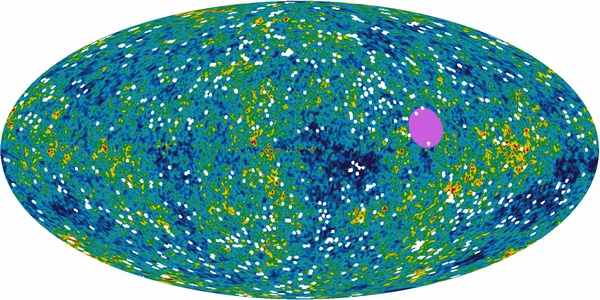
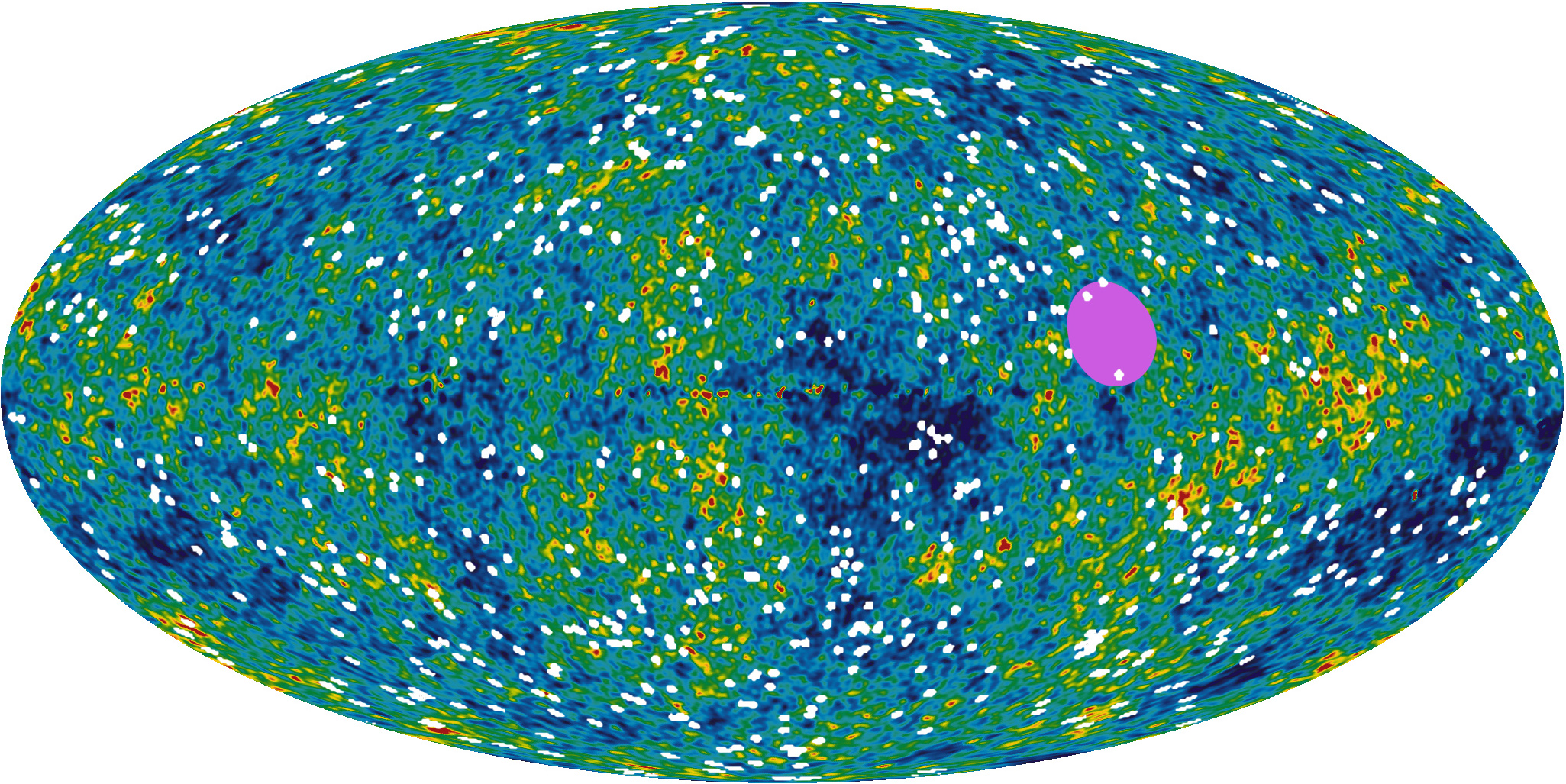
Using data from NASA's Wilkinson Microwave Anisotropy Probe (WMAP), scientists have identified an unexpected motion in distant galaxy clusters. The cause, they suggest, is the gravitational attraction of matter that lies beyond the observable universe.

"The clusters show a small but measurable velocity that is independent of the universe's expansion and does not change as distances increase," says lead researcher Alexander Kashlinsky at NASA's Goddard Space Flight Center in Greenbelt, Md. "We never expected to find anything like this."

Kashlinsky calls this collective motion a "dark flow" in the vein of more familiar cosmological mysteries: dark energy and dark matter. "The distribution of matter in the observed universe cannot account for this motion," he says.

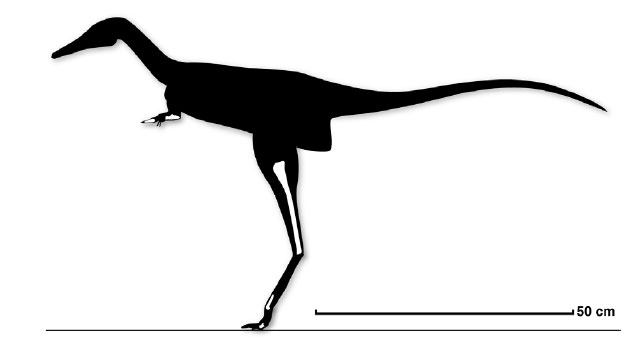
When you think of dinosaurs, you don't often think of critters the size of chickens that ran around the ancient forests of America gobbling up termites but that's just what the smallest dinosaur species found in North America was like, according to University of Calgary researcher Nick Longrich, who analyzed bones found during an excavation near Red Deer, Alberta.

Called Albertonykus borealis, the slender bird-like creature is a new member of the family Alvarezsauridae and is one of only a few such fossils found outside of South America and Asia. In a paper published in Cretaceous Research, Longrich and University of Alberta paleontologist Philip Currie describe the anteater-like specimen and explain how it likely specialized in consuming termites by using its small but powerful forelimbs to tear into logs.

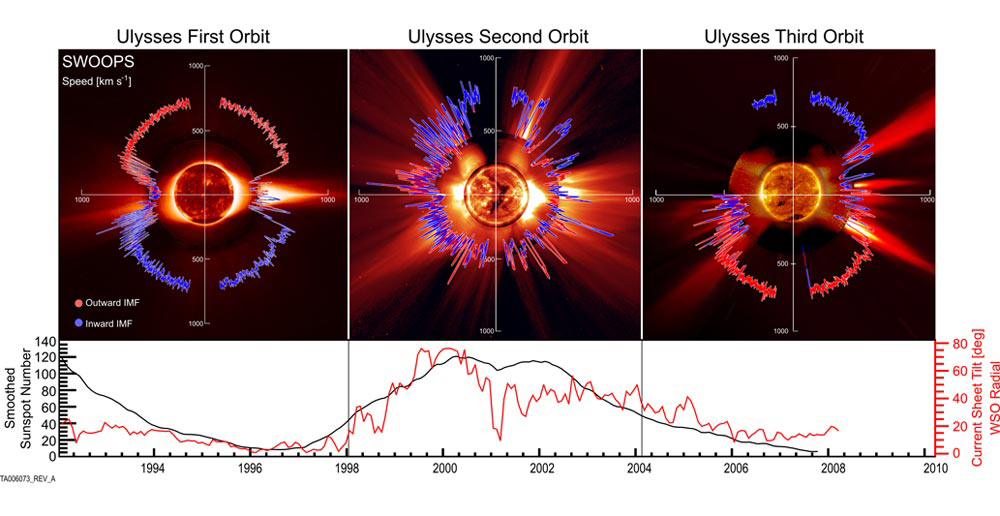
Data from the Ulysses mission show that the Sun has reduced its output of solar wind to the lowest levels since we've had readings and it could reduce the natural shielding that envelops our Solar System.

The Sun's solar wind plasma is a stream of charged particles that are ejected from the upper atmosphere of the Sun. The solar wind interacts with every planetary body in our Solar System. It even defines the border between our Solar System and interstellar space.

This border, called the heliopause, is a bubble-shaped boundary surrounding our Solar System where the solar wind's strength is no longer great enough to push back the wind originating from other stars. The region around the heliopause also acts as a shield for our Solar System, warding off a significant portion of the cosmic rays outside the galaxy.

The rise in atmospheric CO2 levels has been a talked-about subject for quite some time, but while scientists and politicians are coming to what they call a “solution,” the impact on marine environments is being ignored.

Proposed emission cuts are aiming to significantly lower the amount of CO2 produced within the United States, but what impact does this value have outside the human world? Scientists say that even the lowest proposed percentages aren’t nearly enough to halt oceanic damage.


CO2 is a soluble gas that is easily absorbed into the ocean’s waters. When CO2 is combined with H2O, the reaction releases what is known as Carbonic Acid, or H2C03. When the carbonic acid is dissolved, it loses a hydrogen ion resulting in HCO3, leaving the H+ ion to move freely. This process is known as ocean acidification and is ultimately responsible for the rise in seawater acidity.

Ghrelin is a peptide, produced mainly in the stomach but also found in the brain, that is known to affect food intake by increasing feelings of hunger and the urge to eat. A new study has examined ghrelin's role in other addictive behaviors and findings indicate that variations in the genes producing ghrelin and its receptor are more common in individuals considered heavy drinkers.

"Previous research had shown that ghrelin levels in blood plasma are altered in addictive behaviours such as alcohol dependence and compulsive overeating," said Jörgen Engel, professor of pharmacology at the Sahlgrenska Academy, University of Gothenburg. "It may be that common mechanisms in the brain underlie different forms of addictive behaviours, including compulsive overeating, pathological gambling and drug dependence."

