




Excavations at Kfar HaHoresh, in the north of Israel, led by Prof. Nigel Goring-Morris of Hebrew University's Institute of Archaeology, have revealed a prehistoric funerary precinct dating back to 6,750-8,500 BC. This funerary has grave goods including phallic figurines and sea shells from the Mediterranean and Red Seas, along with other items from Syria, Cyprus and Anatolia.

While fertility symbols during this period are often associated with female imagery, at Kfar HaHoresh only phallic figurines have been found to date, including one placed as a foundation deposit in the wall of the precinct.

Burials at the site now total at least 65 individuals, and display an unusual demographic profile – with an emphasis on young adult males. Graves occur under or associated with lime-plaster surfaced L-shaped walled structures, and are varied in nature from single articulated burials through multiple secondary burials with up to 17 individuals. Bones in one had been intentionally re-arranged in what appears to be a depiction.

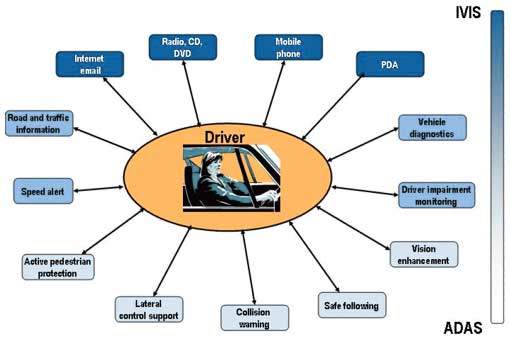
If you're someone who likes to buy the best component rather than enduring some average features of an all-in-one tool, driving can be a tricky prospect, manipulating GPS, cell phone, PDA and whatever else.

European researchers have come to the rescue by developing a special dashboard computer to act as a single conduit for all your gear. It should mean a better, more relaxed and even safer driving experience.

Dozens of research projects around Europe are working on new technologies to improve automotive safety and to develop intelligent vehicles. But all of these systems must then be added to the dozens of controls and user devices that are already found in a car. Current in-vehicle systems like open door and seat belt warnings will soon be joined by lane assistance, hazard detection and a host of other information and systems for safe and efficient driving.

The autistic disorder was first described, more than sixty years ago, by Dr. Leo Kanner of the Johns Hopkins Hospital (USA), who created the new label ´early infantile autism´. At the same time an Austrian scientist, Dr. Hans Asperger, described a milder form of the disorder that became known as Asperger Syndrome, characterised by higher cognitive abilities and more normal language function. Today, both disorders are classified in the continuum of ´Pervasive Developmental Disorders´ (PDD), more often referred to as Autism Spectrum Disorders (ASD).

The prevalence of (classic) autism in the general population is about 15-20 in 10,000, while all Autism Spectrum Disorders (ASD) affect about 60 in 10,000 children. Males are affected four times more often than females. In approximately 10% of cases, autism is associated with a recognized cause, such as Fragile X Syndrome, Tuberous Sclerosis or diverse chromosomal abnormalities (mean observed rates between 5-10%), but in a vast majority of cases, no known causes are associated with autism (see figure).

Researchers say that surface temperatures in the Northern Hemisphere were warmer over the last 10 years than any time during the last 1300 years.

If the controversial data derived from tree-ring records is considered accurate, the warming is anomalous for at least 1700 years.

The proxies used by the researchers included information from marine and lake sediment cores, ice cores, coral cores and tree rings.

A neuroimaging study in the Sept. 1 issue of the journal Sleep is the first to find that cognitive processes related to verbal fluency are compromised in people with insomnia despite the absence of a behavioral deficit. These specific brain function alterations can be reversed, however, through non-pharmacological treatment with sleep therapy.

Results of functional magnetic resonance imaging (fMRI) scanning during verbal fluency tasks show that people with insomnia have less activation than controls in the left medial prefrontal cortex and the left interior frontal gyrus, two fluency-specific brain regions. However, participants with insomnia generated more words than controls on both the category fluency task (46.4 words compared with 38.7 words) and the letter fluency task (40.1 words compared with 32.7 words).

Global warming data can be like the weather in Kentucky - if you don't like it, just wait a few minutes and it will change. So it goes with the impact of carbon stored in frozen permafrost. In a field beset with both grant-driven hype and irrational optimism, a new study says even the hype was not scary enough.

The study, by Edward A. G. Schuur of the University of Florida and an international team of coauthors, more than doubles previous estimates of the amount of carbon stored in the permafrost: the new figure is equivalent to twice the total amount of atmospheric carbon dioxide.

The thawing of permafrost in northern latitudes, which greatly increases microbial decomposition of carbon compounds in soil, will dominate other effects of warming in the region and could become a major force promoting the release of carbon dioxide and thus further warming, according to this new assessment in the September 2008 issue of BioScience. The authors conclude that releases of the gas from melting permafrost could amount to roughly half those resulting from global land-use change during this century.

Long procedures require long fluoroscopy times with a serious amount of radiation for physician and personnel. The idea is that both the performance of procedures can be improved by robotic navigation systems and that the amount of complications can be reduced.

At present two systems are extensively tested in cardiology: a robotic system that allows manipulating conventional catheters directly in the heart (Sensei, Hansen) and the Niobe (Stereotaxis) system that allows steering special magnetic catheters with the help of two large external magnets.

The experience with the robotic remote navigation system is limited but the published data suggests that transeptal puncture can be guided with the steerable sheath system and that pulmonary vein antra can be isolated and flutter can be done.

Men are more likely to die of heart disease compared with women of a similar age – and sex hormones are to blame, according to a new study.

The findings of a study by Dr. Maciej Tomaszewski, New Blood Lecturer in Cardiovascular Medicine in the Department of Cardiovascular Sciences at the University of Leicester, suggest that this "male disadvantage" may be related to the sex-specific effects of naturally occurring sex hormones.

The research in the journal Atherosclerosis involved 933 men aged, on average, 19 years, from the Young Men Cardiovascular Association study. The researchers looked at ways that the sex hormones - estradiol, estrone, testosterone and androstenedione - interacted with three major risk factors of heart disease (cholesterol, blood pressure and weight).

Tobacco companies have no restrictions or mandatory levels for some of the major carcinogens and toxicants in cigarettes. Tobacco manufacturers can, and do, add anything they want into their goods.

But other consumer products, even something like strawberry jam, is strictly regulated and labelled and required to pass stringent tests before it can be sold.

An editorial in Respirology called “Regulation of Consumer Products: The Bizarre Case of Strawberry Jam and Cigarettes” discusses the issues surrounding tobacco regulations and how the industry could be more effectively governed.

The widely-held perception that the influenza vaccination reduces overall mortality risk in the elderly does not withstand careful scrutiny, according to researchers in Alberta. The vaccine does confer protection against specific strains of influenza, but its overall benefit appears to have been exaggerated by a number of observational studies that found a very large reduction in all-cause mortality among elderly patients who had been vaccinated.

The study included more than 700 matched elderly subjects, half of whom had taken the vaccine and half of whom had not. After controlling for a wealth of variables that were largely not considered or simply not available in previous studies that reported the mortality benefit, the researchers concluded that any such benefit "if present at all, was very small and statistically non-significant and may simply be a healthy-user artifact that they were unable to identify."

Principal investigator Sumit Majumdar, M.D., M.P.H., associate professor in the Faculty of Medicine & Dentistry at the University of Alberta said the findings are a reminder to researchers that "the healthy-user effect is everywhere you don't want it to be."

