



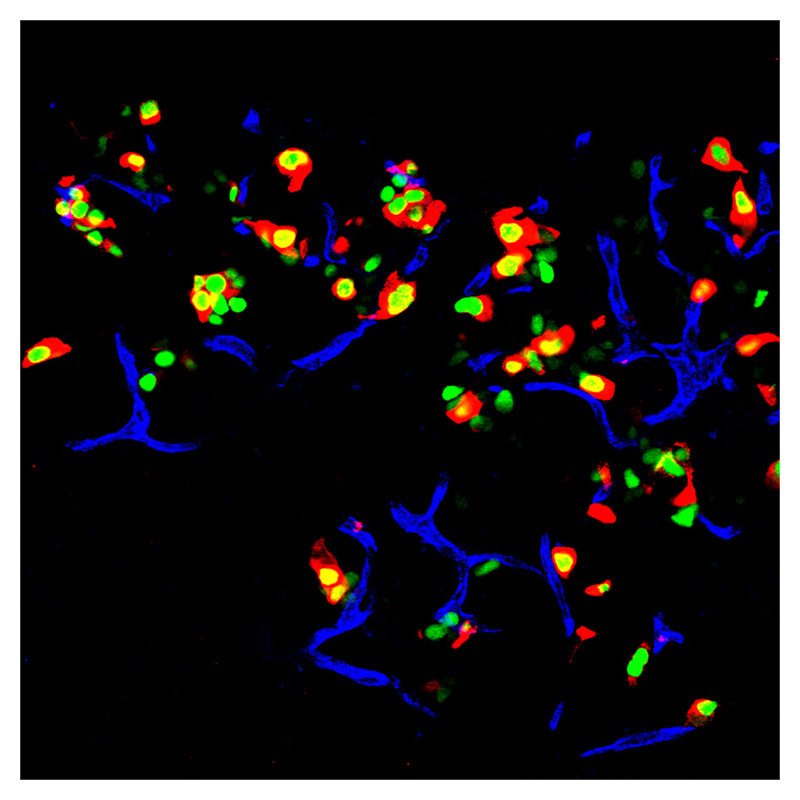


Radiation from the atomic bomb blasts in Hiroshima and Nagasaki, Japan, in 1945 likely rearranged chromosomes in some survivors who later developed papillary thyroid cancer as adults, according to Japanese researchers.

Writing in Cancer Research, the scientists report that subjects who lived close to the blast sites, were comparably young at the time, and developed the cancer quickly once they reached adulthood, were likely to have a chromosomal rearrangement known as RET/PTC that is not very frequent in adults who develop the disease.

Women with depression may be much more likely than men to get relief from a commonly used, inexpensive antidepressant drug called citalopram, available both as a generic drug and under the brand name Celexa, a new national study finds. But many members of both sexes may find that it helps ease their depression symptoms.

The persistence of a gender difference in response to the drug — even after the researchers accounted for many complicating factors — suggests that there's a real biological difference in the way the medication affects women compared with men. The reasons for that difference are still unclear, but further studies are now examining hormonal variations that may play a role.

Researchers from the University of Michigan Depression Center and their colleagues from around the country tested the drug's ability to help depression patients achieve remission, or total relief from their symptoms, in a multi-year study called STAR*D.

Mosquito traps that reek like latrines are so 2007, thanks to a University of California, Davis research team led by chemical ecologist Walter Leal that have discovered a low-cost, easy-to-prepare attractant that lures blood-fed mosquitoes without making humans hold their noses.

The synthetic mixture, containing compounds trimethylamine and nonanal in low doses, is just as enticing to Culex mosquitoes as the current attractants, Leal said, but this one is odorless to humans.

The research could play a key role in surveillance and control programs for Culex species, which transmit such diseases as West Nile virus, encephalitis and lymphatic filariasis.

Andrew Scholey, Ph.D., professor of Behavioral and Brain Sciences, Swinburne University in Melbourne, Australia has led a research study on the effects of chewing gum on stress relief and focus and concentration. The study found that chewing gum helped relieve anxiety, improve alertness and reduce stress among individuals in a laboratory setting.

The study examined whether chewing gum is capable of reducing induced anxiety and/or acute psychological stress while participants performed a battery of 'multi-tasking' activities. The use of chewing gum was associated with higher alertness, reduced anxiety and stress, and improvement in overall performance on multi-tasking activities.

It has long been a dream of developmental biologists to easily reprogram one type of fully formed adult cell into another type of adult cell without using stem cells. By reprogramming cells, you might be able to treat many diseases where certain cells are lost or damaged, like diabetes or Parkinson's. Now, a truly exciting new study from the Harvard Stem Cell Institute (HSCI) is making that dream become reality. In a brand new study published in the journal Nature, Harvard Stem Cell Institute (HSCI) co-director Doug Melton and post doctoral fellow Qiao "Joe" Zhou report having taken one type of fully differentiated cell, called an exocrine cell (it makes gut enzymes and is involved in digesting food), and converting it into an entirely different cell using certain kinds of genes called transcription factors (a gene that encodes proteins that turn 'on' or 'off' other sets of genes). In many ways, their different kind cell is a much more useful kind of cell. The amazing thing? They didn't use stem cells.

 It sounds like a sales job from a 12 year old; "Actually, Dad, this is not just another video game. Its a virtual, scenario-based microcosm of real world experiences that will enhance my decision-making abilities and my cognitive perceptions of the challenges of the sport's environment." 

You respond with, "So, how much is Madden 09?"

  With over 5 million copies of Madden 08 sold, the release of the latest version two weeks ago is rocketing up the charts.  Days and late nights are being spent all over the world creating rosters, customizing plays and playing entire seasons, all for pure entertainment purposes.

  Can all of those hours spent with controller in hands actually be beneficial to young athletes?  Shouldn't they be outside in the fresh air and sunshine playing real sports?  Well, yes, to both questions.

On August 26th, a group of LHC critics filed a suit against CERN in the European Court of Human Rights, in Strasbourg . The authors of the suit are physicists, professors and students largely from Germany and Austria, who feel that the operation of the $10 billion Large Hadron Collider near Geneva, poses grave risks for the safety and well-being of the 27 member states of the European Union and their citizens. The Rule of Law, the suit states, is also threatened. The legal arguments that define the legitimacy of the suit have been crafted in German by a Professor of International Law, Adrian Hollaender.

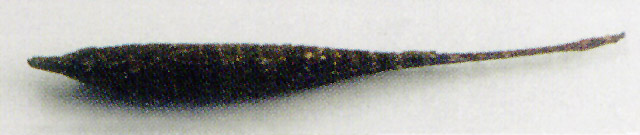
Shedding some genetically induced excess baggage may have helped the tiny Indostomus paradoxus fish thrive in freshwater and outsize its marine ancestors, according to a University of British Columbia study published in Science Express.

Measuring three to 10 centimetres long, stickleback fish originated in the ocean but began populating freshwater lakes and streams following the last ice age. Over the past 20,000 years - a relatively short time span in evolutionary terms - freshwater sticklebacks have lost their bony lateral plates, or "armour," in these new environments.

"Scientists have identified a mutant form of a gene, or allele, that prohibits the growth of armour," says UBC Zoology PhD candidate Rowan Barrett. Found in fewer than one per cent of marine sticklebacks, this allele is very common in freshwater populations.

All drugs used to treat psychosis are linked to an increased risk of stroke, and dementia sufferers are at double the risk, according to a study published on bmj.com today.

Previous research has shown that second generation (atypical) antipsychotic drugs can increase the chances of patients having a stroke. But the risk of stroke associated with first generation (typical) antipsychotics, and whether the risk differs in people with and without dementia, is not known.

Concerns about an increased risk of stroke among people taking atypical antipsychotic drugs were first raised in 2002, particularly in people with dementia. In 2004, the UK's Committee on Safety of Medicines recommended that these drugs should not be used in people with dementia, despite a lack of clear evidence.

There are no lost cities containing aliens and otherworldly technology but ancient settlements in the Amazon, now almost entirely obscured by tropical forest, were once large and complex enough to be considered "urban" as the term is commonly applied to both medieval European and ancient Greek communities, according to a paper in Science authored by anthropologists from the University of Florida and Brazil, and a member of the Kuikuro, an indigenous Amazonian people who are the descendants of the settlements' original inhabitants.

The paper also argues that the size and scale of the settlements in the southern Amazon in North Central Brazil means that what many scientists have considered virgin tropical forests are in fact heavily influenced by historic human activity. Not only that, but the settlements – consisting of networks of walled towns and smaller villages, each organized around a central plaza – suggest future solutions for supporting the indigenous population in Brazil's state of Mato Grosso and other regions of the Amazon, the paper says.


