



The hereditary disease ponto cerebellar hypoplasia (PCH) occurs when certain areas of the brain do not develop properly; this results in severe mental and physical developmental disorders. Life expectancy of those affected ranges from a few months to a few years.

Scientists from Cologne and Amsterdam have discovered the mutations in human genetics which cause PCH of the types 2 and 4.

“In the case of PCH, the protein complex – the so-called tRNA-Splicing-Endonuclease, is mutated. This complex in involved in the manufacture of proteins in the human body and was identified in connection with a disease for the first time,” reports Birgit Budde from the Cologne Center for Genomics and Institute for Genetics of the University of Cologne.

Researchers report the discovery of the first new living species of giant clam in two decades, according to a report in Current Biology. While fossil evidence reveals that the new species, called Tridacna costata, once accounted for more than 80 percent of giant clams in the Red Sea, it now represents less than one percent of giant clams living there.

The researchers said they cannot say for sure which factors contributed to the loss of this giant clam species in favor of others, but the overall decline in giant clam stocks and the striking loss of large specimens is a "smoking gun" for overharvesting by humans many thousands of years ago, said Claudio Richter of the Alfred-Wegener-Institute for Polar and Marine Research in Germany. The new species appears to live only in the shallowest waters, making it particularly vulnerable to overfishing.

Scientific happenings, big and small, on this day in history

But first, today’s quiz:

The answer may seem obvious, but don’t be fooled – it’s not what you think. On this day in 1886, the first earthquake on record with significant human consequence (over 100 deaths) took place. In what U.S. state did it occur? Just to confirm, it’s NOT California. You can discover the answer at the end of this article.

Now on to other events:

Another piece of the jigsaw in understanding how neutron stars work has been put in place following the discovery by scientists of the origin of the high energy emission from rotation-powered pulsars.

Pulsar systems containing neutron stars accelerate particles to immense energies, typically one hundred times more than the most powerful accelerators on Earth. Scientists are still uncertain exactly how these systems work and where the particles are accelerated.

Now a team of researchers from the UK and Italy, led by Professor Tony Dean of the University of Southampton, has detected polarized gamma-ray emission from the vicinity of the Crab Nebula - one of the most dramatic sights in deep space. By using spectroscopic imaging and measuring the polarization - or the alignment - of the waves of high energy radiation in the gamma-ray band, they have shown that these energetic photons originate close to the pulsar.

If you live in Melbourne, Australia or even Sydney and are concerned that climate change will make your great cities ripe for a cane toad invasion, fear no more.

Yes, that is one of the many doomsday scenarios out there about climate change, but according to research recently published in Ecography by Dr Michael Kearney from the University of Melbourne and collaborators from Australia and the USA, the cane toad’s march will grind to a halt once it is physically too cold for the toads to hop.

Don't be too disappointed. There is still a chance that the LHC will doom the world, likely in December 2012, but it will not be cane toads coming out of black holes to subjugate us, it will be Mayans.

Worldwide, there are between 50 and 70 volcanoes that erupt each year but due to the long gaps between eruptions it is difficult to pin down what triggers volcano behavior.

A team from Durham University and the University of Leeds, studied crystal formations from a volcano in Santorini, Greece, to calculate the timescale between the trigger of volcanic activity and the volcano’s eruption.

These crystals from the lava were able to tell them about the triggers for the volcano, they say, and could help civil defense agencies better prepare in the future.

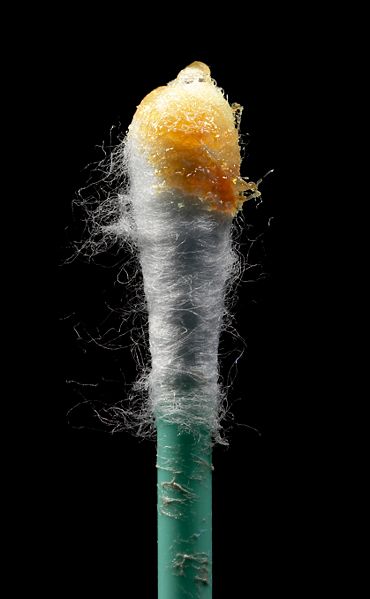
If you use Q-Tips to clean your ears, you may want to read this. And if you use a water pick to clean your ears, you may want to read this too (yes, some people actually use a dental water pick to clean their ears). The guidelines, which will appear as a supplement to the September 2008 issue of Otolaryngology–Head and Neck Surgery, are the first comprehensive clinical guidelines to help health care practitioners identify patients with cerumen impaction. Who knew earwax could be so interesting? But it's still gross.
It’s been known for quite some time that Fido and Spot can lower levels of stress in their owners. Studies by Karen Allen, a professor in neurology at the University of Buffalo, have shown that “the presence of a pet dog can diminish stress responses to real-life daily stress over which caregivers have no control.” Owning a pet dog can lower blood pressure, can play a therapeutic role in confronting disability or injury, and can actually lower stress even more than your BFF—unless, of course, that BFF is also a dog. Now, research that will be presented in Tokyo on August 30th at the International Congress of Behavioral Medicine shows that chewing gum may also help to reduce stress.

"If gum is good, and dogs are good...what if I let my DOG chew GUM!"


If Leopold de Rothschild, Sir Winston Churchill, or the 5th Earl of Lonsdale were alive today their supreme goal would be to eliminate stress from the world with a nice smoke.

At the Tobacco Republic, in Loomis, California, such a place exists.

In this sort of separate universe where the motto is "Every cigar is like a mini vacation," one of the owners, Ron, tells the story of his first experience with cigars, in his usual calm demeanor, which can be fittingly compared to the alluring effect of cigar smoke.

Engineers at Georgia Tech have used skin cells to create artificial bones that mimic the ability of natural bone to blend into other tissues such as tendons or ligaments. The artificial bones display a gradual change from bone to softer tissue rather than the sudden shift of previously developed artificial tissue, providing better integration with the body and allowing them to handle weight more successfully.

"One of the biggest challenges in regenerative medicine is to have a graded continuous interface, because anatomically that's how the majority of tissues appear and there are studies that strongly suggest that the graded interface provides better integration and load transfer," said Andres Garcia, professor in the George W. Woodruff School of Mechanical Engineering at the Georgia Institute of Technology.


