As if things weren’t tough enough for premature babies who have tubes down their throats and noses to survive, once the tubes are removed, they are often unable to take nourishment orally — that is, suck.

But 20 tube-fed preterm infants with respiratory distress syndrome treated with the NTrainer, a therapeutic device patented by the University of Kansas, rapidly learned to suck far better and transitioned to oral feeding faster than a control group of babies with the syndrome.

Respiratory distress syndrome, also known as hyaline membrane disease, is a common condition of prematurity, particularly in the youngest infants, because babies’ lungs are too immature to survive outside the womb without the help of a ventilator and/or oxygen. Overall, it is the seventh leading cause of death among infants younger than one year, fifth for African-American and third for Hispanic infants.

Researchers from the National Institute of Standards and Technology (NIST) and Seoul National University (SNU) have learned how to tweak a new class of polymer-based semiconductors to better control the location and alignment of the components of the blend.

Their recent results—how to move the top to the bottom—could enable the design of practical, large-scale manufacturing techniques for a wide range of printable, flexible electronic displays and other devices.

Organic semiconductors—novel carbon-based molecules that have similar electrical properties to more conventional semiconducting materials like silicon and germanium—are a hot research topic because practical, high-performance organic semiconductors would open up whole new categories of futuristic electronic devices. Think of tabloid-sized “digital paper” that you could fold up into your pocket or huge sheets of photovoltaic cells that are dirt cheap because they’re manufactured by—basically—ink-jet printing.

The largest study ever conducted of DNA evidence extracted from long-dead woolly mammoths points to a rockier past for the iconic Ice Age giants than many had suspected. The last mammoths left in Siberia 50,000 to 5,000 years ago weren't natives, they report in the September 4th Current Biology. Rather, they were North Americans that had migrated in and replaced the dwindling Siberian populations.

In the new study, the researchers analyzed mitochondrial DNA from 160 mammoth samples from across Holarctica (a region encompassing present day North America, Europe and Asia), representing most of radiocarbon time.

Down Syndrome (DS) belongs to the group of conditions called 'aneuploidies', defined by an abnormal loss or gain of genetic material, i.e. fragments of chromosomes or whole chromosomes. Aneuploidies cause congenital anomalies that are a prime cause of infant death in Europe and the USA, and are currently on the increase with advancing maternal age in European countries. The number of people with DS in Europe exceeds half a million.

The condition is more common than muscular dystrophy and cystic fibrosis, but the development of new therapeutic concepts is hindered by the fact that unlike muscular dystrophy and cystic fibrosis, where a single mutated gene causing the disease is known, the entire human chromosome 21 (containing around 300 genes) still has to be dissected into individual gene-dose contributions to the DS symptoms.

Scientists investigating the mechanisms of Down Syndrome have revealed the earliest developmental changes in embryonic stem cells caused by an extra copy of human chromosome 21 – the aberrant inheritance of which results in the condition. Their study is published in the American Journal of Human Genetics.

Astronomers have taken the closest look ever at the giant black hole in the center of the Milky Way. By combining telescopes in Hawaii, Arizona, and California, they detected structure at a tiny angular scale of 37 micro-arcseconds - the equivalent of a baseball seen on the surface of the moon, 240,000 miles distant. These observations are among the highest resolution ever done in astronomy.

Using a technique called Very Long Baseline Interferometry (VLBI), a team of astronomers led by Doeleman employed an array of telescopes to study radio waves coming from the object known as Sagittarius A* (A-star). In VLBI, signals from multiple telescopes are combined to create the equivalent of a single giant telescope, as large as the separation between the facilities. As a result, VLBI yields exquisitely sharp resolution.

The Sgr A* radio emission, at a wavelength of 1.3 mm, escapes the galactic center more easily than emissions at longer wavelengths, which tend to suffer from interstellar scattering. Such scattering acts like fog around a streetlamp, both dimming the light and blurring details. VLBI is ordinarily limited to wavelengths of 3.5 mm and longer; however, using innovative instrumentation and analysis techniques, the team was able to tease out this remarkable result from 1.3-mm VLBI data.

If you are on vacation in the Mediterranean basin and happen upon a person gnawing on a pine tree, fear not – the person is likely treating one of a myriad of inflammatory symptoms. While Western medicine tends to eschew traditional or “natural” therapies, the alternative movement is winning more and more converts as people seek to reduce health care costs and invest in a more organic lifestyle. The latest example of non-traditional medication comes to us from the lovely western Mediterranean, home to the Pinus pinaster , more commonly known as the maritime pine.
In a commentary released today in the September 3rd issue of the medical journal JAMA, Dr. Arnold Relman, Professor of Medicine Emeritus at Harvard and former editor of the New England Journal of Medicine, takes on the issue of industry support of medical education once again, and offers his suggestions for ending the medical profession's dependence on industry support. Should pharmaceutical companies be allowed to fund medical education? Should they be allowed to give doctors gifts? Should they even be allowed to pick up the tab for lunch? No, no, and no, says Dr. Relman, adding that if “busy physicians believe that detailing visits by industry representatives are worth their time and want them to continue, let them at least not accept the gifts, food, and other favors from industry, which make it appear as if physicians’ interest and brand loyalty are being purchased.”

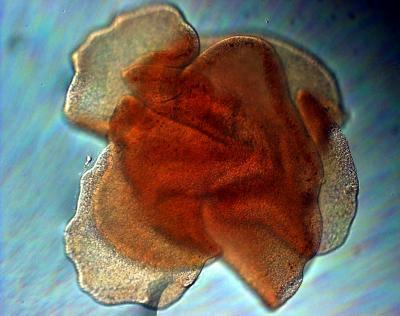
Yale molecular and evolutionary biologists in collaboration with Department of Energy scientists produced the full genome sequence of Trichoplax, one of nature's most primitive multicellular organisms, providing a new insight into the evolution of all higher animals.

The findings reported in Nature show that while Trichoplax has one of the smallest nuclear genomes found in a multi-cellular creature, it contains signature sequences for gene regulation found in more complex animals and humans. Further, it defines Trichoplax as a branching point of animal evolution.

A new study has found that mothers who delivered vaginally compared to caesarean section delivery (CSD) were significantly more responsive to the cry of their own baby, identified through MRI brain scans two to four weeks after delivery.

The results of the study in The Journal of Child Psychology and Psychiatry suggest that vaginal delivery (VD) mothers are more sensitive to own baby-cry in the regions of the brain that are believed to regulate emotions, motivation and habitual behaviors.

When asked if he felt bad killing the hundreds of oysters he serves daily at the popular Brophy Brothers Seafood Restaurant in Santa Barbara 28 year-old Andy Vogel, an employee for ten years, said the thought hadn't crossed his mind.

Oysters are not just something made into a shooter and served at a bar. Scientifically they can change sexes multiple times during their life, historically they have been consumed since prehistoric times, commercially they produce a tiny and valuable thing called a pearl and nutritionally they are one of the healthiest foods around.

In the beginning of his career at Brophy Brothers Vogel said acquiring various nicks and cuts while learning how to shuck an oyster was common. Luckily, he has never been injured badly which is good since the hundreds of oysters sold daily are lucrative.