



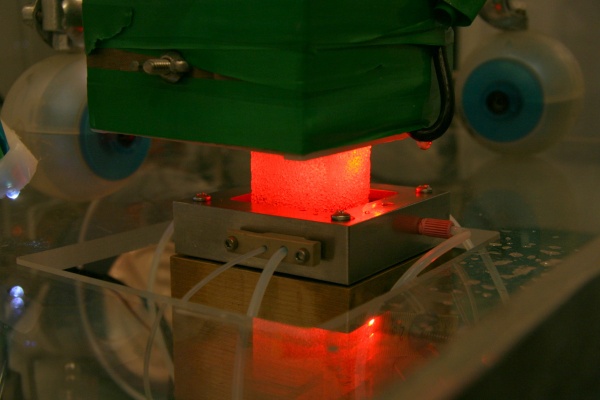




Scientists and consumers have known for years that grapefruit juice can increase the absorption of certain drugs — with the potential for turning normal doses into toxic overdoses. Now, the researcher who first identified this interaction is reporting new evidence that grapefruit and other common fruit juices, including orange and apple, can do the opposite effect by substantially decreasing the absorption of other drugs, potentially wiping out their beneficial effects.

The study provides a new reason to avoid drinking grapefruit juice and these other juices when taking certain drugs, including some that are prescribed for fighting life-threatening conditions such as heart disease, cancer, organ-transplant rejection, and infection, the researcher says. These findings — representing the first controlled human studies of this type of drug-lowering interaction — were described today at the 236th National Meeting of the American Chemical Society.

People with epilepsy appear to have a much higher risk of drowning compared to people without epilepsy, according to a study published in the August 19, 2008, issue of Neurology.

Previous studies have shown a higher risk most likely due to seizures but this study is one of the first to show exactly how high the risk may be.

For the study, researchers compiled information from 50 studies of people with epilepsy worldwide that followed the participants for a total of more than 200,000 patient-years. They also looked at population data and national registries to determine how many regular drowning deaths occur. A total of 88 people with epilepsy died by drowning. By comparison, 4.7 deaths by drowning would have been expected if the rates in the general population applied.

Sugar-frosting isn’t just for livening up corn flakes; it can also preserve important therapeutic proteins. Researchers at the National Institute of Standards and Technology (NIST) have developed a fast, inexpensive and effective method for evaluating the sugars pharmaceutical companies use to stabilize protein-drugs for storage at room temperature, according to their presentation(1) at the 236th American Chemical Society National Meeting and Exposition.

Protein-based drugs such as insulin and vaccines must be stabilized after manufacturing in order to be used safely. For the past 30 years, researchers have been preserving therapeutic proteins by freeze-drying them and coating them with a thin layer of various formulations of glass-like sugars that act to stabilize their molecular structures. This allows them to be safely stored for extended periods of time.

A $2500 bottle of Château Latour wine that scored a 98 on the Wine Spectator point scale is not for amateurs. The sobering business of the high end wine trade involves scientists on a variety of different levels. One big problem is that wine—especially superb wine—goes bad. A chemist at U.C. Davis has found a way to tell if a bottle is fit for the Queen of England, or for the Queen of Wishful Thinking.

In the basement of the chemistry building at U.C. Davis, associate professor Matthew Augustine works with a unique nuclear magnetic resonance device of which there are only two in the U.S. Besides being able to do things like locating liquid explosives in sealed containers such as turpentine and nitro glycerin, Augustine has used the NMR to test the quality of wine.

As I was sitting patiently in Long Beach waiting to exit the plane and listening to that weird sawing sound that I hear every time I fly on an Airbus A320, I was wondering two things:

1) Why does it sound like Paul Bunyon is attacking my plane with a drywall saw, and

2) Who is going to be the first person to make some stupid joke, like “Oh no, Paul Bunyon is attacking our plane with a drywall saw!” Would it be the young woman to my right in 20D — we’ll call her “Cathy” — with whom I was fiercely trying not to make eye contact for the duration of the flight, for fear that I would be not only subjected to the inordinate flow of words streaming from her mouth, but also socially obliged to smile and nod at the relevant pauses in her soliloquy?

New research, reported this week in the online early edition of the Proceedings of the National Academy of Sciences, finds that coal burning, primarily in North America and Europe, contaminated the Arctic and potentially affected human health and ecosystems in and around Earth's polar regions.

The study, titled "Coal Burning Leaves Toxic Heavy Metal Legacy in the Arctic," was conducted by the Desert Research Institute (DRI), Reno, Nev. and partially funded by the National Science Foundation.

Detailed measurements from a Greenland ice core showed pollutants from burning coal--the toxic heavy metals cadmium, thallium and lead--were much higher than expected. The catch, however, was the pollutants weren't higher at the times when researchers expected peaks.

Fast memory chips such as DRAMs and SRAMs (Dynamic and Static Random Access Memory) commonly used today have one decisive disadvantage: in case of power interruption, they lose their stored information. This problem could be solved by magnetic memory chips called MRAMs (Magnetic Random Access Memory). In MRAM the digital information is not stored by means of electric charge but by means of the orientation of the magnetization of a magnetic cell.

An experiment carried out at the Physikalisch-Technische Bundesanstalt (PTB) has realized spin torque switching of a nanomagnet as fast as the fundamental speed limit allows. Using this so-called ballistic switching future non-volatile magnetic memories could operate as fast as the fastest non-volatile memories. The experiments are described in the next issue of Physical Review Letters (22 August, 2008).

Self-recognition, it has been argued, is a hallmark of advanced cognitive abilities in animals. It was previously thought that only the usual suspects of higher cognition—some great apes, dolphins, and elephants—were able to recognize their own bodies in a mirror. In a PLoS Biology article, psychologist Helmut Prior and colleagues show evidence of self-recognition in magpies — a species with a brain structure very different from mammals.

The researchers subjected the magpies to a mark test, wherein a mark is placed on the subject's body in such a way that it can only be seen in a mirror. When the magpies engaged in activity that was directed towards the mark (e.g. scratching at it), the researchers were able to conclude that these birds recognized the image in the mirror as themselves, and not another animal.

Cells obtained from menstrual blood, termed 'endometrial regenerative cells' (ERCs), are capable of restoring blood flow in an animal model of advanced peripheral artery disease, according to a study published today in Journal of Translational Medicine. When circulation-blocked mice were treated with ERC injections, circulation and functionality were restored.

Critical limb ischemia, an advanced form of peripheral artery disease, causes approximately 150,000 amputations per year in the US. Currently there are no medical or surgical interventions that are effective in the advanced stages of the disease. ERCs are cells taken from menstrual blood that are capable of forming into at least 9 different tissue types, including heart, liver and lung. Their discovery won the 'Medicine Research Award of the Year' award for BioMed Central's Research Awards in 2007.

Knowing the words for numbers is not necessary to be able to count, according to a new study of aboriginal children by UCL (University College London) and the University of Melbourne. The study of the aboriginal children from two communities which do not have words or gestures for numbers found that they were able to copy and perform number-related tasks.

The findings suggest that we possess an innate mechanism for counting, which may develop differently in children with dyscalculia, a lessor-known learning disability that affects mathatical calculations.

