







Sweet, sour, salty, bitter, and savory were the five taste sensations you probably learned in school but a group of chemists in Philadelphia say a new one should be added — "calcium."

In a report today at the 236th National Meeting of the American Chemical Society, scientist Michael G. Tordoff, Ph.D., and colleagues with the Monell Chemical Senses Center in Philadelphia described research they say demonstrates that a taste for calcium exists in mice. With mice and humans sharing many of the same genes, the findings suggest that people also may have such a taste, which could have a range of practical applications.

University of Texas Medical School Assistant Professor C.S. Raman and colleagues say they have been able to manipulate flavor enzymes found in a popular plant model, Arabidopsis thaliana, by genetic means. The enzymes—allene oxide synthase (AOS) and hydroperoxide lyase (HPL)—produce jasmonate (responsible for the unique scent of jasmine flowers) and green leaf volatiles (GLV) respectively. GLVs confer characteristic aromas to fruits and vegetables.

That means not only that you could soon be enjoying a lemony watermelon or a strawberry-flavored banana but that fine tuning those flavor enzymes in fruits and vegetables could lead to environmentally-friendly pest control.

The structure of gold nanoparticles has been largely unknown for over a decade. A current study helps to understand the stability, composition as well as electronic, chemical and optical properties of the particles.

The research group, led by Professor Hannu Häkkinen of the Nanoscience Centre of the University of Jyväskylä, says the results of the study can be utilized in medicine, biomolecule research and nanoelectronics. With the help of gold nanoparticles it is, for instance, possible to destroy cancer cells.

The particles are able to attach themselves to cancer cells due to a biologically compatible molecular overlayer. With the help of laser it is possible to heat the particles so much that the attached cancer cells die. Particles can also be used as a tracer when looking at biomolecules with an electron microscope. Nanoelectronics, for its part, can use gold nanoparticles as components in electrical circuits.

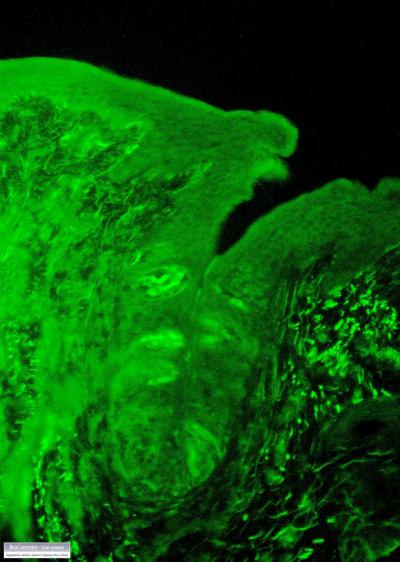
Our skin has an 'odor profile' and that knowledge may open doors to early and noninvasive skin cancer detection and diagnosis, say researchers at the Monell Center, who used odors from skin to identify basal cell carcinoma, the most common form of skin cancer.

Human skin produces numerous airborne chemical molecules known as volatile organic compounds, or VOCs, many of which are odorous. In the study presented at the ACS, the researchers obtained VOC profiles from basal cell carcinoma sites in 11 patients and compared them to profiles from similar skin sites in 11 healthy controls.

The researchers sampled air above basal cell tumors and found a different profile of chemical compounds compared to skin located at the same sites in healthy control subjects.

Rabies, an infection of the nervous system, transmitted by animal bites, causes over 50,000 deaths each year around the world.

A new Chinese study has reported a dramatic spike in rabies infections. The research in BMC Infectious Diseases shows that in some provinces of China the number of human rabies cases has jumped dramatically since the new millennium.

Jia-Hai Lu, from the School of Public Health at Sun Yat-Sen University, China, led a team of researchers who studied the rabies trend in China between 1990 and 2007. Lu describes how things have changed in the last eight years “In China, human rabies was largely under control during the years 1990-1996, via nation-wide rabies vaccination programs. Since the end of the century, however, cases of human rabies have jumped high enough to trigger a warning sign for control and prevention.”

A study by researchers at the Joslin Diabetes Center has shown that a protein known for its role in inducing bone growth can also help promote the development of brown fat, a "good" fat that helps in the expenditure of energy and plays a role in fighting obesity.

Obesity is a major risk factor for type 2 diabetes and is closely linked to the metabolic syndrome, a collection of medical problems associated with insulin resistance that can lead to an increased risk of atherosclerosis, the buildup of plaque in coronary arteries that leads to heart attack and stroke.

Life has had billions of years to evolve defences against free radicals, reactive oxygen compounds and other physical and chemical assaults that can damage cell components, including our genetic material, DNA. Those same, powerful defense mechanisms protect us from low levels of ionizing radiation - from the cosmic rays that strike the earth surface to the radioactive particles continually released from the earth's crust into the air around us.

Yet today the words 'radiation' and 'radioactivity' cause unwarranted fear, argues Zbigniew Jaworowski of the Central Laboratory for Radiological Protection in Warsaw, Poland.

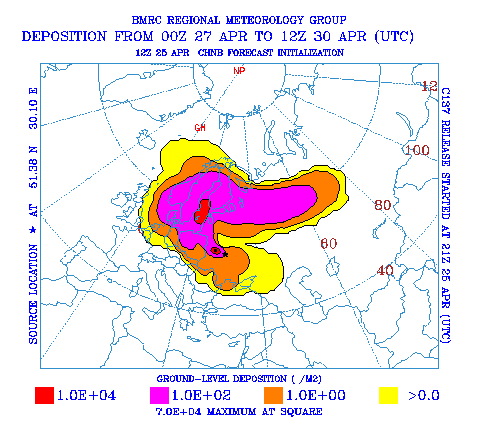
Writing in the current issue of the International Journal of Low Radiation from Inderscience publishers, he suggests that because life evolved alongside ionizing radiation, we can cope far better with low doses of radioactivity than is often thought. He says that changing our perspective on radiation could reduce the costs to society of the precautionary principle adopted in the aftermath of the Chernobyl incident.

The field of particle physics is poised to enter unknown territory with the startup of a massive new accelerator--the Large Hadron Collider (LHC)--in Europe this summer. On September 10, LHC scientists will attempt to send the first beam of protons speeding around the accelerator.

The LHC will put hotly debated theories to the test as it generates new experimental data. Potential breakthroughs include an explanation of what gives mass to fundamental particles and identification of the mysterious dark matter that makes up most of the mass in the universe. More exotic possibilities include evidence for new forces of nature or hidden extra dimensions of space and time.

The scale of the LHC is gigantic in every respect--its physical size, the energies attained, the amount of data it will generate, and the size of the international collaboration involved in its planning, construction, and operation. In September, high-energy beams of protons will begin circulating around the LHC's 27-kilometer (16.8-mile) accelerator ring located 100 meters (328 feet) underground at CERN, the European particle physics lab based in Geneva, Switzerland. After a period of testing, the beams will cross paths inside the detectors and the first collisions will take place.

Use of embedded software in electronics devices is growing even faster than advances in electronics themselves. Yet human capabilities for producing software have not increased in Europe over the past decade.

“The amount of software is growing very rapidly and it is increasingly difficult to find the people and resources necessary to develop it all,” explains Dr Pekka Abrahamsson of project coordinator VTT Technical Research Centre in Finland. “As a result, Europe is seeing a lot of development work transferring to India and other countries. An additional problem lies in the speed of development as it is necessary to get solutions to market in optimum time and with sufficient reliability that it works properly.”

Results of the EUREKA ITEA software Cluster AGILE project make it possible for European manufacturers to develop high quality embedded software in markedly shorter times and at much lower costs than possible with traditional techniques. Applying the approach to 68 pilot case studies in industries from avionics and telecommunications to consumer electronics, the project demonstrated clearly that ‘agile’ methodology can lead to massive improvements in embedded software engineering. Suitable tooling was also demonstrated to simplify application of the agile approach. As a result, much more software development can be carried out cost effectively in Europe rather than being outsourced to Asia.

On the 17th of June 2008, The Richard Green Library, a collection of rare scientific books was put up for bid by Christi’s Auction House.

Of the 289 lots sold totaling $11,019,688 the most notable was De revolutionibus orbium coelestium libri V, 1543 (On the Revolutions of the Celestial Spheres), the seminal work, by Nicolaus Copernicus, in which he explained his theory of heliocentricity.

The book, which is often referenced as the beginning of modern astronomy was sold for $2,210,500, the most expensive of the lot.

