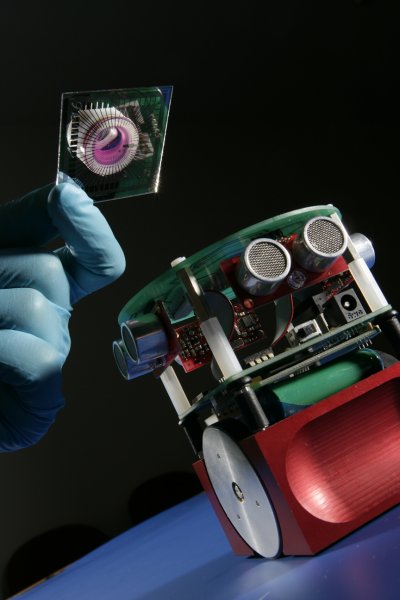
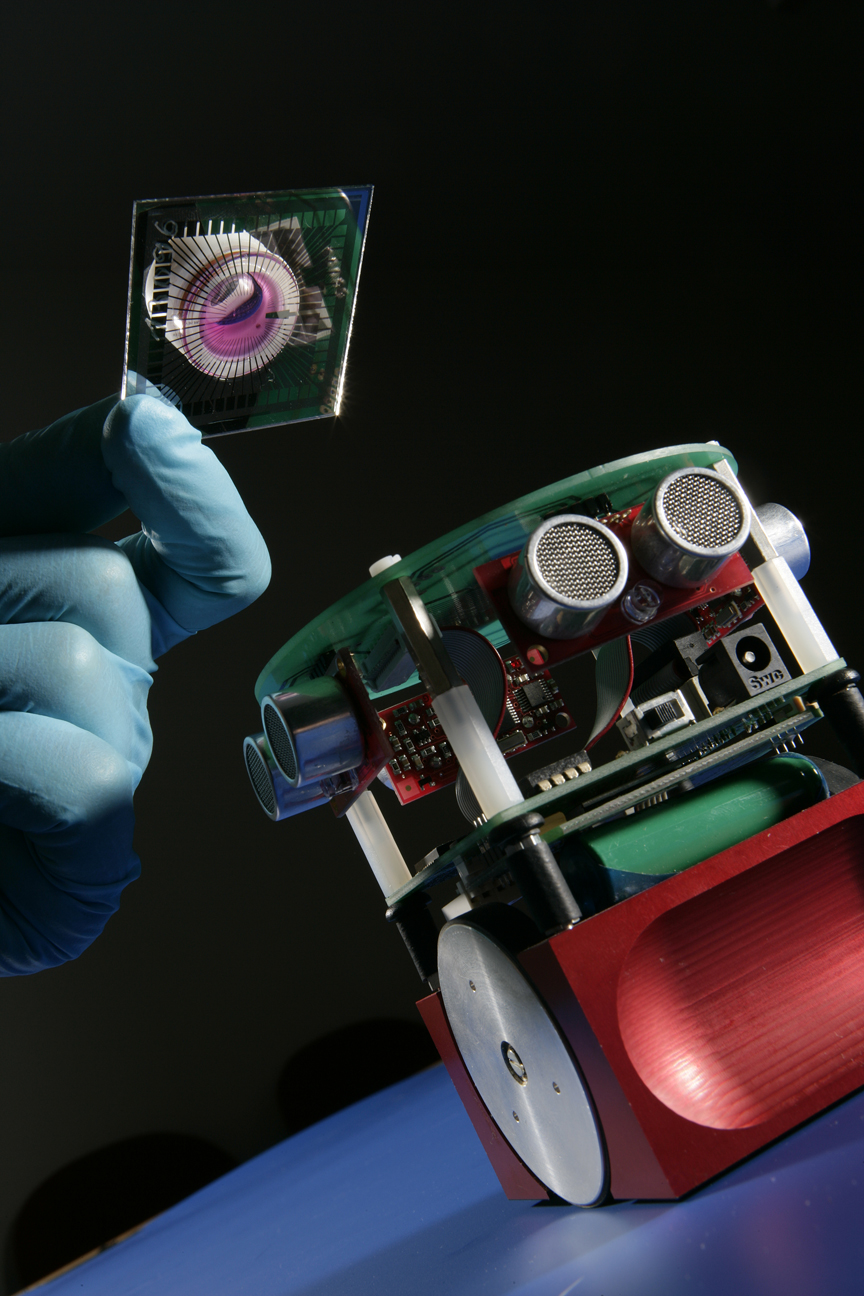






A multidisciplinary team at the University of Reading has developed a robot which is controlled by a biological brain formed from cultured neurons. This cutting edge research is the first step to examine how memories manifest themselves in the brain, and how a brain stores specific pieces of data.

The key aim is that eventually this will lead to a better understanding of development and of diseases and disorders which affect the brain such as Alzheimer's Disease, Parkinson’s Disease, stoke and brain injury.

The robot’s biological brain is made up of cultured neurons which are placed onto a multi electrode array (MEA). The MEA is a dish with approximately 60 electrodes which pick up the electrical signals generated by the cells. This is then used to drive the movement of the robot.

U.S. and Swiss scientists have made a breakthrough in understanding how a type of white blood cell called the eosinophil may help the body to fight bacterial infections in the digestive tract, according to research published online this week in Nature Medicine.

Hans-Uwe Simon, from the University of Bern, Switzerland, Gerald J.Gleich, M.D., from the University of Utah School of Medicine, and their colleagues discovered that bacteria can activate eosinophils to release mitochondrial DNA in a catapult-like fashion to create a net that captures and kills bacteria.

Biofuels are a bad word these days, due to the fact that everyone from Al Gore to George Bush thought ethanol was a good idea due to a lack of understanding actual science much less basic economics.

But before grain ethanol and biodiesel there was 'gasification' and it's getting a new look from researchers at the U.S. Department of Energy's Ames Laboratory and Iowa State University.

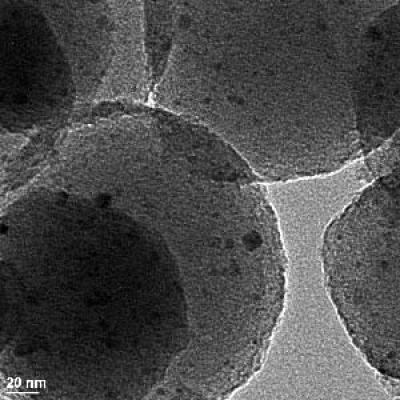
By combining gasification with high-tech nanoscale porous catalysts, they hope to create ethanol from a wide range of biomass, including distiller's grain left over from ethanol production, corn stover from the field, grass, wood pulp, animal waste, and garbage.

An academic from Swansea University’s History Department has received a research grant of £101,000 from the Wellcome Trust to investigate the history of medicine in Joseph Stalin’s concentration camps of the mid-twentieth century.

Dr Dan Healey’s project, entitled Medicine in the Gulag Archipelago, will be done in collaboration with Dr Kirill Rossianov of the Moscow Institute of the History of Natural Sciences and Technology of the Russian Academy of Sciences and focus on the history of medicine in the Soviet Union’s Gulag network of labor camps and will show how doctors and medicine were integral to these far-flung places of confinement during the 1930s to 1950s.

Researchers at Duke University Medical Center and at the National Institute of Environmental Health Sciences (NIEHS) say they have shown how broken sections of chromosomes can recombine to change genomes ... and spawn new species.

The scientists used X-rays to break yeast chromosomes, and then studied how the damage was repaired. Most of the chromosome aberrations they identified resulted from interactions between repeated DNA sequences located on different chromosomes rather than from a simple re-joining of the broken ends on the same chromosome.

Chromosome aberrations are a change in the normal chromosome complement because of deletion, duplication, or rearrangement of genetic material. On rare occasions, the development of one of these new chromosome structures is beneficial, but more often DNA changes can be detrimental, leading to problems like tumors.

Jeremy Jackson, a professor of oceanography at Scripps Institution of Oceanography at UC San Diego, is not an optimistic guy about the future. He says human activities are cumulatively driving the health of the world's oceans down a rapid spiral and the result will be mass extinctions in the oceans on par with vast ecological upheavals of the past.

He cites the synergistic effects of habitat destruction, overfishing, ocean warming, increased acidification and massive nutrient runoff as culprits in a grand transformation of once complex ocean ecosystems. Areas that had featured intricate marine food webs with large animals are being converted into simplistic ecosystems dominated by microbes, toxic algal blooms, jellyfish and disease.

Jackson, director of the Scripps Center for Marine Biodiversity and Conservation, has tagged the ongoing transformation as "the rise of slime."

All countries should take steps to govern organ donation and transplantation, thereby ensuring patient safety and prohibiting unethical practices, according to an article appearing in the September 2008 issue of the Clinical Journal of the American Society of Nephrology (CJASN).

The document is a consensus of more than 150 representatives of scientific and medical bodies from around the world, government officials, social scientists, and ethicists, who met in Istanbul, Turkey, this spring.

In prior articles, we found the scientific validation of Stephen Colbert's 'truthiness', and now it turns out that anecdotal evidence of a 'Colbert bump' following an appearance (anecdotal evidence provided, naturally, by Colbert himself) on the show has legs as well - but only if you're in one political party. Democratic politicians receive a 40% increase in contributions in the 30 days after appearing on "The Colbert Report" while Republicans essentially gained nothing.

Stephen Colbert is right - the "Colbert bump" boosts campaigns.

This analysis of one of America's most well-known pop icons of recent years is conducted by political scientist James H. Fowler (University of California, San Diego), who is also a self-identified fan of the show. The research appears in the July issue of PS: Political Science and Politics.

Young people from 10 countries around the world have shared their views on housework and abortion issues in a new study from the University of Adelaide, Australia. Small surveys were conducted at high schools and universities in the United States, Canada, Australia, Korea, China, Japan, Vietnam, Thailand, India and Indonesia.

The research, conducted by Professor Chilla Bulbeck in the University's Discipline of Gender, Work and Social Inquiry, looked at the attitudes of young men and women to a number of gender equality issues.

The prospect of climate change sparking food and water shortages in the Middle East is less likely than previously thought, with new research by an Australian climate scientist suggesting that rainfall will be significantly higher in key parts of the region.

Recent projections from the Intergovernmental Panel on Climate Change (IPCC) raised fears that storm activity in the eastern Mediterranean would decline this century (if global warming continues on the predicted curve) and that would reduce rainfall by between 15 and 25 per cent over a large part of the so-called Fertile Crescent, the land encompassing parts of Turkey, Syria, northern Iraq, and north-eastern Iran and the strategically important headwaters of the Tigris and Euphrates rivers.

But the IPCC projections were based on the results of global modelling of climate change, which tends to obscure smaller-scale regional effects.

