






You may have laughed when you read in history books that in years gone by maggots were used to cure disease.

Laugh no more. It’s not uncommon for someone to suffer from chronic infected wounds for 18 months, despite all sorts of conventional treatment, but when maggots are applied to the same wound they can often begin to clear infection in just a few days. They have even been known to save people from having limbs amputated.

MRSA infections cause suffering, amputations and death, not to mention the estimated £1 billion cost to the NHS. Between 2002 and 2006, 6,201 deaths in England and Wales involved MRSA and 15,683 deaths in England and Wales involved C. difficile. The rapid rise in antibiotic-resistant bacteria means that scientists urgently need to find a solution.

A study published in the International Journal of Obesity says that eating two eggs for breakfast, as part of an overall reduced-calorie diet, helps overweight adults lose more weight and feel more energetic than those who eat a bagel breakfast of equal calories.(1) This study supports previous research, published in the Journal of the American College of Nutrition, which showed that people who ate eggs for breakfast felt more satisfied and ate fewer calories at the following meal. (2)

It may not be an ever popular artificial sweetener like NutraSweet, or have the crystalline texture of pure sugar, but the herb, which is commonly found at Trader Joes when it isn’t in its natural South American setting is sweeter than its sweetener counterparts—and calorie free.

The once banned herb stevia, which is 300 times the sweetness of sugar, is safe to consume in the U.S. as a dietary supplement, but pronounced unsafe by the Food and Drug Administration if used in food.

My colleague Peter Turchin over at the University of Connecticut (my Alma Mater) has recently published an intriguing short article in Nature (3 July 2008) on what he termed “cliodynamics,” the possibility of turning history into a science. The word comes from Clio, the muse of history for the Greek and Romans, with the “dynamics” part referring to the central concept proposed by Turchin, that history -- contrary to what most historians might think -- is not just one damn thing after another, that there are regular and predictable patterns, from which we can learn and that we can predict.

The architecture of haematopoiesis – which is the process by which all blood cells originate – is essentially the same throughout the mammal world, report scientists in the Proceedings of the Royal Society. This is an unexpected result considering the thousands of mammals’ species with a myriad of habitats and lifestyles, as so well demonstrated when comparing the 30 mm flying bumblebee bat and the 30 metre-long aquatic blue whale both mammals. But the work now published shows that the variations in the blood system - necessary to adapt to the evolutionary changes found within the mammals’ world -can be explained quantitatively (for example by producing more cells or having the cells dividing faster), and are directly correlated to the animals’ body mass and do not require any fundamental alteration in the haematopoietic process.

Metabolic changes responsible for the evolution of our unique cognitive abilities indicate that the brain may have been pushed to the limit of its capabilities, according to research published today in Genome Biology.

This adds weight to the theory that schizophrenia is a costly by-product of human brain evolution.

Philipp Khaitovich, from the Max Planck Institute for Evolutionary Anthropology and the Shanghai branch of the Chinese Academy of Sciences, led a collaboration of researchers from Cambridge, Leipzig and Shanghai who investigated brains from healthy and schizophrenic humans and compared them with chimpanzee and rhesus macaque brains.

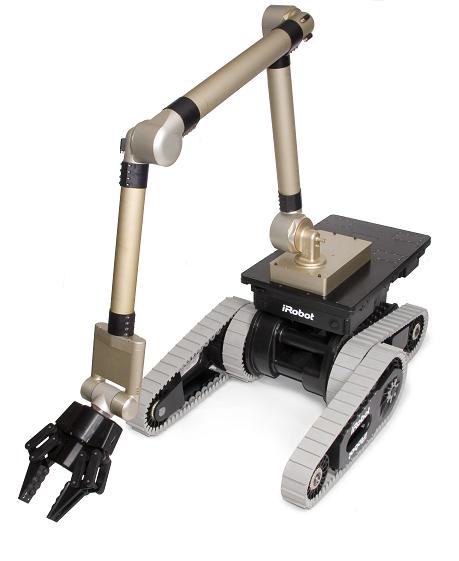
The first thing iRobot Corporation wants you to know, because they have been asked so many times, is that the Packbot is no Terminator - and never will be.

Robots in the military are not the stuff of science fiction but their mission parameters are very specific - and they are all teleoperated, meaning that there is someone operating the robot from a remote location, perhaps with a joystick and a computer screen.

While this may seem like a caveat in plans to add robots to the military, it is actually very important to keep humans involved in the robotic operations.

A revised outlook for the Arctic 2008 summer sea ice minimum shows ice extent will be below the 2005 level but not likely to beat the 2007 record, say researchers with DAMOCLES (Developing Arctic Modeling and Observing Capabilities for Long-term Environmental Studies), an integrated ice-atmosphere-ocean monitoring and forecasting system designed for observing, understanding and quantifying climate changes in the Arctic.

DAMOCLES will dispatch eleven research missions into the Arctic this autumn to better understand the future of the sea ice.

Chances that the 2008 ice extent will fall below last year's record minimum is about 8 percent, researchers forecast after having run a number of different models predicting the fate of the Arctic sea ice this summer. But there is still reason for concern; the scientists are almost certain the ice extent will fall below the minimum of 2005, which was the second lowest year on record. With a probability of 80% the minimum ice extent in 2008 will be in the range between 4.16 and 4.70 million km2.

You no longer need a snooty wine expert to identify a ’74 Pinot Noir from Burgundy – a handheld “electronic tongue” devised by European scientists will tell you the grape variety and vintage at the press of a button.

Designed for quality control in the field, the device is made up of six sensors which detect substances characteristic of a certain wine variety. Components such as acid, sugar and alcohol can be measured by this detection, and from these parameters it can determine the age and variety of the wine.

The tongue was invented by Cecilia Jiménez-Jorquera and colleagues from the Barcelona Institute of Microelectronics, Spain, and is reported in the Royal Society of Chemistry journal The Analyst.

Tiny fossilized teeth excavated from an Indian open-pit coal mine could be the oldest Asian remains ever found of anthropoids, the primate lineage of today's monkeys, apes and humans, say researchers from Duke University and the Indian Institute of Technology.

Just 9-thousandths of a square inch in size, the teeth are about 54.5 million years old and suggest these early primates were no larger than modern dwarf lemurs weighing about 2 to 3 ounces. Studies of the shape of the teeth suggest these small animals could live on a fruit and insect diet, according to the researchers.

"It's certainly the oldest anthropoid from Asia and India," said Richard Kay, a Duke professor of evolutionary anthropology who is corresponding author of a report in Proceedings of the National Academy of Sciences (PNAS).

