






Low levels of naturally occurring antibodies may represent an increased risk of developing cardiovascular disease, particularly stroke in men. This discovery, published in Atherosclerosis, has now led to attempts to develop an immunization against cardiovascular disease.

Atherosclerosis (hardening of the arteries) is an inflammatory disease in which the walls of the blood vessels are thickened and become less elastic. It can cause blood clots and other cardiovascular diseases. It is not known precisely what causes atherosclerosis, but the immune system probably plays an important role.

Judging by the astonishing increase in journal papers written by scientists in China, China is finding its place as one of the world’s scientific power houses, says Michael Banks, but he also quantifies this surge in scientific output China and measures whether quality matches quantity in August’s Physics World.

Nanoscience, quantum computing and high-temperature superconductivity are three of the cutting-edge areas of physics that have seen particularly large increases. Published journal articles in nanoscience, for example, with at least one co-author based in China, have seen a 10-fold increase since the beginning of the millennium, rising to more than 10,500 in 2007.

China has already overtaken the UK and Germany in the number of physics papers published and is beginning to nip at the heels of the United States. If China’s output continues to increase at its current pace, the country will be publishing more articles in physics - and indeed all of science - than the US by 2012.

Have you ever wondered what our world would look like stripped bare of all plants, soils, water and man-made structures?

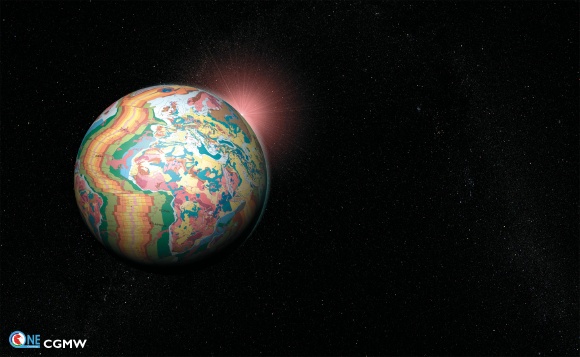
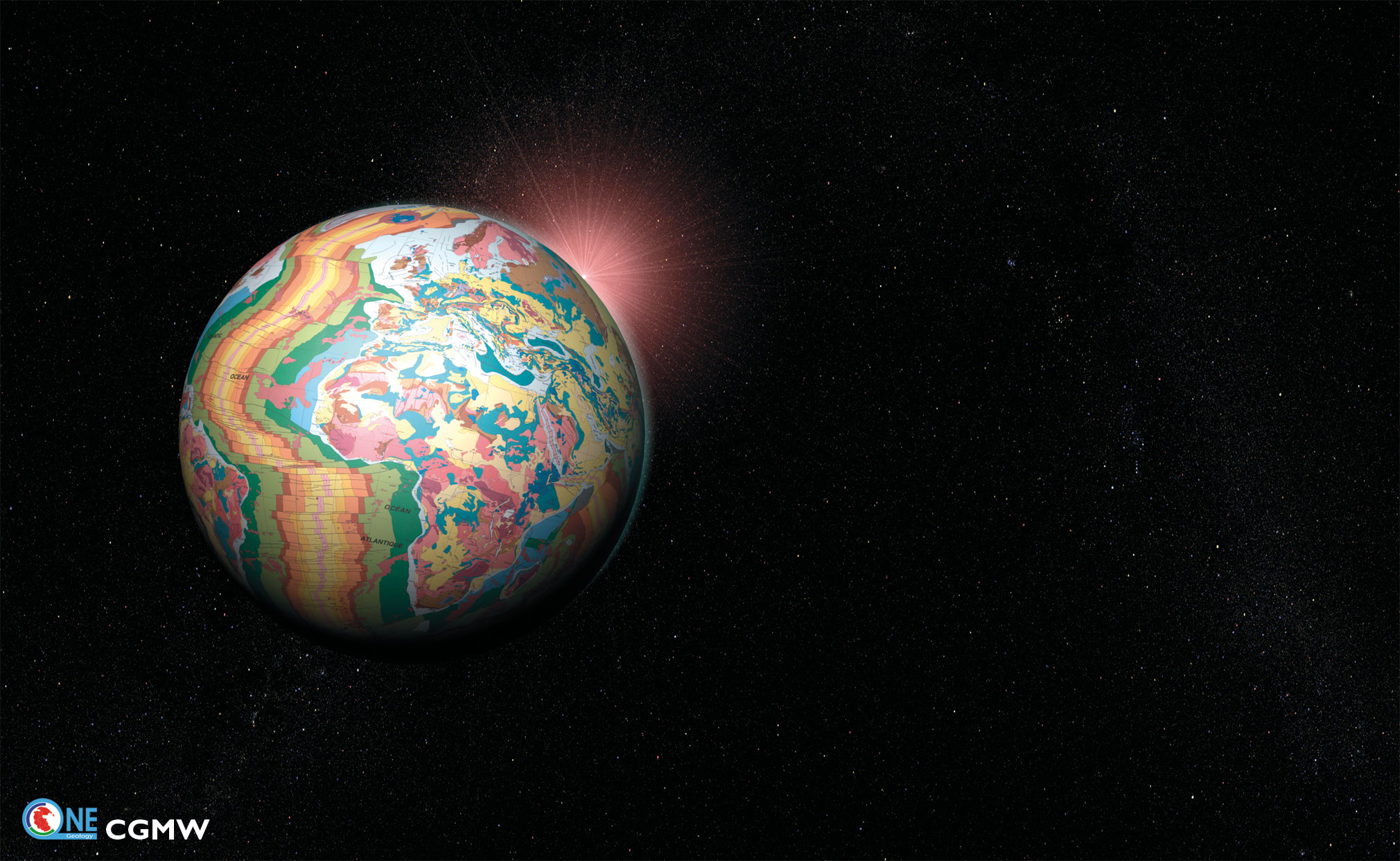
So have earth and computer scientists from 79 nations who are working together on a global project called OneGeology to produce the first digital geological map of the world.

Images of the Earth as never seen before have been unveiled in what is the world’s biggest geological mapping project ever.

Begun just over a year ago, the project is doing for the rocks beneath our feet what Google does for maps of the Earth’s surface. Pretty fast for a science that usually counts time in millions of years.

Brian May CBE, PhD, ARCS, FRAS, and a founding member of Queen, is a world-renowned guitarist, songwriter, producer and performer.

May abandoned his PhD studies at Imperial College London in 1974 when Queen’s popularity first exploded but always retained a keen interest in astronomy, and has been a regular contributor to “The Sky at Night,” BBC TV’s monthly astronomy program hosted by Sir Patrick Moore.

Returning to astrophysical research in 2006, he was awarded his PhD and is now Chancellor of John Moores University, and a patron to a number of charities, including the Mercury Phoenix Trust and the British Bone Marrow Donor Association.

The value of open access is an on-going debate, at least in the science community, with some stating that it leads to greater citations and others concerned that it leads to less rigorous research outside free internet sources.

A new Cornell study says that while "open access" or free online articles get read more often, they don't get cited more often in academic literature, which goes against the conventional wisdom.

The reason, suggest Cornell graduate student Philip Davis and colleagues, is that most researchers probably already have all the access they need to relevant articles.

So free is nice but everyone still gets paid journals anyway.

To-date, solar power is a marginal, boutique alternative to mainstream energy but MIT researchers say they have overcome a major barrier to large-scale, cost-effective solar power: efficiently storing energy for use when the sun doesn't shine.

Solar power is currently a daytime-only energy source because storing extra solar energy for later use is prohibitively expensive and grossly inefficient. MIT researchers say have hit upon a simple, inexpensive, highly efficient process for storing solar energy.

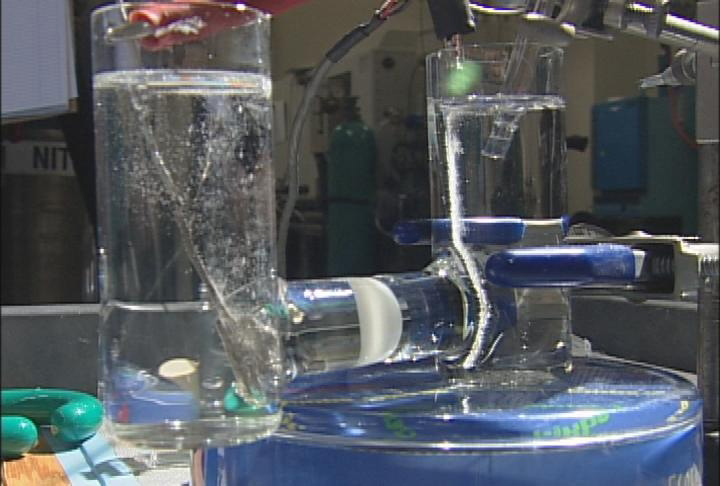
Inspired by the photosynthesis performed by plants, Daniel Nocera, the Henry Dreyfus Professor of Energy at MIT and Matthew Kanan, a postdoctoral fellow in Nocera's lab, have developed an unprecedented process that will allow the sun's energy to be used to split water into hydrogen and oxygen gases. Later, the oxygen and hydrogen may be recombined inside a fuel cell, creating carbon-free electricity to power your house or your electric car, day or night.

It may seem like an odd marketing campaign but "Come visit Spain, the European point of entry for cocaine" remains apt.

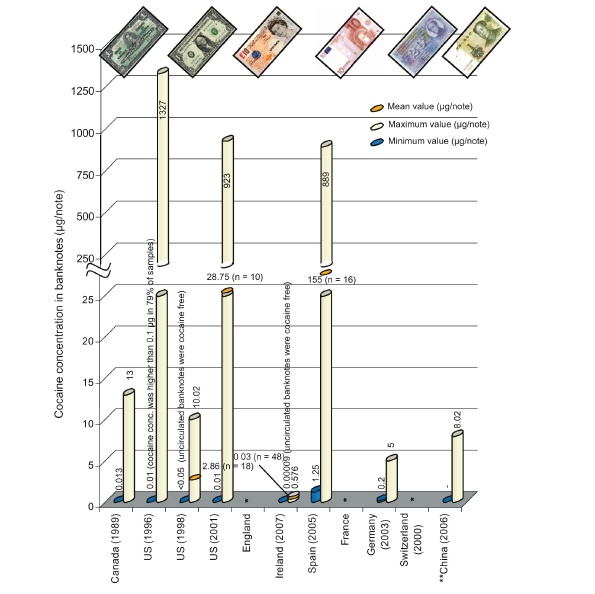
A study of randomly selected Spanish euro notes carried out by chemists at the University of Valencia (UV) has shown that they contained traces of cocaine at an average concentration of 155 micrograms, which is the highest rate in Europe, according to an article published in the latest issue of Trends in Analytical Chemistry. The researchers also carried out a comparative study of the methods currently used in detecting the presence of cocaine on bank notes worldwide.

The most recent report from the United Nations Office on Drugs and Crime warns that Spain is still the major point of entry of cocaine into Europe. In 2006, 41% of all hauls of the drug made on the continent were made on Spanish soil, where 50 metric tonnes were seized, followed by Portugal, with 35 metric tonnes. The UN also says the rate of cocaine use doubled in Spain between 1999 and 2005, increasing from 1.6% to 3% of those aged between 15 and 64, which is more than twice the rate for western Europe as a whole (1.2%).

Geoscientists have long presumed that the tropics remained warm throughout Earth's last major glaciation 300 million years ago but new evidence indicates that cold temperatures episodically gripped even equatorial latitudes at that time.

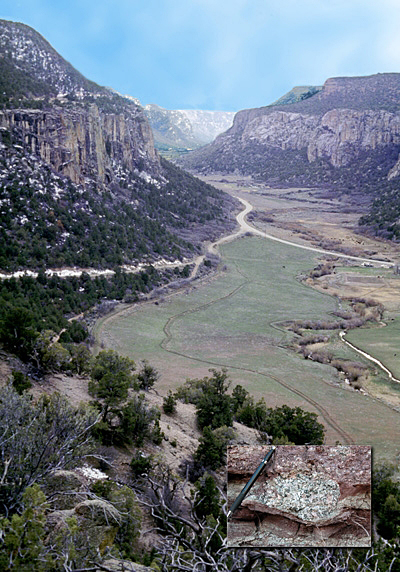
Geologist Gerilyn Soreghan of Oklahoma University found evidence for this conclusion in the preservation of an ancient glacial landscape in the Rocky Mountains of western Colorado. Three hundred million years ago, the region was part of the tropics. The continents then were assembled into the supercontinent Pangaea.

Climate model simulations are unable to replicate such cold tropical conditions for this time period, said Soreghan. "We are left with the prospect that what has been termed our 'best-known' analogue to Earth's modern glaciation is in fact poorly known."

We have long been fascinated by the concept of absolute zero, the temperature at which everything comes to a complete stop, but physics tells us absolute zero cannot be reached but only approached - and the closer you get, the more interesting phenomena you find.

Three scientists from ESF's EUROCORES Programme EuroQUAM gave insight into this 'cool' matter at the event "The Amazing Quantum World of Ultra Cold Matter", held at this year's ESOF (Euroscience Open Forum) in Barcelona. It was co-organized by the European Science Foundation (ESF) and The Institute of Photonic Sciences (ICFO) within the collaborative research programme "Cold Quantum Matter" (EuroQUAM).

Maciej Lewenstein leads the quantum optics theory group at ICFO and is a Humboldt Research Prize Awardee.

A new study published today in Proceedings of the Royal Society B investigates the genetic and geographical relationships between different forms of crimson rosellas and the possible ways that these forms may have arisen.

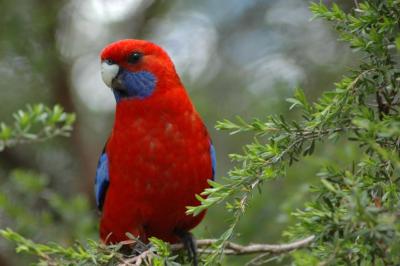
Dr Gaynor Dolman of CSIRO's Australian National Wildlife Collection says there are three main color 'forms' of the crimson rosella – crimson, yellow and orange – which originated from the same ancestral population and are now distributed throughout south eastern Australia.

"Many evolutionary biologists have argued that the different forms of crimson rosellas arose, or speciated, through 'ring speciation'," she says.


