






It's no secret that the Commonwealth Fund doesn't like private health care and their new national scorecard states that scores on access have declined significantly since the first national scorecard in 2006. Despite spending more on health care than any other industrialized nation, they state, the U.S. overall continues to fall far short on key indicators of health outcomes and quality, with particularly low scores on efficiency.

There are currently great needs and great opportunities for improvement in post-secondary science education. As world education improves, we need to provide more students with complex understanding and problem solving skills in technical subjects to allow them to be responsible and successful citizens in modern society.

Emerging research indicates that our colleges and universities are not achieving this. However, there are great opportunities to improve this situation using advances in the understanding of how people learn science and advances in educational technology.

Pneumonoultramicroscopicsilicovolcanosconiosis is a type of lung disease. Pneumoconiosis, also called black lung or coal-miners disease, is different, but is estimated to be the cause of death for 1,500 U.S. coal miners. Besides being bizarre, words like these can be largely informative. The top scientific and mathematical words and laws judging off of complexity can transpire into a largely personal-opinion-oriented endeavor. Astute denizens of cyberspace expounded on a list of some semi-rare and contentious terms and classified them into an “organized mess.”

Of course the flip side, meaning the benefits of the sunk-cost fallacy, need to be addressed. One example can be found in a January 12, 2007 article in the “Freakonomics” section of the New York Times titled “What does Barack Obama Know about Behavioral Economics?”

In the article, Obama is quoted as having said about sending more troops to Iraq as having used the notion of the fallacy. “And essentially the administration repeatedly has said: ‘We’re doubling down; we’re going to keep on going … because now we’ve got a lot in the pot and we can’t afford to lose what we put in the pot.”

Dr. Hal Arkes in the department of psychology at Ohio State University has done extensive studies on the sunk-cost fallacy after he became interested for his personal involvement in politics twenty years ago. His most recent studies look at finding new ways to minimize the fallacy through interventions.

With the help of undergrads and some others at OSU Arkes gives volunteers a scenario having to do with an airplane company and the construction of a $10 million Radar Blank Plane. If the plane has been 90 percent completed, meaning millions of dollars already having been spent, but another company came up with a better version making the almost finished product “grossly inferior,” should the last 10 percent of the budget be spent anyways? Most of the testers said “yes.”

President Bush is quoted in 2005 as saying “we owe them something…We will finish the task that they gave their lives for,” about the soldiers who have died since the 9/11 terrorist attack on the World Trade Center, exemplifying a mode of thinking that appeals to everyone in some way. Most people know this notion as an expenditure made in the past that cannot be modified, or the sunk-cost fallacy.

A recent study in the July issue of Psychological Science tested the relationship between older and younger adults through an individuals’ commitment relating to the “sunk-cost fallacy,” in matters of money.

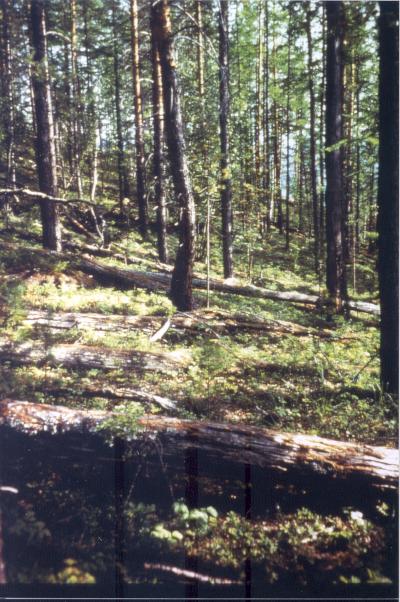
The Tunguska event is regarded as one of the biggest natural disasters of modern times. On 30 June 1908 one or more explosions took place in the area close to the Tunguska River north of Lake Baikal. The explosion(s) flattened around 80 million trees over an area of more than 2000 square kilometres.

The strength of the explosion is estimated to have been equivalent to between five and 30 megatons of TNT. That is more than a thousand times as powerful as the Hiroshima bomb.

This almost unpopulated region of Siberia was first studied in 1927 by Professor Leonid A. Kulik. There are a number of different theories about what caused the catastrophe. However, the majority of scientists assume that it was caused by a cosmic event, such as the impact of a meteorite, asteroid or comet. If it had exploded in the atmosphere just under five hours later, St. Petersburg, which was the capital of Russia at that time, would have been completely destroyed because of the Earth's rotation.

hominin fossils are the most important materials for exploring human origins and evolution. Since most hominin fossils are incomplete, or filled with a heavy calcified matrix, it is difficult or often impossible to reconstruct the endocast in a real fossil without destroying it.

Accordingly, traditional methods limited the study of human brain evolution. CT can explore fossils in a noninvasive way by transforming a real fossil into a virtual object, and make it possible for paleoanthropologists to extend the study of fossil specimens from the exterior to the interior.

Just this once, anti-fishing organizations can fall back on capitalistic economics to make their case - with huge increases in fuel costs, it may be time to have government-run fisheries rather than spend more money on fuel subsidies currently given to fishing fleets.

In addition, it would actually save money to invest in re-training fishers, says University of British Columbia fisheries economist Rashid Sumaila, a 2008 Pew Fellow in Marine Conservation.

Dramatic fuel price increases over the past weeks have sparked large-scale protests by fishers around the world. In France, fishers set up blockades at several ports while Japanese squid fishing boats halted operations for two days. Similar events have taken place in Australia, Nigeria and the Philippines.

University of Florida and Florida Institute of Technology engineering researchers have narrowed the search for the source of X-rays emitted by lightning, a feat that could one day help predict where lightning will strike.

"From a practical point of view, if we are going to ever be able to predict when and where lightning will strike, we need to first understand how lightning moves from one place to the other," said Joseph Dwyer, a professor in the department of physics and space sciences at FIT. "At present, we do not have a good handle on this. X-rays are giving us a close-up view of what is happening inside the lightning as it moves."

