






In the quest to find the biological route of drug addiction, research at Cambridge University, UK, is revealing what makes some people more vulnerable than others. Speaking at Europe’s major neuroscience conference in Geneva today, Professor Barry Everitt described what they now believe causes the switch from occasional, ‘recreational’ use to a compulsive habit.

Professor Everitt and researchers in the Cambridge lab have discovered there is a shift in the control of drug seeking behaviour in the brain. Taking drugs – for example, cocaine – generates reinforcing or ‘rewarding’ effects mediated by the ventral striatum of the brain. In some people, however, drug taking escalates to become a strong habit, difficult to relinquish, and which is eventually controlled by the dorsal striatum, a region of the brain associated with habit learning.

If you've said you're going to 'sleep on it' in regards to a difficult decision, you know it became a cliche' for a reason - it often works. Swiss scientists have discovered that sleep can have lasting consequences on brain function by stimulating new brain connections that strengthen the learning processes and directly influence our actions.

Speaking at the Forum of European Neuroscience, Dr. Sophie Schwartz from the University of Geneva explained that any new experience is encoded in memory, but memory traces can later be forgotten or become more stable and permanent. Among the numerous factors that can affect the fate of memory traces, sleep seems to play a critical role.

The topic of gender in science has been a hot one this decade. While women have equal representation in biology and an overwhelming majority in social sciences, they are lacking in the hard sciences and sparse at the professor level.

Germany has implented "Research oriented gender equality standards“, which have been developed by the German Research Foundation (Deutsche Forschungsgemeinschaft, DFG) and have now been adopted by the General Assembly of the DFG in Berlin.

For the first time, researchers have taken a detailed look at what lies beneath all of Iceland's volcanoes – and found a world far more complex than they ever imagined.

They mapped an elaborate maze of magma chambers - work that could one day help scientists better understand how earthquakes and volcanic eruptions occur in Iceland and elsewhere in the world.

Knowing where magma chambers are located is a key first step to understanding the chemical composition of the molten rock that is flowing within them - and of the gases that are released when a volcano erupts, explained Daniel Kelley, doctoral student in earth sciences at Ohio State University.

Sociologist Ching Kwan Lee, a sociologist at the University of California-Los Angeles, writes in the summer issue of the American Sociological Association's Contexts magazine that there is a 'quiet revolution' happening among citizens of China that isn't recognized by the louder human rights activists.

In contrast to traditional activism appealing to universal notions of human rights, this grassroots movement among everyday people in China invokes "the protection of lawful rights," or weiquan. This activism focuses on specific rights prescribed by Chinese law, such as labor, property and rural land rights.

According to Lee, growing unrest over social injustice, as well as wealth and power gaps in Chinese society—due to the country's rapid economic development—has led to three decades of market reform and legal proliferation by the central government in Beijing.

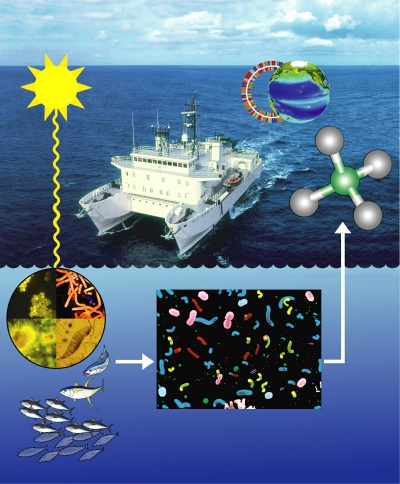
A new pathway for methane formation in the oceans has been discovered, with significant potential for advancing our understanding of greenhouse gas production on Earth, scientists believe.

A paper on the findings published in Nature Geoscience reveals that decomposition of a phosphorus-containing compound called methylphosphonate may be responsible for an unexpected supersaturation of methane in the oceans' oxygen-rich surface waters.

Through the National Science Foundation (NSF) Center for Microbial Oceanography: Research and Education (C-MORE), oceanographer David Karl of the University of Hawaii and microbiologist Edward DeLong of the Massachusetts Institute of Technology, co-authors of the Nature Geoscience paper, are working to learn how and when microbes turn on and off their methane production genes in response to methane precursors like methylphosphonate.

Nothing knows how to survive changes on Earth like bacteria. Microorganisms once reigned supreme on the Earth and they thrived by filling every nook and cranny of the environment billions of years before humans first arrived on the scene.

Their ability to grow from an almost infinite variety of food sources may help bail out society from its current energy crisis, according to the Arizona State University Biodesign Institute's Bruce Rittmann, Rosa Krajmalnik-Brown, and Rolf Halden.

Two distinct, but complementary approaches will be needed:

A team of London scientists have found clues for the potentially therapeutic benefits of nicotine on learning, memory and attention while minimising the risk of addiction. The research announced in Geneva today will assist the search for new drugs for dementia.

The pharmaceutical industry has striven to discover nicotine-like substances for conditions such as Alzheimer’s disease. Nicotine itself is difficult to administer by conventional means. The differences between doses that produce cognitive and toxic effects are small and, most significantly, there is also high risk of addiction. The balance, however, between costs and benefits is much more favourable for people with serious illnesses such as dementia.

Superconductors are materials that conduct electricity with no resistance. Electricity comes from electrons traveling through wire conductors. Those electrons bumping into each other generate an enormous amount of heat. With superconductors, however, there is no jostling, therefore no heat. But there's a catch: "High-temperature" superconductors (a very relative term) only behave this way when they are cooled to liquid nitrogen temperatures – between -346°F and -320.44°F.

Scientists have been unable to decipher just how copper-oxide HTS materials become superconductors. In its natural state, copper-oxide behaves like a permanent magnet. Scientists "dope" the material – which involves adding impurities to increase the number of electron carriers – and as a result of the doping and the cooling, the material turns into a superconductor, with the doped electrons pairing up to effortless carry electricity. But how, and where in the material, does this happen?

Meteorites are a major tool for knowing the history of the solar system because their composition is a record of past geologic processes that occurred while they were still incorporated in the parent asteroid.

Most of the meteorites that we collect on Earth come from the main belt of asteroids located between Mars and Jupiter [1]. They were ejected from their asteroidal "parent body" after a collision, were injected into a new orbit, and they finally felt onto the Earth.

One fundamental difficulty is that we do not know exactly where the majority of meteorite specimens come from within the asteroidal main belt. For many years, astronomers failed to discover the parent body of the most common meteorites, the ordinary chondrites that represent 75% of all the collected meteorites.

