




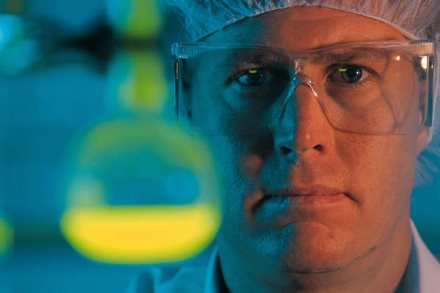

A laser-activated antimicrobial offers hope for new treatments of bacterial infections, even those that are resistant to current drugs. Research published today in the open access journal BMC Microbiology describes the use of a dye, indocyanine green, which produces bacteria-killing chemicals when lit by a specific kind of laser light.

Michael Wilson led a team from UCL (University College London) who carried out experiments showing that activated indocyanine green is capable of killing a wide range of bacteria including Staphylococcus aureus, Streptococcus pyogenes and Pseudomonas aeruginosa. The dye is safe for humans. The strength of this new approach lies in the variety of ways in which the chemicals produced by the activated dye harm bacteria.

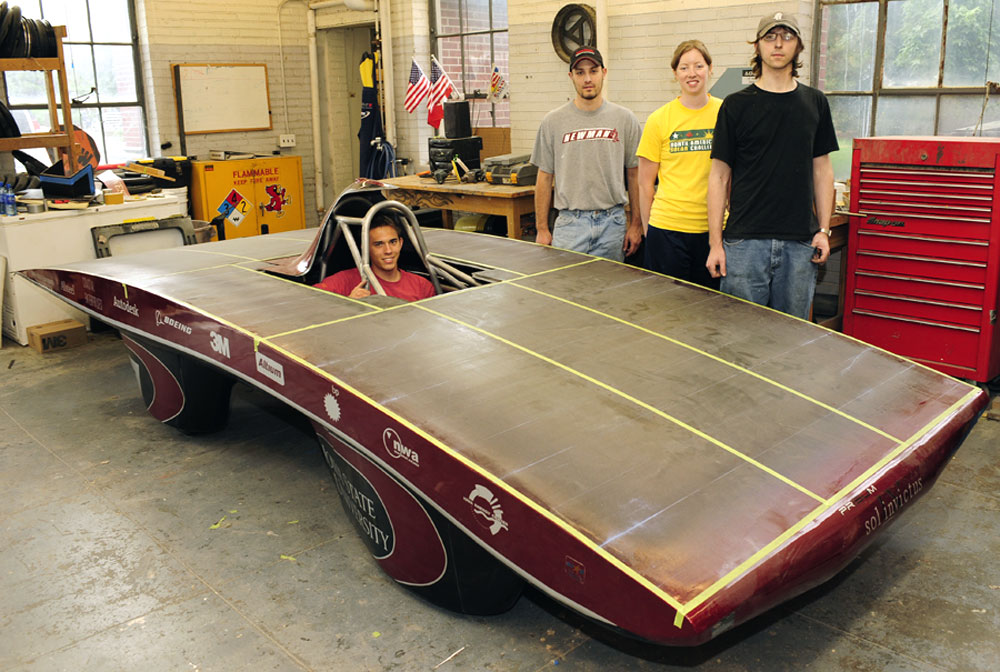
Sol Invictus, Iowa State University's student-designed and student-built solar race car, is getting ready to compete in the North American Solar Challenge July 13-22.

The challenge will take 24 student-designed and student-built solar race cars from Plano, Texas, to Calgary, Alberta, Canada. They’ll make the 2,400-mile run July 13-22, with a checkpoint in Omaha, Neb., July 15-16 and a stage stop in Sioux Falls, S.D., July 16-18. The route between those cities takes the solar cars into western Iowa for a few hours.

Team PrISUm did very well in 2005, the last time the challenge was contested. The Iowa State car made it from Austin, Texas, to Calgary in 71.5 hours. That was good for a third place finish in the challenge’s stock class and 11th overall against cars in the more powerful open class.

The "La Mente Bilingüe" research team headed by Itziar Laka leads at the University of the Basque Country aims to find out how the brain acquires and manages languages and to discover in what way languages being similar or different is influential in this process.

In order to understand how we become fluent in a language and to better comprehend bilingualism, the La Mente Bilingüe ("the bilingual brain") research team at the Faculty of Arts of the University of the Basque Country UPV/EHU analysed the acquisition process for languages.

Despite much research on acquisition of languages amongst monolingual persons, scientists still have to ask themselves basic questions about bilingual acquisition: How do babies realize that they are in a bilingual environment? What are the clues for them in discovering this? How is discrimination between languages produced in infants?

KARLSRUHE, Germany, June 30 /PRNewswire/ -- RapidSolution Software AG presents new Windows software MP3videoraptor 3.0 that allows users to instantly download and save virtually any song in MP3 format - free of charge. Even the automatic creation of an entire music library is a piece of cake.

What makes this principle revolutionary are two functions: an intelligent control and the recording of music from numerous individual Web 2.0 radios - the legal and free way to get your favorite music.

If you're in one of those municipalities that would rather ban foods than learn science, you probably aren't allowed to have food with trans fats in a restaurant.

That's because, they say, trans fat lowers “good” HDL cholesterol and raises the “bad” LDL variety - but that's not true for the kind normally present in meat and dairy products and those are not a big health concern, reports the July 2008 issue of the Harvard Health Letter.

Hydrogenation, the process used to convert oil into solid trans fat by adding hydrogen, occurs in nature also. Bacteria in animals’ stomachs hydrogenate the fatty oils from animal feed, for example.

Caffeine has been found to protect mice from a disease similar to Multiple Sclerosis (MS), according to a new study. As if we needed another excuse to drink coffee.

MS is disorder of the central nervous system marked by weakness, numbness, a loss of muscle coordination, and problems with vision, speech and bladder control. Believed to be an autoimmune disease in which the body's immune system attacks nerves in the brain and spinal cord, MS affects approximately 400,000 Americans and 2.5 million people worldwide.

The research appears in the early online edition of the June 30, 2008 Proceedings of the National Academy of Sciences.

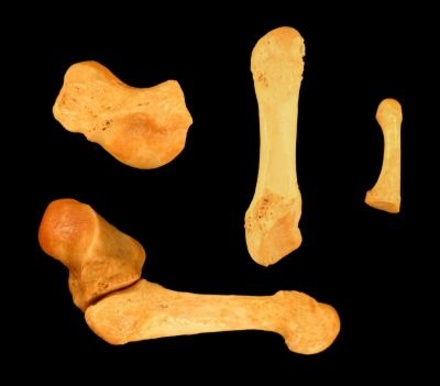
A complete mandible of Homo erectus was discovered at the Thomas I quarry in Casablanca by a French-Moroccan team co-led by Jean-Paul Raynal, CNRS senior researcher at the PACEA[1] laboratory (CNRS/Université Bordeaux 1/ Ministry of Culture and Communication). This mandible is the oldest human fossil uncovered from scientific excavations in Morocco. The discovery will help better define northern Africa's possible role in first populating southern Europe.

A Homo erectus half-jaw had already been found at the Thomas I quarry in 1969, but it was a chance discovery and therefore with no archeological context. This is not the case for the fossil discovered May 15, 2008, whose characteristics are very similar to those of the half-jaw found in 1969. The morphology of these remains is different from the three mandibles found at the Tighenif site in Algeria that were used, in 1963, to define the North African variety of Homo erectus, known as Homo mauritanicus, dated to 700,000 B.C.

In a new study published today, scientists at the Burnham Institute for Medical Research have shown that neural stem cell development may be linked to Autism. The study demonstrated that mice lacking the myocyte enhancer factor 2C (MEF2C) protein in neural stem cells had smaller brains, fewer nerve cells and showed behaviors similar to those seen in humans with a form of autism known as Rett Syndrome.

Rett syndrome afflicts more girls than boys and results in poor brain development, repetitive hand motions, altered anxiety behaviors and the inability to speak. Patients with Rett Syndrome also suffer from seizures and other debilitating neurological symptoms.

This work represents the first direct link between a developmental disorder of neural stem cells and the subsequent onset of autism.

A survey of 17 countries has found that the United States has the highest levels of illegal cocaine and cannabis use. The study, by Louisa Degenhardt (University of New South Wales, Sydney, Australia) and colleagues, is based on the World Health Organization's Composite International Diagnostic Interview (CIDI) and is published in this week's PLoS Medicine.

The authors found that 16.2% of people in the United States had used cocaine in their lifetime, a level much higher than any other country surveyed (the second highest level of cocaine use was in New Zealand, where 4.3% of people reported having used cocaine). Cannabis use was highest in the US (42.4%), followed by New Zealand (41.9%).

The study's main limitations are that it's a survey (it is unclear whether people accurately report their drug use when interviewed), only 17 countries were included and within those countries there were different rates of participation.

A new assistive technology developed by engineers at the Georgia Institute of Technology could help individuals with severe disabilities lead more independent lives.

The novel system allows individuals with disabilities to operate a computer, control a powered wheelchair and interact with their environments simply by moving their tongues. The tongue-operated assistive technology, called the Tongue Drive system, was described on June 29 at the 2008 Rehabilitation Engineering and Assistive Technology Society of North America (RESNA) Annual Conference in Washington, D.C. An article about this system is also scheduled to appear in an upcoming issue of the Journal of Rehabilitation Research and Development. This research was funded by the National Science Foundation and the Christopher and Dana Reeve Foundation.

