





A small protein may have a big role in helping you make more bone and less fat, says Dr. Xingming Shi, bone biologist at the Medical College of Georgia Institute of Molecular Medicine and Genetics. "The pathways are parallel, and the idea is if you can somehow disrupt the fat production pathway, you will get more bone"

He's found the short-acting protein GILZ appears to make this desirable shift and wants to better understand how it does it with the long-term goal of targeted therapies for osteoporosis, obesity and maybe more.

Weight gain and bone loss are established side effects of glucocorticoids, whose wide-ranging uses include treatment for arthritis, asthma, infections and organ transplants. Ironically, glucocorticoids also induce a short burst of GILZ. GILZ, in turn, inhibits the transcription factor PPARã2, called the master regulator of adipogenesis, or fat production, as well as CCAAT/enhancer-binding proteins that turn on this fat-producing gene. One way GILZ does this is by binding to the regulatory region of PPARã2, Dr. Shi has shown.

For the first time, researchers have demonstrated that the administration of minute amounts of inhaled or intravenous hydrogen sulfide, or H2S – the molecule that gives rotten eggs their sulfurous stench – significantly improves survival from extreme blood loss in rats.

Cell biologist Mark B. Roth, Ph.D., and colleagues in the Basic Sciences Division of Fred Hutchinson Cancer Research Center, in collaboration with surgeon Robert K. Winn, Ph.D., and colleagues at UW Medicine's Harborview Medical Center, report their findings online ahead of print in The Journal of Trauma Injury, Infection, and Critical Care.

Epigenetic mechanisms are at the heart of developmental biology, orchestrating the formation of many different tissues and organs from a fertilised egg. Almost all cells in an individual have exactly the same genetic material, yet behave very differently depending on which organs they comprise. Epigenetic regulation enables the fine-tuning of our genes and their expression in different places at different times, leading to the amazing complexity we see in humans despite the relatively small number of unique genes.

We all get two copies of every gene, one from our mother and one from our father. In many cases both copies are used or 'expressed’, however it is becoming clear that for some genes either the mother’s or the father’s version is used preferentially, a phenomenon known as genomic imprinting.

Specific chemical modifications to the DNA, such as methylation, appear to give the chromosomes a ‘memory’ as to their parental origin. These ‘epigenetic’ imprints, from the Greek meaning ‘on top of’, modify the structure of the DNA but not its sequence. In addition to parental modifications, it is thought that epigenetic changes may also arise in response to environmental factors, enabling an organism's genes to adapt and respond differently, even though the gene sequence does not change.

"Don't tug on that, you never know what it might be attached to ...," said Buckaroo Banzai while doing brain surgery in an early scene from one of the greatest science fiction movies of all time.

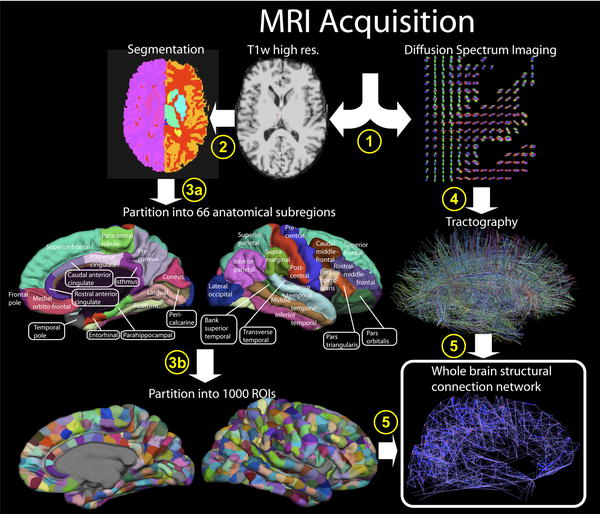
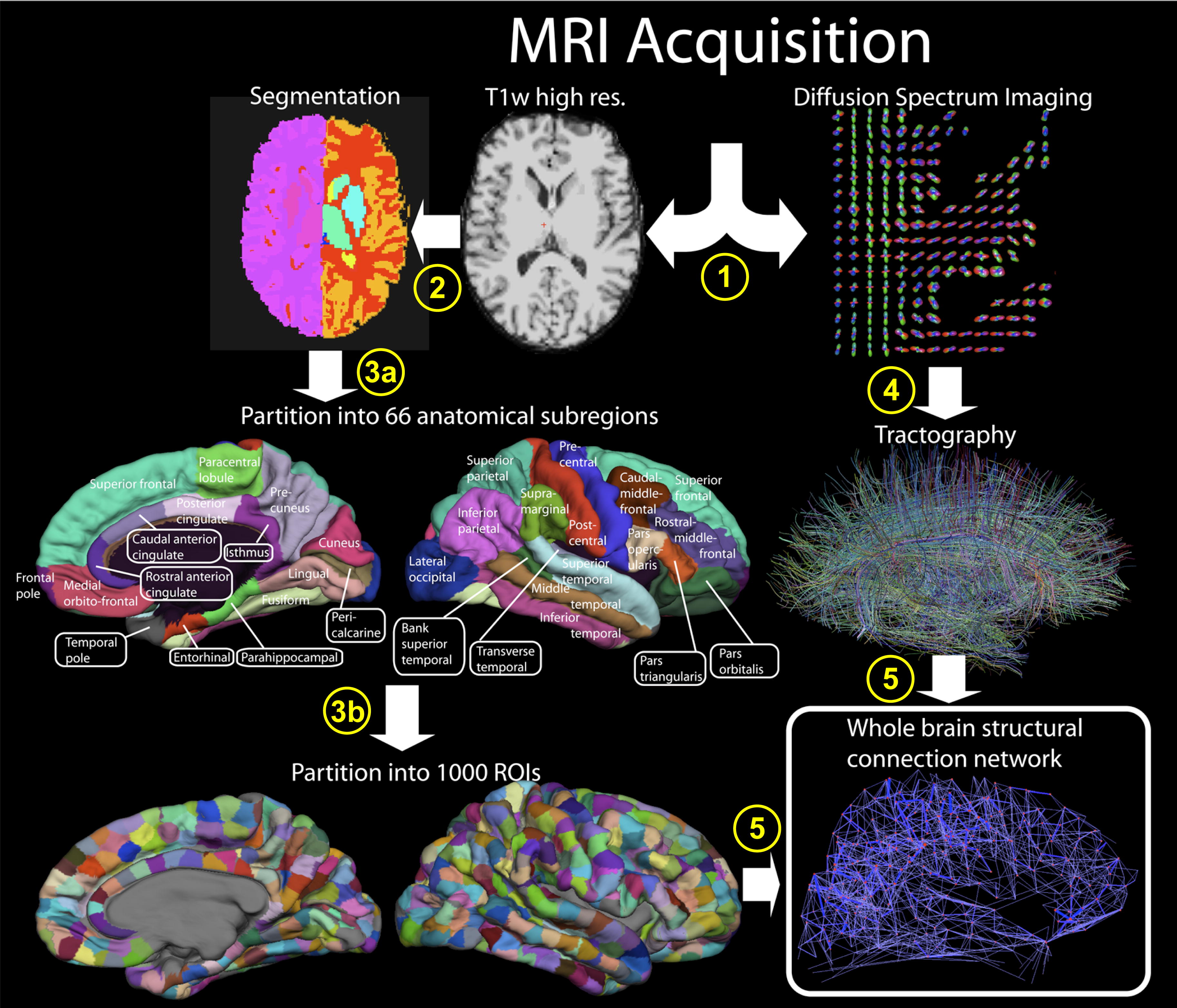
He couldn't have been more correct. A complete high-resolution map of the human cerebral cortex, the outer layer of the brain responsible for higher level thinking, has been created and it identified a single network core (or hub) that may be key to the workings of both hemispheres of the brain - detailing millions of neural fibers.

The work by the researchers from Indiana University, University of Lausanne, Switzerland, Ecole Polytechnique Fédérale de Lausanne, Switzerland, and Harvard Medical School marks a major step in understanding the most complicated and mysterious organ in the human body. It not only provides a comprehensive map of brain connections (the brain "connectome"), but also describes a novel application of a non-invasive technique that can be used by other scientists to continue mapping the trillions of neural connections in the brain at even greater resolution, which is becoming a new field of science termed "connectomics."

Few places on Earth are as untouched as the "Crown of the Continent" — a 10-million-acre expanse of mountains, valleys and prairies in Montana and Canada. The area has sustained all the same species — including grizzlies, lynx, moose and bull trout — for at least 200 years.

Now, in one of the most significant conservation sales in history , The Nature Conservancy and The Trust for Public Land have preserved 320,000 acres of forestlands in western Montana that provide valuable habitat for species in the Crown of the Continent.

Here we go again, this time it is Stuart Kauffman’s turn to write silly things about science and religion. Kauffman is a serious and brilliant scientist, best known for his work on complexity theory and its application to evolutionary biology. But he has now joined an increasingly long and embarrassing list of scientists who write really silly things about religion and how it relates to science.

Kauffman’s latest book is entitled Reinventing the Sacred: A New View of Science, Reason, and Religion. It is a view that is bound to fail on a variety of levels, but I think it is instructive to see why. Let’s start with the good news: Kauffman, unlike, say, authors like Paul Davies (author of questionably ambiguous stuff like Cosmic Jackpot: Why Our Universe Is Just Right for Life) or -- worse -- Frank Tipler (author of the downright nonsensical The Physics of Christianity) -- is pretty clear that there is no way to recover any classical version of god, not even the deist one. For Kauffman, for instance, morality emerged out of the biological and cultural evolution of humanity. Still, Kauffman seeks to “find common ground between science and religion so that we might collectively reinvent the sacred.”

We all know that light effects the growth and development of plants but a new paper by Nathalie Hoang et al., published in PLoS Biology examines the effects light has on humans and animals.

In plants, cryptochromes are photoreceptor proteins which absorb and process blue light for functions such as growth, seedling development, and leaf and stem expansion. Cryptochromes are present in humans and animals as well and have been proven to regulate the mechanisms of the circadian clock. But how they work in humans and animals is still somewhat of a mystery.

When plants are exposed to blue light, they experience a reduction in flavin pigments. This reduction activates the cryptochromes and thus allows for growth and seedling development. Hoang et al. sought to study the effect of blue light on fly, animal, and human cryptochromes by exposing them to blue light and measuring the change in the number of oxidized flavins. After a prolonged exposure to blue light, the authors found that the number of flavins did in fact decrease, as they do in plants.

Children studying subjects like math, physics and chemistry have a harder time gettings A's than students of similar ability studying subjects like media studies and psychology, according to a new report that really doesn't surprise anyone.

Durham University researchers analyzed and compared data from nearly one million schoolchildren sitting GCSE and A-level exams and reviewed 28 different studies of cross subject comparison conducted in the UK since 1970.

They found significant differences in the relative difficulty of exams in different subjects with the sciences among the hardest. On average, subjects like Physics, Chemistry and Biology at A-level are a whole grade harder than Drama, Sociology or Media Studies, and three-quarters of a grade harder than English, RE or Business Studies.

"I want to say one word to you. Just one word," spoke Mr. Maguire to young Benjamin in the 1967 film The Graduate. That word was 'plastics' and it became a cultural litany meaning lots of different things but it's never been more true in its original form. Plastics are still the future.

With market analysts predicting an increase from £1.5 billion to £15.5 billion in the value of the organic light emitting display industry by 2014, it is no surprise that scientists and governments alike are keen to advance research into new 'plastics' - in this case the electronic kind.

For a long time, plastic was thought of as an insulating material that could not conduct electricity, but ground-breaking research in the 1970s proved that some plastics could do so. Now, more than thirty years later some of the potential applications of these breakthrough materials – electronic billboards, flexible laptops, high-definition television screens only one centimetre thick – are coming to light.

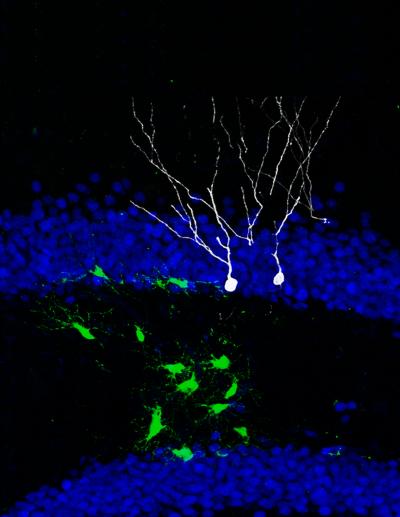
Researchers at the Salk Institute for Biological Studies have gone beyond manipulating adult stem cells cultured in the lab and achieved the same feat with adult neural stem cells - still in place in the brain. They successfully coaxed mouse brain stem cells bound to join the neuronal network to differentiate into support cells instead.

The discovery not only attests to the versatility of neural stem cells but also opens up new directions for the treatment of neurological diseases, such as multiple sclerosis, stroke and epilepsy that not only affect neuronal cells but also disrupt the functioning of glial support cells.

Throughout life, adult neural stem cells generate new brain cells in two small areas of mammalian brains: the olfactory bulb, which processes odors, and the dentate gyrus, the central part of the hippocampus, which is involved in the formation of memories and learning.

