Creationists and their intellectual cousins, intelligent design proponents, keep saying that scientists disagree as to “the truth” of evolution, and that the field is therefore in crisis, despite official attempts by scientists to deny any problem and unite under the evil cause of fighting “the truth” about Jesus Christ our Lord and Savior. As is common in these circumstances, some creationist claims are in fact correct, but trivially so, while the use that creationists attempt to make of the claims themselves is highly (and possibly willfully) misleading. As a case in point, I am about to leave the United States for a trip to Vienna where I will be chairing a workshop on the status and future of evolutionary theory, the anticipation of which has been providing delight to creationists for the past several months.

The so-called “Woodstock of evolution” (not my term, and a pretty bad one for sure) will see a group of scientists, by now known as “the Altenberg 16” (because there are sixteen of us, and we’ll meet at the Konrad Lorenz Institute for theoretical biology in Altenberg, near Vienna) has been featured on blogs by a variety of nutcases, as well as the quintessential ID “think” tank, the Discovery Institute of Seattle. They have presented the workshop that I am organizing in collaboration with my colleague Gerd Müller, and the proceedings of which will be published next year by MIT Press, as an almost conspiratorial, quasi-secret cabala, brought to the light of day by the brave work of independent journalists and “scholars” bent on getting the truth out about evolution. Of course, nothing could be further from the (actual) truth.

Charles Darwin (1809-1882) opened his first notebook about "the species question" in 1837, not long after his return from the voyage of the Beagle.  By 1838, he had developed the basic outline   of his theory of natural selection to explain the evolution of species.  He spent the next 20 years developing the theory and marshalling evidence in favour of both the fact that species are related through common descent and his particular theory to explain this.  After receving word that another naturalist, Alfred Russel Wallace (1823-1913), had independently come upon the same theory, he assembled his work for publication, first in a joint paper with Wallace presented to the Linnean Society of London in 1858 and then his "abstract", On the Origin of Species, in 1859.

Some authors have argued that Edward Blyth (1810-1873), an acquaintance of Darwin's, developed the central idea of selection in an 1835 paper in the Magazine of Natural History.  For example, Eiseley and Grote (1959) claimed that "the leading tenets of Darwin's work -- the struggle for existence, variation, natural selection and sexual selection are all fully expressed in Blyth's 1835 paper", from which they then quoted the following:

Starve a fever, feed a traumatic brain injury. Recent studies by clinician-scientists from New York-Presbyterian Hospital and Weill Cornell Medical Center found that patients with traumatic brain injury, or TBI, have a higher survival rate when their caloric intake is increased. Patients of TBI are fed through a gastric feeding tube inserted through a hole in the stomach for long-term eternal nutrition. The sooner the supplemental nutrition plan is initiated the better chance a patient has for survival, up to four times, researchers say.

A few years ago Voyager 1 entered the final frontier, that place where the solar wind becomes denser and hotter and pressure from gas between stars causes it to slow - the Termination Shock.

Now that Voyager 2 has reached its edge of the solar system, just under 7 billion miles from Earth, it has confirmed what astrophysicists had believed - the conflict between the solar wind and the interstellar wind has made that part of the solar system slightly squashed.

The Bengal tiger population of Suklaphanta Wildlife Reserve in Nepal has declined at least 30 percent, according to camera trap results monitored by World Wildlife Fund (WWF). While once a refuge that boasted among the highest densities of the endangered species in the Eastern Himalayas, the recent survey (April 2008) showed a population of between 6-14 tigers, down from 20-50 tigers in 2005.

Suklaphanta Wildlife Reserve in Nepal is 117 sq miles, less than twice the size of the District of Columbia, and is home to tigers, rhinos and the world's largest flock of Bengal florican (Houbaropsis bengalensis) and swamp deer (Cervus duvauceli). It connects with two tiger reserves in India, Pilbhit and Dudhwa.

New research findings say that if we get smart about diet, even our intelligence can improve.

In an MIT study published in The FASEB Journal, gerbils were given various combinations of three compounds needed for healthy brain membranes: choline, found in eggs; uridine monophosphate (UMP) found in beets; and docosahexaenoic acid (DHA), found in fish oils. Other gerbils were given none of these to serve as a baseline.

They were checked for cognitive changes four weeks later and the scientists found that the gerbils given choline with UMP and/or DHA showed cognitive improvements in tasks thought to be relevant to gerbils, such as navigating mazes. After these tests were concluded, the researchers dissected the mouse brains for a biological cause for the improvement. They found biochemical evidence that there was more than the usual amount of brain synapse activity, which was consistent with behaviors indicating higher intelligence.

LONDON, July 2 /PRNewswire/ --

The In-Depth Report Examining Internet Pharmacies and Life-saving Medicines Purchased Online was Presented Today by the EAASM at the 3rd Annual Pharmaceutical Anti Counterfeiting Conference in London.

The European Alliance for Access to Safe Medicines (EAASM) has today unveiled its comprehensive research report - The Counterfeiting Superhighway. The report reveals that a frightening 62% of medicines purchased online are fake or substandard. These include medicines indicated to treat serious conditions such as cardiovascular and respiratory disease, neurological disorders and mental health conditions.

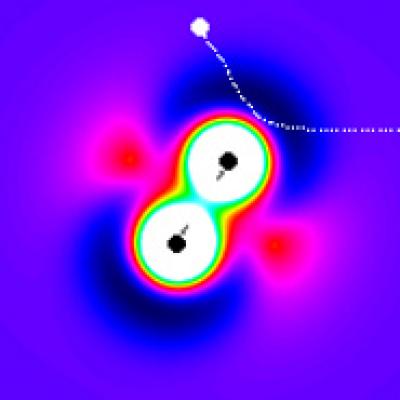
We all know what happens when cars collide on the freeway or an anvil lands on Wile E. Coyote's head - physics at the macro level is predictable. But what about a single hydrogen atom and a lone molecule of deuterium, the smallest atom and one of the smallest molecules?

When an atom collides with a molecule, traditional wisdom said the atom had to strike one end of the molecule hard to deliver energy to it. People thought a glancing blow from an atom would be useless in terms of energy transfer, but that turns out not to be the case, according to the researchers.

Every atom or molecule, even if it has no charge, has electrostatic forces around it-sort of like the magnetic field of the Earth. Those chemical forces exert a pull on any other atom or molecule within range, trying to form a chemical bond.

More evidence for the beneficial effect of green tea on risk factors for heart disease has emerged in a new study reported in the latest issue of European Journal of Cardiovascular Prevention and Rehabilitation.(1) The study found that the consumption of green tea rapidly improves the function of (endothelial) cells lining the circulatory system; endothelial dysfunction is a key event in the progression of atherosclerosis.

The study, performed by Dr Nikolaos Alexopoulos and colleagues at the 1st Cardiology Department, Athens Medical School in Greece, was a randomised trial involving the diameter measurement (dilatation) of the brachial artery of healthy volunteers on three separate occasions - after taking green tea, caffeine, and hot water (for a placebo effect). The measurements were taken at 30, 90 and 120 minutes after consumption. Dilatation of the brachial artery as a result of increased blood flow (following a brief period of ischaemia of the upper limb) is related to endothelial function and is known to be an independent predictor of cardiovascular risk.(2)

Do men who have more sex get less erectile disfunction(ED) or are studies skewed because men with erectile disfunction report having less sex? It's hard to say but the message is clear; have more sex.

Having intercourse more often may also help prevent the development of erectile dysfunction. A study in The American Journal of Medicine reports that researchers have found that men who had intercourse more often were less likely to develop ED.

Analyzing a five-year study of 989 men aged 55 to 75 years from Pirkanmaa, Finland, the investigators observed that men reporting intercourse less than once per week at baseline had twice the incidence of erectile dysfunction compared with those reporting intercourse once per week. Further, the risk of erectile dysfunction was inversely related to the frequency of intercourse.