We learned from the prior blog that the Sun is much too bright for normal viewing with our sensitive eyes. A white “color” results when we observe objects that are both extremely bright and bright at all or most visible wavelengths. Please allow me to elaborate a little more on this issue.

The French like their artichokes fried, the Italians like them on pizza, in Spain they are used in frittata and the best artichokes are supposedly found in Greece. Meanwhile, at the University of Reading, a research University in Great Britain, the flower is being used for medicinal purposes connected to reducing cholesterol. High cholesterol levels related to cardiovascular disease have been shown to improve with the help of Artichoke Leaf Extract, or ALE, therefore minimizing the need for prescription drugs. By stabilizing cholesterol before it becomes a problem, researchers at University of Reading found yet another dietary supplement beneficial to healthy cholesterol levels.

If you're a long-time reader of this site, you might get the idea that Albert Einstein was a pretty smart guy - that comes across because he tends to proven right a lot even today.

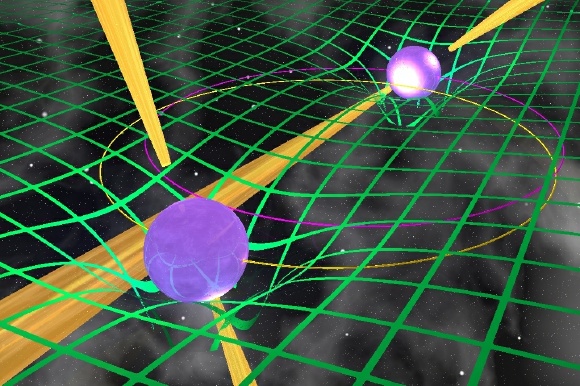
PSR J0737-3039A/B is a unique system of two dead stars, pulsars, and one of the pair is 'wobbling' in space just like a spinning top, according to a team of researchers. The effect, called precession, was predicted by Albert Einstein and is yet another confirmation of his theory.

The binary pulsars were formed when a pair of massive stars exploded and their cores collapsed to create objects whose mass is greater than that of our Sun, but compressed to the size of a city. They are spinning at incredible speeds and emit powerful beams of radio waves which sweep across our radio-telescopes like cosmic lighthouses producing regular pulses of energy - hence their name, pulsars. PSR J0737-3039A/B is the only known system in our galaxy where two pulsars are locked into such close orbit around one another - the entire system could fit inside our Sun.

Calorie restriction related to longevity is a hot topic. Calorie restriction slows the aging process in rats and mice but no one is sure how. One recently popular hypothesis is that it slows aging by decreasing a thyroid hormone, triiodothyronine (T3), which then slows metabolism and tissue aging.

Mice who benefited from calorie restriction were weaned on that diet, a strategy that will get you arrested for child endangerment with human children, but a new study in the June 2008 issue of Rejuvenation Research found that moderate calorie restriction – cutting approximately 300 to 500 calories per day – showed a similar thyroid decrease in humans.

So, they say, the longevity effect may also happen in humans.

A giant rubber anaconda could be a step on the road to meeting a large chunk of our energy needs using carbon-free, wave-generated electricity.

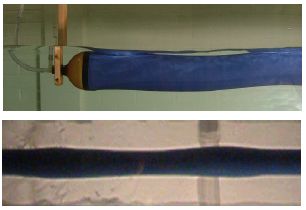
The 'Anaconda' is named after the snake of the same name because of its long thin shape. It is closed at both ends and filled completely with water and then anchored just below the sea's surface, with one end facing the oncoming waves. A wave hitting the end squeezes it and causes a 'bulge wave'(a wave of pressure produced when a fluid oscillates forwards and backwards inside a tube) to form inside the tube. As the bulge wave runs through the tube, the initial sea wave that caused it runs along the outside of the tube at the same speed, squeezing the tube more and more and causing the bulge wave to get bigger and bigger. The bulge wave then turns a turbine fitted at the far end of the device and the power produced is fed to shore via a cable.

Thanks to salt and hot chili peppers, researchers have found what tells a roundworm to go forward toward dinner or turn to broaden the search. It's a computational mechanism, they say, that is similar to what drives hungry college students to a pizza.

Yes, college students have the calculus center of a worm.

These behavior-driving calculations are done "in a tiny, specialized computer inside a primitive roundworm," says principal investigator Shawn Lockery, a University of Oregon biologist and member of the UO Institute of Neuroscience.

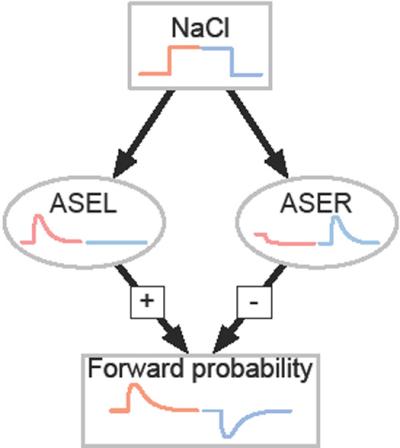
In the paper, the researchers documented how two related, closely located chemosensory neurons, acting in tandem, regulate behavior. The left neuron controls an on switch, while the opposing right one an off switch. These sister neurons are situated much like the two nostrils or two eyes of mammals. Together these neurons are known as ASE for antagonistic sensory cues.

A woman in southern Ontario is one of the first cases in Canada of a rare neurological syndrome in which a person starts speaking with a different accent, McMaster University researchers report in the July issue of the Canadian Journal of Neurological Sciences.

The puzzling medical phenomenon known as foreign-accent syndrome (FAS) arises from neurological damage, and results in vocal distortions that typically sound like the speaker has a new, "foreign" accent.

This particular case, however, is even more unusual because the English-speaking woman did not acquire an accent that sounds foreign but one that instead sounds like Maritime Canadian English.

In a familiar world of solids, liquids and gases, we find the fourth state of matter, the plasmas of lightning to the aurora borealis and fluorescent tubes at the office. Further out, minor phenomena becomes the big event in space, our shining stars are plasma being fused producing light. Not until 1924 was a fifth state of matter considered possible. Intrigued by quantum statistics, invented by the Bengali physicist, Satyendra Nath Bose from observations of light, Einstein applied Bose’s work to matter. The Bose-Einstein Condensate(BEC) was born. Was there any truth to the theory, Einstein himself wondered, that matter that could condense at ultracold temperatures into something new?

Einstein’s theory was left hanging, as a mathematical artifact, until 1938. Fritz London, a German theoretical chemist and physicist, working on helium at the same time as the Russian Pyotr Kapitsa who discovered its superfluid state at just under 2.2 K, found it behaved like Einstein’s theoretical BEC. Subsequent research confirmed London’s insight. Both stable isotopes, ordinary helium-4, and the rare helium-3 at much lower temperatures, are quantum superfluids, behaving like matter-waves or superatoms, undifferentiated matter with vastly different properties from their gas state or their ordinary bottled fluid state.

Almost fifty percent of people over the age of 85 have Alzheimer’s disease, an illness that is not considered part of the normal aging process by the U.S. National Institute on Aging. Statistics on the NIA website also reveal that there is no cure for the degenerative disease. Recently, according to scientists at University of York and Simon Fraser University in Burnaby, British Columbia, tricking the brain into halting the degeneration of neurons could be a dramatic step in finding a remedy for neurodegenerative diseases—especially Alzheimer’s disease. Research in the latest issue of Nature Chemical Biology looks at Alzheimer’s disease in relation to neurodegeneration involving the death of neurons.
I'm back from the UCSD workshop on New Communication Channels for Biology held June 27-28, 2008. The talks were recorded and are now available here. The first day mainly consisted of talks while the second was very heavy on breakout sessions (see agenda). Probably the most beneficial part for me was seeing old friends or meeting in person several people I had only interacted with online previously. For example was nice to finally meet Dan Gezelter from the OpenScience project and Hilary Spencer from Nature Precedings. I also had a blast over enchiladas on Friday night with Mike Nieslen and Jen Dodd. Mike gave a very engaging talk on the Future of Science on Thursday night. The presentations were recorded and should be available within a week on the wiki link above - I'll post an update here when I am made aware of it.