





Many common diseases exhibit gender bias and gender differences have been observed in the development of high blood pressure (hypertension) and heart (cardiovascular) disease. Previous studies have reported that gender may affect vascular physiology and the body’s response to some types of blood pressure medications.

Although gender is usually accounted for in association studies, newer research has focused on identifying autosomal (not on the X or Y chromosomes) genes that contribute differentially to complex traits (blood pressure) or diseases (hypertension). In a new study, researchers examined the differential contribution of genetic factors involved in regulating blood pressure based on samples drawn from a large community.

Just when you thought it was safer to stay out of the water.

Microbes that result in beach closures and health advisories when detected at unsafe levels in the ocean also have been detected in the sand, according to a recent study by a team of Stanford scientists.

Published in the July 1 issue of Environmental Science and Technology, the study found that sand at beaches all along the California coast contained some level of fecal indicator bacteria. Moreover, when the researchers looked closely at the sand quality at a popular beach in Monterey, Calif., they found evidence of human waste-raising doubt about the commonly held belief that some fecal indictor bacteria occur naturally in the sand and are therefore benign.

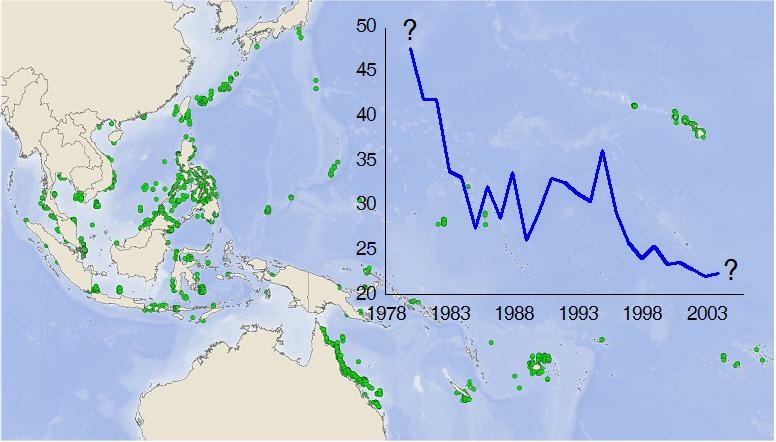
Corals in the central and western Pacific ocean are dying faster than previously thought, University of North Carolina at Chapel Hill researchers have found. Nearly 600 square miles of reef have disappeared per year since the late 1960s, twice the rate of rainforest loss.

The reefs are disappearing at a rate of one percent per year, a decline that began decades earlier than expected, the researchers discovered. Historically, coral cover, a measure of reef health, hovered around 50 percent.

A team of researchers contends that animals learn to connect the taste of food with the amount of caloric energy it provides, and children who consume low-calorie versions of foods that are normally high in calories may develop distorted connections between taste and calorie content, leading them to overeat as they grow up.

So diet foods and drinks for children may inadvertently lead to overeating and obesity.

"Based on what we've learned, it is better for children to eat healthy, well-balanced diets with sufficient calories for their daily activities rather than low-calorie snacks or meals," said Dr. David Pierce, a University of Alberta sociologist and lead author of the paper.

Researchers have identified a new player in the control of high-density lipoprotein cholesterol (HDL-C) ( the “good” cholesterol ) that circulates in the bloodstream and reduces heart attack risk.

In the current study, the researchers found that treatments that partially block the activity of liver enzymes called proprotein convertases decreased plasma HDL-C levels in mice. They showed that the metabolic effect of the proprotein convertases depended on yet another factor, an enzyme called endothelial lipase (EL), which breaks down HDL-C. Proprotein convertases normally reduce EL function, they reported.

Part of an ongoing study into the impact of drinking milk after heavy weightlifting has found that milk helps exercisers burn more fat.

The study by researchers at McMaster University and published today in the American Journal of Clinical Nutrition, was conducted by the Department of Kinesiology’s Exercise Metabolism Research Group, lead by Stuart Phillips.

The researchers took three groups of young men 18 to 30 years of age – 56 in total – and put them through a rigorous, five-day-per-week weightlifting program over a 12-week period.

Researchers at the University of Pennsylvania School of Medicine recently identified how a regulatory protein called Bcl-3 helps to control the body’s inflammation response to infection by interfering a critical biochemical process called ubiquitination. While previous studies suggested Bcl-3 plays a role in immunity, this is the first report that Bcl-3 regulates inflammation by blocking ubiquitination.

Their findings, published in Science, open new avenues of exploration for developing therapies to treat infectious or inflammatory diseases, such as sepsis, diabetes, and rheumatoid arthritis.

As oil becomes scarce, the world needs new transportation fuels. As new fuel options develop we need means of assessing which are most effective at replacing petroleum. So far many scientists have used a measure called ‘net energy’.

However, Professor Bruce Dale from Michigan State University claims, “Net energy analysis is simple and has great intuitive appeal, but it is also dead wrong and dangerously misleading – net energy must be eliminated from our discourse.” Dale’s perspective is published in the first edition of Biofuels, Bioproducts and Biorefining.

Instead, Dale recommends comparing fuels by assessing how much petroleum fuel each can replace, or by calculating how much CO2 each produces per km driven.

A new study funded by the Economic and Social Research Council (ESRC) says that ethical consumption is most likely to happen when it is approached as a political or societal goal rather than encouraging individual changes in lifestyle.

Efforts like Live Earth to "raise awareness" may be doing it all wrong, they say.

The research team found that campaigns aimed at getting people to change what they buy often worked on the assumption that individuals lack the necessary information to make educated decisions about the consequences of what they buy and where they buy it from. However the findings from the study suggest that people don't lack information about organic food, environmental sustainability, or third world sweatshops. They lack realistic alternatives.

In a new study appearing in Personality and Social Psychology Bulletin, researchers at the University of Illinois explore real-life relationship issues by looking at the choices people make in simulated online dating relationships. By standardizing the behavior of the romantic “partner,” the study clarifies how each participant’s outlook influences his or her choices and satisfaction with the romance.

The online study took participants through a series of scenarios about a relationship with a fictional partner.

