







Like navigating spacecraft through the solar system by means of gravity and small propulsive bursts, researchers can guide atoms, molecules and chemical reactions by utilizing the forces that bind nuclei and electrons into molecules (analogous to gravity) and by using light for propulsion. But, knowing the minimal amount of light required, and how that amount changes with the complexity of the molecule, has been a problem.

Now, by creating a quantum mechanical analog of Ulam’s conjecture, researchers at the University of Illinois and the University of California have expanded the flexibility and controllability of quantum mechanical systems.

Many of us experience a tinge of guilt as we delight in feelings of pleasure from our favorite indulgences, like splurging on an expensive handbag or having another drink.

Yet, in spite of documented ambivalence towards temptation and well-meaning vows not to succumb again, consumers often end up repeating the same or similar choices. A new study by Suresh Ramanathan (University of Chicago) and Patti Williams (Wharton School of Business, University of Pennsylvania) examines repeated impulsive behavior despite the presence of guilt – important research underscored by the increasing prevalence of binge drinking, obesity, and credit card debt.

Researchers from the Stem Cell Transplant Program and the Amyloid Treatment and Research Program at Boston University Medical Center (BUMC) have found that high-dose chemotherapy and blood stem cell transplantation can result in long-term survival for patients diagnosed with primary systemic light chain (AL) Amyloidosis.

BUMC was the first to begin using this treatment in 1994 and is the only center to publish these long-term outcome results.

AL amyloidosis occurs when plasma cells in bone marrow produce proteins that misfold and deposit in tissues, leading to organ failure and death. Between 1,200 and 3,200 new cases are reported each year in the United States, although researchers believe the disease is highly underdiagnosed.

As more people become fat, fat becomes more acceptable - even normal - and the definition of 'obesity' gets pushed further out.

Today, fat is the new 'normal', according to Florida State University Assistant Professor of Economics Frank Heiland and Federal Reserve Bank of Boston Economist Mary Burke, who are the co-authors of a paper published in the academic journal Economic Inquiry that argues that the ballooning weight of the population has fed even more collective weight gain as our perception of what is considered a normal body size has changed.

“This is a social force that we are trying to document because the rise in obesity has occurred so rapidly over the past 30 years,” said Heiland, who also is affiliated with FSU’s Center for Demography and Population Health.

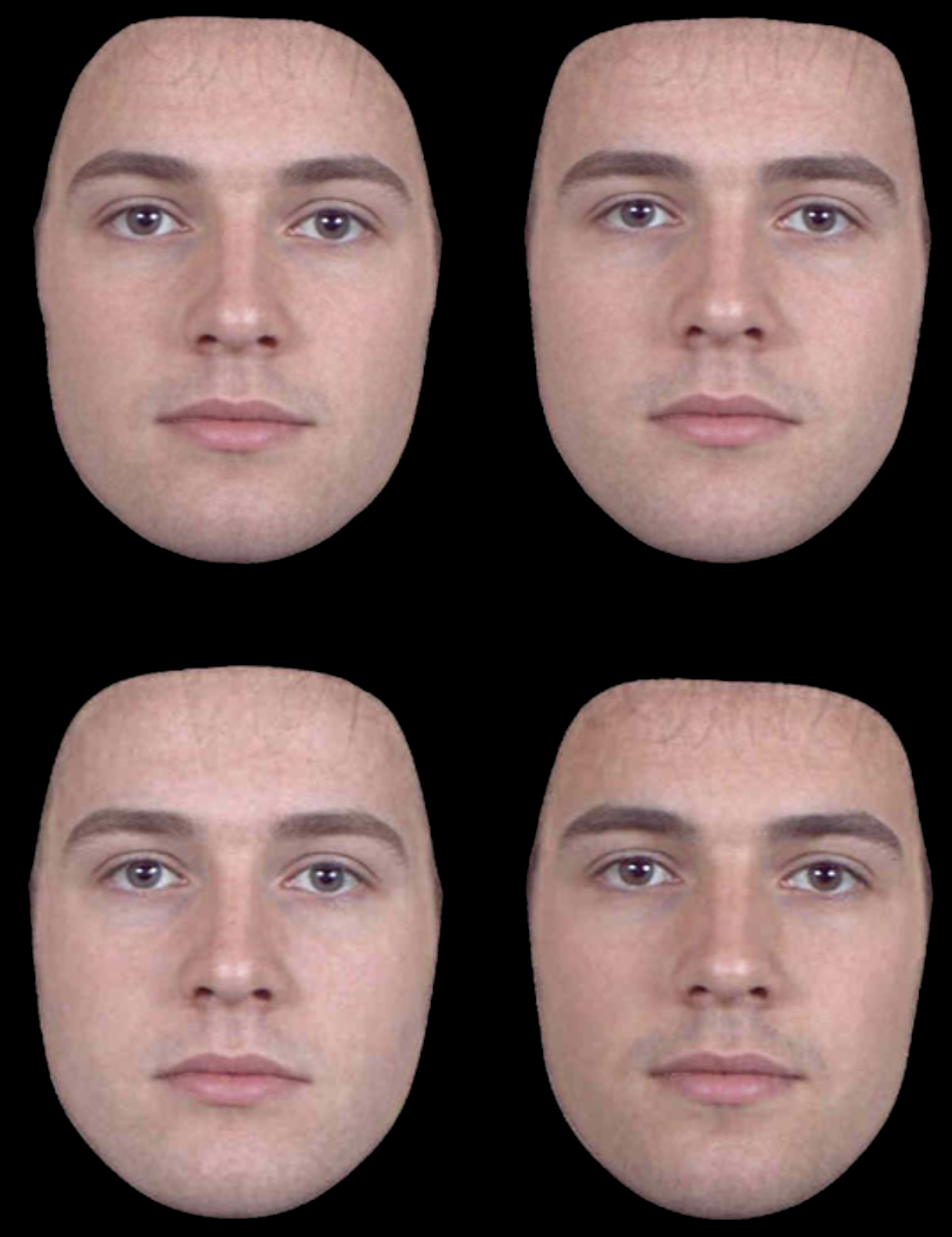
Women see ‘masculine’ men as unsuitable long-term partners, new research suggests. Conversely, the psychologists from Durham and St Andrews Universities found that men with feminine facial features are seen as more committed and less likely to cheat on their partners.

The study, published in the current edition of Personality and Individual Differences, asked over 400 British men and women to judge digitally altered pictures of male faces made to look more masculine or feminine. The participants were asked to predict personality traits including sexual behaviour and parenting skills based on what they saw.

People suffering from a severe retinal disease will sooner or later lose their eyesight considerably or even become completely blind.

Coordinated by the geneticist Ronald Roepman from Nijemegen, an international team has identified a further gene for the inherited retinal disease Leber Congenital Amaurosis (LCA) and discovered evidence how it functions. This represents new opportunities for gene therapy, a very promising approach for LCA since the disease is caused by a single mutation.

LCA causes blindness very early on – often shortly after or within a few months of birth. The disease can be caused through a single mutation in different genes; with the newly discovered LCA5 gene, ten disease-causing genes had been identified so far which are responsible for approx.

The DNA of ancient microorganisms, long frozen in glaciers, may return to life as the glaciers melt, according to a paper published online this week in the Proceedings of the National Academy of Sciences by scientists at Rutgers and Boston University.

The finding is significant, said Kay Bidle, assistant professor of marine and coastal sciences at Rutgers, because scientists didn’t know until now whether such ancient, frozen organisms and their DNA could be revived at all or for how long cells are viable after they’ve been frozen.

When it comes to generating neurons, researchers have found that not all embryonic stem (ES) cell lines are equal. In comparing neurons generated from two NIH-approved embryonic stem cell lines, scientists have uncovered significant differences in the mature, functioning neurons generated from each line. The discovery implies that culture conditions during ES cell generation -- which have yet to be identified -- can influence the developmental properties of human ES cells.

The report also describes a new technique for producing functioning neurons from stem cells that will be important for creating models of human neurodegenerative diseases.

Green tea could hold promise as a new treatment for skin disorders such as psoriasis and dandruff, Medical College of Georgia researchers say.

Researchers studied an animal model for inflammatory skin diseases, which are often characterized by patches of dry, red, flaky skin caused by the inflammation and overproduction of skin cells. Those treated with green tea showed slower growth of skin cells and the presence of a gene that regulates the cells’ life cycles.

“Psoriasis, an autoimmune disease, causes the skin to become thicker because the growth of skin cells is out of control,” says Dr. Stephen Hsu, an oral biologist in the MCG School of Dentistry and lead investigator on the study.

Caffeine may help older women protect their thinking skills, according to a new study.

The study found that women age 65 and older who drank more than three cups of coffee (or the equivalent in tea) per day had less decline over time on tests of memory than women who drank one cup or less of coffee or tea per day. The results held up even after researchers adjusted for other factors that could affect memory abilities, such as age, education, disability, depression, high blood pressure, medications, cardiovascular disease, and other chronic illnesses.

