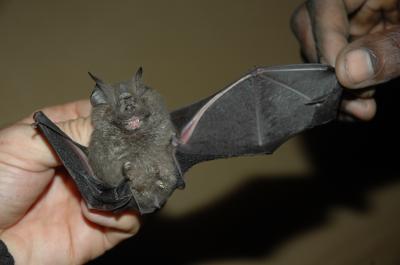







An expedition led by the Wildlife Conservation Society (WCS) to a remote corner of the eastern Democratic Republic of Congo has uncovered unique forests which, so far, have been found to contain six animal species new to science: a bat, a rodent, two shrews, and two frogs.

The forested region—including the Misotshi-Kabogo Forest (formerly Mt. Kabobo)—and nearby Marunga Massif is located just west of Lake Tanganyika and has been off limits to scientists since 1960 as a result of continued instability in the area.

“If we can find six new species in such a short period it makes you wonder what else is out there,” said WCS researcher Dr. Andrew Plumptre, director of the society’s Albertine Rift Program.

A team of Cornell University scientists have discovered that a novel group of E. coli bacteria – containing genes similar to those described in uropathogenic and avian pathogenic E. coli and enteropathogenic bacteria such as salmonella, cholera, bubonic plague – is associated with intestinal inflammation in patients with Crohn’s disease.

Crohn’s disease, an incurable inflammatory disorder of the intestine – most commonly found in the lower part of the small intestine called the ileum – affects 1-in-1,000 people in Europe and North America. Thus far, gut bacteria have long been suspected in playing a pivotal role in the development of Crohn’s disease, but the specific bacterial characteristics that drive the inflammatory response have remained elusive.

After complaining that there was not enough time to cover everything at the Science Foo Camp, and after getting some very positive feedback from our chemical reaction mechanism representation in Second Life, it occurred to me that it would make sense to attempt to continue the conversation in a virtual medium. I have previously presented a poster in Second Life and I was thoroughly impressed with how well it worked.

‘Second generation’ biorefineries – those making biofuel from lignocellulosic feedstocks like straw, grasses and wood – have long been touted as the successor to today’s grain ethanol plants, but until now the technology has been considered too expensive to compete. However, recent increases in grain prices mean that production costs are now similar for grain ethanol and second generation biofuels, according to a paper published in the first edition of Biofuels, Bioproducts & Biorefining.

The switch to second generation biofuels will reduce competition with grain for food and feed, and allow the utilization of materials like straw which would otherwise go to waste.

"The grass isn't always greener on the other side of the fence" is a popular old phrase. In a series of eight experiments, Tom Meyvis (New York University) and Alan Cooke (University of Florida) set out to demonstrate that scientifically.

The issue, they say, is that the quest for improvement sometimes makes people lose sight of the best choice they already have.

“Our findings suggest that consumers who are focused on the future are so preoccupied with finding ways to improve their situation that they become overly sensitive to information that points to such opportunities — and lose sight of the relative advantages of their current choice,” the authors explain.

University of Queensland researchers have identified microbial remains in some of the oldest preserved organic matter on Earth, confirmed to be 3.5 billion years-old.

The UQ team, led by School of Physical Sciences scientists Dr Miryam Glikson and Associate Professor Sue Golding as well as Associate Professor Lindsay Sly from the School of Molecular & Microbial Sciences, are the first to conclusively confirm the nature and source of the organic material.

“What we have found is the first visual confirmation of primitive microbial communities in what is considered to be the best preserved ancient organic matter on our planet,” Dr Glikson, the instigator of the research, said.

An intense form of ultrasound that shakes a tumor until its cells start to leak can trigger an “alarm” that enlists immune defenses against the cancerous invasion, according to a study led by researchers at Duke University's Pratt School of Engineering.

The new findings from animal experiments suggest that once activated by the ultrasound, the immune system might even seek and destroy cancer cells, including those that have spread through the bloodstream to lurk in other parts of the body.

This high-intensity focused ultrasound, or HIFU, is in use or testing in China, Europe and the United States to kill tumors by heating them. But Duke researchers now find that HIFU might work even better if it is first delivered in a manner that just shakes the cells.

University of Cincinnati (UC) neurovascular researchers have identified a gene that—when suppressed or completely absent—may predispose a person to brain aneurysms.

Todd Abruzzo, MD, and his colleagues demonstrated that “knocking out” a gene known as endothelial nitric oxide synthase (NOS-3) in an animal model led to intracranial aneurysm formation in 33 percent of study subjects.

Scientists say this suggests that the gene may play an important role in the development of intracranial aneurysms.

While 10 years of bathing North Carolina pine tree stands with extra carbon dioxide did allow the trees to grow more tissue, only those pines receiving the most water and nutrients were able to store significant amounts of carbon that could offset the effects of global warming, scientists told a national meeting of the Ecological Society of America (ESA).

These results from the decade-long Free Air Carbon Enrichment (FACE) experiment in a Duke University forest suggest that proposals to bank extra CO2 from human activities in such trees may depend on the vagaries of the weather and large scale forest fertilization efforts, said Ram Oren, the FACE project director.

"If water availability decreases to plants at the same time that carbon dioxide increases, then we might not have a net g

Despite marketing claims, parents who want to give their infants a boost in learning language probably should limit the amount of time they expose their children to DVDs and videos such as “Baby Einstein” and “Brainy Baby.”

Rather than helping babies, the over-use of such productions actually may slow down infants eight to 16 months of age when it comes to acquiring vocabulary, according to a new study by researchers at the University of Washington and Seattle Children’s Hospital Research Institute.

The scientists found that for every hour per day spent watching baby DVDs and videos, infants understood an average of six to eight fewer words than infants who did not watch them.

