Stradivarius and his
violins are so eponymous in our culture that they have become a benchmark for quality - and the mystery of why they sound so good has
baffled competitors for centuries. After 33 years of work, a Texas A&M University professor is confident he knows the secret - chemistry.
Nearly every summary of creationism and the law that I've read includes some sort of statement to the effect that 'the judicial decisions have left the door cracked slightly open for creation science.' Two generally excellent books on the subject illustrate this phenomenon.
Edward Humes, in
Monkey Girl writes about the 1987
Edwards v. Aguillard Supreme Court decision striking down a Louisiana law requiring that "creation science" be taught. Humes quotes Scalia's rather juvenile dissent (the man couldn't help but drape his argument in insults for his colleagues), and writes:
Ever since the time of Mendel, students and the general public have struggled with how to understand the interconnection of mathematics and genetics. Not because understanding Mendelian mathematics is a difficult subject, but rather because the application of mathematics has never been the strong suit for most people.
Reginald Punnett recognized this struggle when in 1909 he introduced the Punnett square - the cornerstone of genetics education in almost every classroom. In fact, for almost 100 years now, while the science of genetics has evolved by leaps and bounds, little has changed in the way that educators teach genetics.
A team of Yale University astronomers say that galaxies stop forming stars long before their central supermassive black holes reach their most powerful stage, meaning the black holes can’t be responsible for shutting down star formation.
Astronomers believe that active galactic nuclei (AGN), the supermassive, extremely energetic black holes at the centers of many young galaxies, were responsible for shutting down star formation in their host galaxies once they grew large enough. It was thought that AGN feed on the surrounding galactic material, producing enormous amounts of energy (expelled in the form of light) and heat the surrounding material so that it can no longer cool and condense into stars.
Not a fan of the mass media? You just might not live as long, according to a BMC Medicine study of people from 29 Asian countries which says that individuals with high levels of trust in the mass media tend to be healthier.
Unless we are your mass media. We have articles for and against the health claims related to
chocolate, for example, along with articles for and against almost everything else. Sometimes life is easier if you pick a position first and just write articles that support it but scientific neutrality holds us back from that time-honored path.
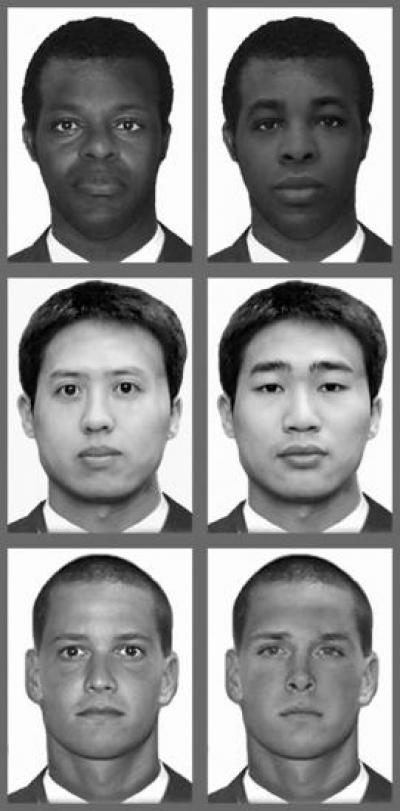
There may be a simple way to address racial bias: Help people improve their ability to distinguish between faces of individuals of a different race, according to Brown University and University of Victoria researchers who say they learned this through a new measurement system and protocol they developed to train Caucasian subjects to recognize different African American faces.
"The idea is this that this sort of perceptual training gives you a new tool to address the kinds of biases people show unconsciously and may not even be aware they have," said Michael J. Tarr, the Sidney A. and Dorothea Doctors Fox Professor of Ophthalmology and Visual Sciences and a professor of cognitive and linguistic sciences at Brown.
Headache sufferers either benefit from acupuncture or they mentally fool themselves into thinking acupuncture helps, according to two separate systematic reviews by Cochrane Researchers which show that acupuncture is an effective treatment for prevention of headaches and migraines, but faked procedures, in which needles are incorrectly inserted, can be just as effective.
In each study, the researchers tried to establish whether acupuncture could reduce the occurrence of headaches. One study focused on mild to moderate but frequent 'tension-type' headaches, whilst the other focused on more severe but less frequent headaches usually termed migraines. Together the two studies included 33 trials, involving a total of 6,736 patients.
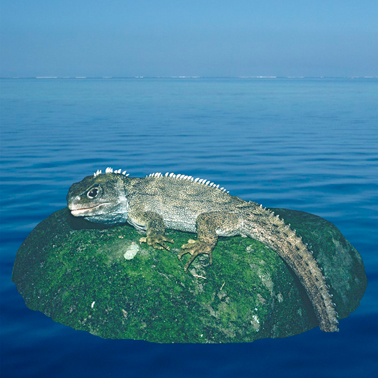
The fossil of a lizard-like New Zealand reptile has been identified by a team of scientists from University College London, University of Adelaide, and the Museum of New Zealand Te Papa Tongarewa. The fossil, dating back 18 million years, has triggered fresh arguments over whether the continent was fully submerged some 25 million years ago.
The endangered New Zealand tuatara (Sphenodon) is a lizard-like reptile that is the only survivor of a group that was globally widespread at the time of the dinosaurs. The tuatara lives on 35 islands scattered around the coast of New Zealand, mainland populations having become extinct with the arrival of humans and associated animals some 750 years ago.
Cosmic-rays detected half a mile underground in a disused U.S. iron-mine can be used to detect major weather events occurring 20 miles up in the Earth’s upper atmosphere, according to a new study published in Geophysical Research Letters and led by scientists from the UK’s National Centre for Atmospheric Science (NCAS) and the Science and Technology Facilities Council (STFC).
The study shows how the number of high-energy cosmic-rays reaching a detector deep underground, closely matches temperature measurements in the upper atmosphere (known as the stratosphere).
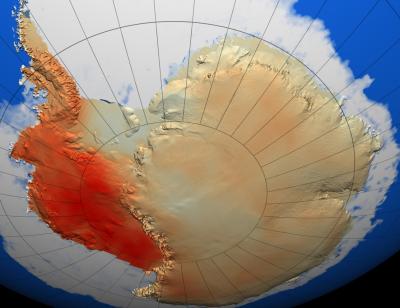
The consensus among scientists has been that while much of the globe has been getting warmer, a large part of Antarctica – the East Antarctic Ice Sheet – has actually been getting colder. Not so, say Eric Steig, a University of Washington professor of Earth and space sciences, and colleagues in Nature.