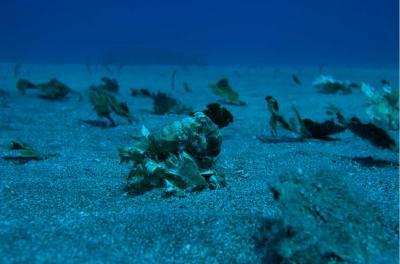
Uniform and mottle patterns are what most people recognize as camouflage and those patterns function by resembling the background. True background matching is not simple, though, and Roger T. Hanlon and colleagues say they are making one of the first efforts to quantify camouflage body patterns.
Although they have begun to compare camouflage tactics in many animals — large primates, amphibians, reptiles, fishes, insects — they are currently focusing on the cephalopods, which include squid, octopus, and cuttlefish. Remarkably, these soft-bellied mollusks are able to dynamically produce all three classes of camouflage body patterns (termed uniform, mottled, and disruptive).
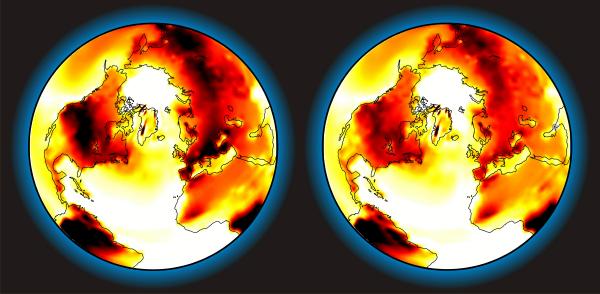
By carefully selecting which varieties of food crops to cultivate, much of Europe and North America could be cooled by up to 1°C during the summer growing season, say researchers from the University of Bristol, UK. This is equivalent to an annual global cooling of over 0.1°C, almost 20% of the total global temperature increase since the Industrial Revolution.
The growing of crops already produces a cooling of the climate because they reflect more sunlight back into space, compared with natural vegetation. Different varieties of the same crop vary significantly in their solar reflectivity (called 'albedo'), so selecting varieties that are more reflective will enhance this cooling effect. Since arable agriculture is a global industry, such cooling could be extensive.
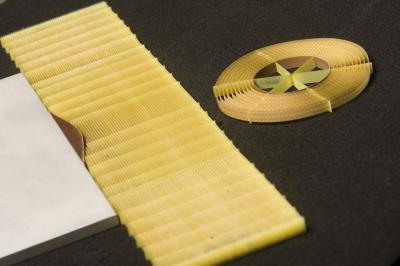
'Cloaking' devices bend electromagnetic waves, such as light, in such a way that it appears as if the cloaked object is not there. In the latest laboratory experiments by Duke researchers, a beam of microwaves aimed through the cloaking device at a "bump" on a flat mirror surface bounced off the surface at the same angle as if the bump were not present. Additionally, the device prevented the formation of scattered beams that would normally be expected from such a perturbation.
The underlying cloaking phenomenon is similar to the mirages seen ahead at a distance on a road on a hot day.
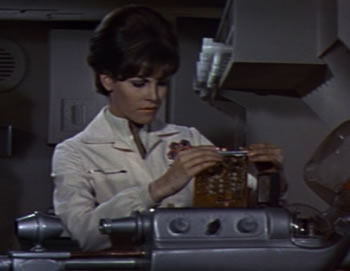
Ever since the 1966 Hollywood movie "Fantastic Voyage", written by Harry Kleiner (with what is actually a pretty good novelization by Isaac Asimov afterward) and starring Raquel Welch as the most convincing portrayal of a scientist ever , doctors have sought a day when they could have access to the real thing – a medical vehicle shrunk small enough to "submarine" in and fix faulty cells in the body. According to new research by Tel Aviv University scientists, that may be only three years away.
Blasting biofuels for significantly contributing to greenhouse gas emissions is sooooo 2006, according to a new Michigan State University analysis. Much like the environmental hype in the 1990s about how much better we would be with ethanol, the scorn heaped on biofuels has been exaggerated as well, calling into question the benefits of making fuel from plant material.
The scorn comes from assumptions that may not be correct, write Bruce Dale, Distinguished Professor of chemical engineering and materials science, and co-authors in Environmental Science&Technology.
The downside to new antibiotics is that bacteria think of new ways to become resistant to them. While resistant bacteria continue to increase, scientists keep searching for new sources of drugs in this week's
Journal of Biological Chemistry, one potential new bactericide has been found in the tiny freshwater animal Hydra.
The protein identified by Joachim Grötzinger, Thomas Bosch and colleagues at the University of Kiel, hydramacin-1, is unusual, and clinically valuable, as it shares virtually no similarity with any other known antibacterial proteins except for two antimicrobials found in another ancient animal, the leech.
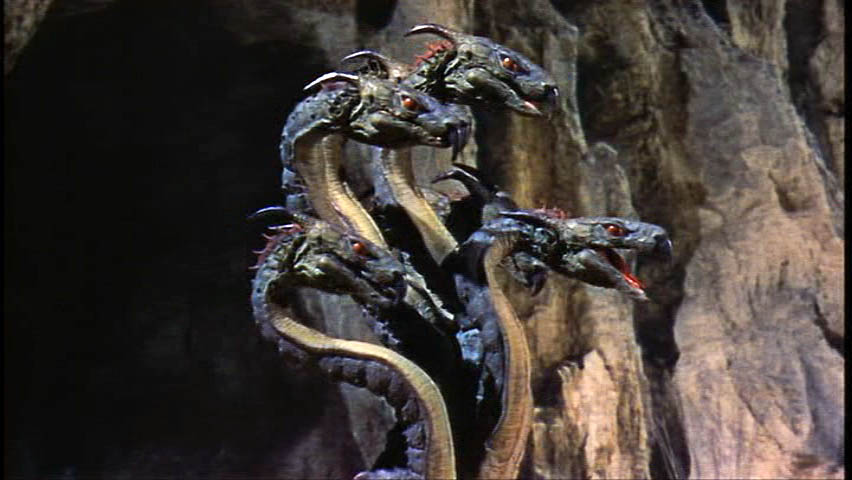 Not this Hydra.
In our 'studies you don't need to read' category is this bit of economic insight from the February edition of Addiction; the more alcoholic beverages cost, the less likely people are to drink. And when they do drink, they drink less.
After analyzing 112 studies spanning nearly four decades, researchers documented a concrete association between the amount of alcohol people drink and its cost.
Yes, it was unclear before that we should make alcohol something only rich people can have, thus widening the social and cultural gap before have's and have not's even further.
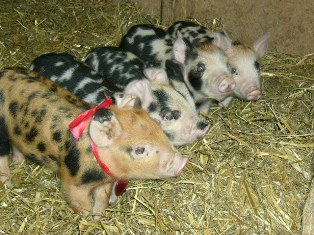
HUMANS have actively changed the coats of domestic animals by cherry-picking rare genetic mutations, causing variations such as different colours, bands and spots, according to a new study.
Although the study was carried out on pigs, the results can explain the evolution in the coat colors of all domesticated animals as they all express the same melanocortin-1 receptor (MC1R) gene, one of the genes that controls coat colour in animals.
The study also explains for the first time why there is a stark contrast between the coat colors of wild and domestic animals and gives further insight into the process of evolution, particularly since animals were first domesticated about 10,000 years ago.
DALLAS, January 15 /PRNewswire/ --
- Menlo Worldwide Government Services leverages One Network's Transportation and Logistics Network solution to establish enterprise-wide centralized management, planning, collaboration and execution for USTRANSCOM DTCI program.
NOIDA, India and LONDON, January 15 /PRNewswire/ --
- New Solution Will be Targeted at Institutions With Loan Origination Needs and Positions Misys and HCL as the Leading Providers of STP Solutions for Commercial Lenders
A new technology solution for banks originating commercial loans is to be brought to market as a result of an extended alliance between Misys plc (LSE: MSY), the global application software and services company, and the HCL CapitalStream Lending Group, a division of HCL Technologies which provides straight through processing (STP) solutions for lending operations.