





Research at the University of Liverpool has found how Saharan dust storms help sustain life over extensive regions of the North Atlantic Ocean.

Working aboard research vessels in the Atlantic, scientists mapped the distribution of nutrients including phosphorous and nitrogen and investigated how organisms such as phytoplankton are sustained in areas with low nutrient levels.

They found that plants are able to grow in these regions because they are able to take advantage of iron minerals in Saharan dust storms. This allows them to use organic or 'recycled' material from dead or decaying plants when nutrients such as phosphorous – an essential component of DNA – in the ocean are low.

Viruses achieve their definition of success when they can thrive without killing their host. Now, biologists Pamela Bjorkman and Zhiru Yang of the California Institute of Technology have uncovered how one such virus, prevalent in humans, evolved over time to hide from the immune system.

The human immune system and the viruses hosted by our bodies are in a continual dance for survival--viruses ever seek new ways to evade detection, and our immune system devises new methods to hunt them down. Human Cytomegalovirus (HCMV), says Bjorkman, Caltech's Delbrück Professor of Biology and a Howard Hughes Medical Institute (HHMI) Investigator, "is the definition of a successful virus--it thrives but it doesn't affect the host."

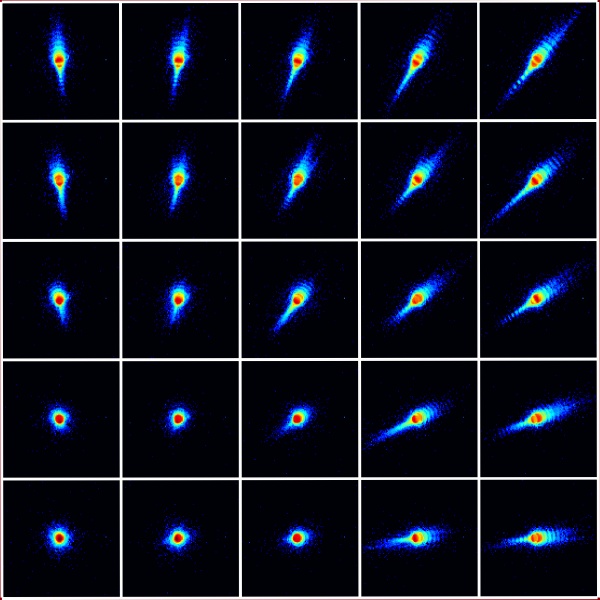
A super-resolution X-ray microscope developed by a team of researchers from the Paul Scherrer Institut (PSI) and EPFL in Switzerland combines the high penetration power of x-rays with high spatial resolution, making it possible for the first time to shed light on the detailed interior composition of semiconductor devices and cellular structures.

The new instrument uses a Megapixel Pilatus detector (whose big brother will be detecting collisions from CERN's Large Hadron Collider), which has excited the synchrotron community for its ability to count millions of single x-ray photons over a large area. This key feature makes it possible to record detailed diffraction patterns while the sample is raster-scanned through the focal spot of the beam. In contrast, conventional x-ray (or electron) scanning microscopes measure only the total transmitted intensity.

NEW YORK, July 18 /PRNewswire/ --

- Largest electricity investment in Togo's history will double the Country's generating capacity

ContourGlobal Togo, a subsidiary of international power company ContourGlobal, received approval today for US$209 million in financing and political risk insurance from the Board of Directors of the Overseas Private Investment Corporation (OPIC) for the construction and operation of a power plant in Lome, Togo.

LONDON, July 18 /PRNewswire/ --

Unite members across the NHS will today (Friday 18th July) send a strong message to government to say: "Cut my pay - No Way!" In a national day of protest NHS staff will be making clear their anger against the derisory three year pay offer of 7.99 per cent. This action will mark the start of the Unite campaign against the imposition of the pay deal, this includes the possibility of Unite balloting its members on industrial action.

Union members are angry that the proposed three year award, worth 2.75 per cent in year one, 2.54 per cent in year two and 2.5 per cent in the third year, represents a significant pay cut in the current economic climate.

LONDON, July 18 /PRNewswire/ --

- Exhibition Opens at The O2 This Autumn

LONDON, July 18 /PRNewswire/ --

Tickets to the next blockbuster exhibition to premiere at The O2, Body Worlds & The Mirror of Time from physician, scientist and anatomist Dr. Gunther von Hagens, go on sale today.

(Photo: http://www.newscom.com/cgi-bin/prnh/20080718/313865-a )

(Photo: http://www.newscom.com/cgi-bin/prnh/20080718/313865-b )

In partnership with the producers of the sensation Tutankhamun and the Golden Age of the Pharaohs, AEG and Arts and Exhibitions International (AEI), this all-new Body Worlds exhibition will make its world premiere at The O2 bubble on 24 October, 2008.

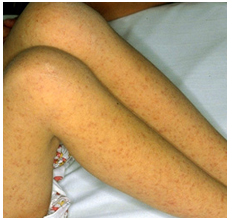
Hypochondriacs beware. The Rocky Mountain spotted fever and lyme disease caused by ticks is nothing to take lightly—especially in the dry season when ticks are most prominent, even more so due to global warming.

Rocky Mountain spotted fever, which was first identified in the Rocky Mountains, is caused by the bacteria Rickettsia rickettsii, when an infected tick comes in contact with humans. The ticks affected by the bacteria include the American dog tick, the lone-star tick, and the wood tick, all of which like to live in wooded areas and tall, grassy fields.

Similarly, Lyme disease is named after the place it was discovered in Lyme, Connecticut in 1975. It is caused by a cork-screw like bacterium called Borrelia burgdorferi. The black-legged ticks are usually the ones that spread the disease. Like its progressive corkscrew shaped bacterium, ticks are affected by feeding off small animals with the disease. These animals usually include mice, chipmunks, and other wild rodents. When the infected tick attaches to a person or animal and stays attached long enough (usually more than 36 hours) to take a “blood meal” it has further passed on the infection.

Below is the final statement emerging from the Altenberg workshop, agreed upon by all 16 participants. Individual commentaries about the workshop will be posted on the KLI web site, and MIT Press will publish the full proceedings by the end of 2009.

A group of 16 evolutionary biologists and philosophers of science convened at the Konrad Lorenz Institute for Evolution and Cognition Research in Altenberg (Austria) on July 11-13 to discuss the current status of evolutionary theory, and in particular a series of exciting empirical and conceptual advances that have marked the field in recent times.

The new information includes findings from the continuing molecular biology revolution, as well as a large body of empirical knowledge on genetic variation in natural populations, phenotypic plasticity, phylogenetics, species-level stasis and punctuational evolution, and developmental biology, among others.

LONDON, July 17 /PRNewswire/ --

Silence Therapeutics plc (London AIM: SLN), a leading European RNAi focused biotechnology company, announces that for personal reasons, Jeffery Vick has resigned as Group CEO and left the Company.

The Board of Directors has appointed Iain Ross, currently Non-Executive Chairman, full time Chairman and Group CEO with immediate effect. Jeremy Curnock Cook, a Non-Executive Director of the Company has been appointed Senior Independent Non-Executive Director.

LONDON, July 17 /PRNewswire/ --

On behalf of the Board of Silence Therapeutics plc, Jeremy Curnock Cook said:

PLEASANTON, California, July 17 /PRNewswire/ --

- Recognized for game-changing technology and Enterprise Innovation

Spigit, a leader in enterprise social software, today announced that it has been chosen by AlwaysOn as one of the AO Global 250 Winners. Inclusion in the AO Global 250 signifies major developments in the creation of new business opportunities in the global technology industries. Spigit was selected by the AlwaysOn editorial team with assistance from KPMG's emerging business practice, KPMG VC Practice, who together surveyed more than 500 venture investors, investment bankers, and technology insiders.


