






MILPITAS, California, June 9 /PRNewswire/ --

BERLIN, June 9 /PRNewswire/ -- The German parliament (Bundestag) has agreed to new laws that strengthen conditions for renewable energies investments. The laws are part of the government's "Climate Package," the goals of which are saving 250 million metric tons of CO2 by 2020, with renewable energies contributing to 30% of electricity production by the same year. These legal changes strengthen Germany as an investment location for renewable energies and energy efficiency technologies.

A team of forensic scientists at the University of Copenhagen has studied human remains found in two ancient Danish burial grounds dating back to the iron age, and discovered a man who appears to be of Arabian origin.

The findings suggest that human beings were as genetically diverse 2000 years ago as they are today and indicate greater mobility among iron age populations than was previously thought. The findings also suggest that people in the Danish iron age did not live and die in small, isolated villages but, on the contrary, were in constant contact with the wider world.

On the southern part of the island of Zealand in Denmark, lie two burial grounds known as Bøgebjerggård and Skovgaarde, which date back to the Danish iron age (c. 0-400 BC). Linea Melchior and forensic scientists from the University of Copenhagen analysed the mitocondrial DNA of 18 individuals buried on the sites and found that there was as much genetic variation in their remains as one would expect to find in individuals of the present day. The research team also found DNA from a man, whose genetic characteristics indicate a man of Arabian origin.

A propensity for attention deficit hyperactivity disorder (ADHD) might be beneficial to a group of Kenyan nomads, according to new research published in BMC Evolutionary Biology. Scientists have shown that an ADHD-associated version of the gene DRD4 is associated with better health in nomadic tribesmen, and yet may cause malnourishment in their settled cousins.

The DRD4 gene codes for a receptor for dopamine, one of the chemical messengers used in the brain. One version of the DRD4 gene, the '7R allele', is believed to be associated with food craving as well as ADHD.

A study led by Dan Eisenberg, an anthropology graduate student from Northwestern University in the US, analyzed the correlates of body mass index (BMI) and height with two genetic polymorphisms in dopamine receptor genes, in particular the 48 base pair (bp) repeat polymorphism in the dopamine receptor D4 (DRD4) gene.

By manipulating a specific gene in a mouse blastocyst — the structure that develops from a fertilized egg but is not yet an actual embryo — scientists with the University of Florida's McKnight Brain Institute and the Harvard Stem Cell Institute caused cells destined to build an embryo to instead change direction and build the cell mass that leads to the placenta.

In revealing a cellular signaling mechanism in place at the earliest developmental stage, the researchers have explored the first fork in the developmental road, getting a new look at what happens when fertilized eggs differentiate to build either an embryo or a placenta.

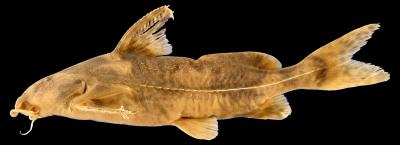
He's not well known like President Bush and musician Neil Young, but Philadelphian Frank Gallagher now has something in common with them: He has a new species named after him.

Gallagher was The Academy of Natural Sciences' affable mailroom supervisor for 37 years before retiring in 2003. "They used to call me 'the grapevine,'" said Gallagher, because he not only distributed the mail to the staff but also passed along the latest gossip. Now he is the inspiration for Rhinodoras gallagheri, a new species of catfish described by Academy fish scientist Dr. Mark Sabaj Pérez in the March issue of Copeia.

New species often are named for prominent scientists, generous benefactors or even spouses. A biologist recently named a new trapdoor spider after popular singer-songwriter Neil Young. A few years ago an entomologist named a new slime-mold beetle after the president. Rarely, if ever, has a new species been named for a postman.

Biometrics is commonly associated with retinal scans, iris recognition and DNA databases but researchers in India are working on another form of biometrics that could allow law enforcement agencies and airport security to recognize suspects - their characteristic gait.

C. Nandini of the Vidya Vikas Institute of Engineering & Technology and C.N. Ravi Kumar of the S.J. College of Engineering in Mysore, India, explain that human gait typifies the motion characteristics of an individual. Viewed from the side, we each have a unique gait that makes us easily recognizable.

They point out that a camera with a side view can record a set of key frames, or stances, as a person heads for the security desk at an airport, military installation or bank, for instance. Key frames over the person's complete walk cycle, can then be converted into silhouette form and statistical analysis using so-called Shannon entropy, together with height measurements and the periodicity of the gait used to classify the person's gait.

A clinical study on patients who have suffered a heart attack found that a partially purified extract of Chinese red yeast rice, Xuezhikang (XZK), reduced the risk of repeat heart attacks by 45%, revascularization (bypass surgery/angioplasty), cardiovascular mortality and total mortality by one-third and cancer mortality by two-thirds.

The multicenter, randomized, double-blind study, was conducted on almost 5,000 patients, ranging in age from 18-70 over a five-year period at over 60 hospitals in the People's Republic of China. Corresponding author David M. Capuzzi, M.D., Ph.D, director of the Cardiovascular Disease Prevention Program at Jefferson's Myrna Brind Center of Integrative Medicine and Zonliang Lu, M.D., Ph.D, from the Fuwai Hospital at the Chinese Academy of Medical Science report their findings in the June 15th edition of the American Journal of Cardiology.

Scientists, reporting in the current issue of the online journal Marine Drugs, state that an increase of epileptic seizures and behavioral abnormalities in California sea lions can result from low-dose exposure to domoic acid as a fetus.

The findings follow an analysis earlier this year led by Frances Gulland of the California Marine Mammal Center that showed this brain disturbance to be a newly recognized chronic disease.

John Ramsdell of NOAA's Center for Environmental Health and Biomolecular Research in Charleston, SC, in partnership with Tanja Zabka, a veterinary pathologist at the Marine Mammal Center, conducted the first-of-its kind analysis of poisoning by the algal toxin, domoic acid, during fetal brain development. The results, analyzed across multiple animal species, point to the toxin as a cause for behavioral changes and epilepsy that does not become evident until later in life.

A 115-year-old woman who had remained mentally alert throughout her life had no evidence of Alzheimer's disease, according to a study in the August issue of Neurobiology of Aging, questioning the assumption that Alzheimer's disease or other forms of dementia will inevitably develop, if people live long enough.

Prof. dr. Gert Holstege of University Medical Centre Groningen, The Netherlands and colleagues had a unique chance to test the mental functioning of one of the world's oldest humans, and then to compare their findings with the condition of the subject's brain after death.

The patient was a Dutch woman who, at age 82, made arrangements to donate her body to science after death. At age 111, she contacted the researchers to ask whether her body would still be useful for research or teaching purposes. They assured her that, contrary to what she thought, they were especially interested because of her age: "She was very enthusiastic about her being important for science," Dr. Gert Holstege and colleagues write.

