







By disrupting the potassium channel of the malaria parasite, a team of researchers has been able to prevent new malaria parasites from forming in mosquitoes and has thereby broken the cycle of infection during recent animal tests.

By genetically altering the malaria parasite through gene knock-out technol-ogy, a research team consisting of scientists at the University of Copenha-gen and John Hopkins University, Baltimore, has prevented the parasite from going through the normal stages of its life cycle and developing a cyst (egg-like structure or occyst), which spawns new infectious parasites."

As it is exclusively the parasites from these oocysts that can infect new individu-als, we were able to prevent the disease from being transmitted to the animals in our tests", explains Assistant Professor, Peter Ellekvist from the University of Copenhagen.

Arsenic is acutely toxic and a highly potent carcinogen, but is widespread in the earth's crust and easily taken up and accumulated in crops. Contaminated water is the main source of arsenic poisoning, followed by ingestion of arsenic-rich food, especially rice that has been irrigated with arsenic-contaminated water. According to the WHO, arsenic has been found approaching or above guideline limits in drinking water in Argentina, Australia, Bangladesh, Chile, China, Hungary, India, Mexico, Peru, Thailand, and the US.

Amid recent reports of dangerous levels of arsenic being found in some baby rice products, scientists have found a protein in plants that could help to reduce the toxic content of crops grown in environments with high levels of this poisonous metal. A team of Scandinavian researchers has revealed a set of plant proteins that channel arsenic in and out of cells.

Researchers from University of Leicester Archaeological Services have recently completed work on the results of three closely related Bronze Age round barrows excavated at Cossington, Leicestershire and show how the ancient cemetery was reused by successive communities.

Their excavations revealed a variety of burial practices from Bronze Age, Iron Age, Roman and Anglo Saxon times. They offer the first definite example of an Anglo Saxon cemetery sited on an earlier monument to be found in Leicestershire.

One of the barrows included the crouched burial of a child of around eight years, who lay with grave offerings including two pots, a stone bowl and three flint knives. One of the knives had been made from a much earlier object, perhaps making a physical link to past ‘ancestors.’

The world needs to develop a means of securing the supply of clean fresh water within the next 10 years if we are to tackle a looming water shortage, says a leading expert on water purification and director of the National Science Foundation’s Science and Technology Centre for Advanced Materials for the Purification of Water.

Dr. Mark Shannon is giving a speech at the 2nd Global Innovation Imperatives (Gii) conference in New Delhi, India on 19-20 June 2008 and will warn top scientists, government, industrialists, academics and business people that just as food shortages have led to fierce fighting and unrest in parts of the world, water shortages triggered by climate change, population growth and poor water management will be next unless tackled now.

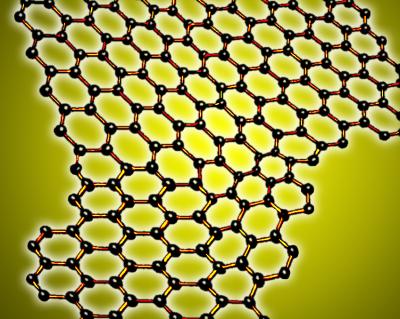
The familiar pencil-lead form of carbon, graphite, consists of layers of carbon atoms tightly bonded in the plane but only loosely bonded between planes; because the layers move easily over one another, graphite is a good lubricant. In fact these graphite layers are graphene.

Graphene is the two-dimensional crystalline form of carbon: a single layer of carbon atoms arranged in hexagons, like a sheet of chicken wire with an atom at each nexus. As free-standing objects, such two-dimensional crystals were believed impossible to create -- even to exist -- until physicists at the University of Manchester actually made graphene in 2004.

Due to the material's unexpected electronic properties, it could have novel practical applications like tunable optical modulators for communications and other nanoscale electronics.

Star Trek: The Next Generation's holodeck allowed crewmembers to walk through their childhood home, re-enact famous historical events or watch performances of famous plays. It was also a consistent source of story lines for Star Trek writers who had nothing left to fall back on, because the holodeck offered so many opportunities to just make things up that didn't rely on logic or the Star Trek universe's core mythology.

Of course, if leisure time permitted they could also learn new skills or execute training drills by simulating surgery, flight, and engine repairs in a truly realistic environment but most of the time it involved being Sherlock Holmes or something like that.

Virtual life seemed pretty good on TV but it's still just science fiction for us. However, last year researchers took the first steps towards it with the COHERENT project, an EU-funded research project to create a commercial, true 3-D display.

They could have called it Holodeck 1.0. They went with HoloVizio instead.

One of the great scientific challenges is to understand the design principles and origins of the human brain. New research has shed light on the evolutionary origins of the brain and how it evolved into the remarkably complex structure found in humans.

The research suggests that it is not size alone that gives more brain power, but that, during evolution, increasingly sophisticated molecular processing of nerve impulses allowed development of animals with more complex behaviors.

The study shows that two waves of increased sophistication in the structure of nerve junctions could have been the force that allowed complex brains - including our own - to evolve. The big building blocks evolved before big brains.

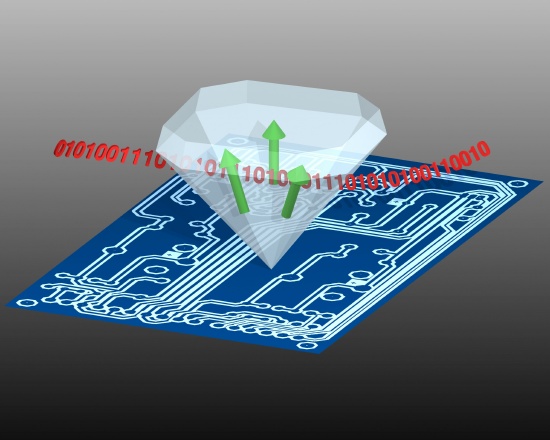
Researchers from the Physikalisches Institut of the University of Stuttgart have create entangled quantum states in diamond, which means there is finally a diamond men care about - namely the one that might some day be inside a quantum computer working at room temperature, a feat so far considered impossible for other materials.

While physicists have long described the world of atoms by quantum mechanics, one of its strangest characteristics, and the one that defies easy description, allows the linking of two objects without any noticeable interaction over a distance.

Einstein called this a 'spooky interaction.'

One of the most spectacular experiments based on this unusual entanglement characteristic is quantum teleportation, where the properties of one quantum object are transferred to another one at a remote location.

Maternal diet influences the chances of having male or female offspring, according to research in Reproductive Biology and Endocrinology. The study says that ewes fed a diet enriched with polyunsaturated fats for one month prior to conception have a significantly higher chance of giving birth to male offspring.

Polyunsaturated fats are essential nutrients. It is believed that the dietary ratio between omega-3 and omega-6 fats has important biological effects, especially in terms of inflammation, immunity and central nervous system signalling. The omega-6 fats used in this study were protected from digestion by naturally occurring rumen bacteria to ensure that they would be absorbed through the intestines of the sheep.

Synthetic biology seeks to apply the principles of engineering to biological systems and processes. Scientists believe that it may lead to new applications, such as new energy production systems, medical therapies, biological computers and innovative ways to clean up hazardous waste. In common with other modern technologies, it is potentially controversial because it raises issues of ownership, misuse, unintended consequences, and accidental release.

A report of an independent review of social and ethical challenges associated with synthetic biology and commissioned by the Biotechnology and Biological Sciences Research Council's (BBSRC) Bioscience for Society Strategy Panel is part of its program to analyze issues raised by this rapidly emerging area of science and technology.

