





Genome-wide association studies are increasingly widely used to discover genetic variations that increase the risk of common diseases like heart disease and type 2 diabetes. Intuitively they're quite straightforward: take a few thousand individuals with a disease (cases), a few thousand healthy individuals (controls), examine hundreds of thousands of genetic variations in both groups using new large-scale genotyping technologies, and see which variants are more common in cases than controls. This simple approach has turned out to be a powerful tool, uncovering genes involved in a multitude of common diseases.

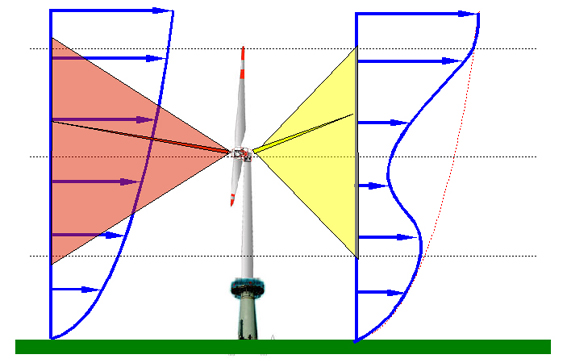
Wind energy is regarded by many as the most viable source of short-term renewable energy.

Optimal operation of new generation wind turbines will only be possible through the reliable measurement of the wind inflow characteristics. Experience has shown that accurate power generation estimation based on wind speed is a challenging task.

For large new turbine models, conventional mast wind speed measurements are not feasible based on cost and technical considerations. Researchers at the Endowed Chair of Wind Energy (SWE) of the University of Stuttgart are working together with researchers from the University of Oldenburg and other project partners on an alternative remote sensing technique.

Radio waves accelerate electrons within Jupiter’s magnetic field in the same way as they do on Earth, according to new research. The discovery overturns a theory that has held sway for more than a generation and has important implications for protecting Earth-orbiting satellites.

Using data collected at Jupiter by the Galileo spacecraft, Dr Richard Horne of British Antarctic Survey (BAS) and colleagues from the University of California, Los Angeles, and the University of Iowa found that a special type of very low frequency radio wave is strong enough to accelerate electrons up to very high energies inside Jupiter’s magnetic field.

Scientists funded by the Biotechnology and Biological Sciences Research Council (BBSRC) have published new research in Molecular Pharmacology identifying the structure of a receptor in the brain implicated in conditions such as epilepsy and pre-menstrual tension. The same receptor has also been reported to be highly sensitive to alcohol.

The University of Cambridge team, in collaboration with colleagues at Aston University and the University of Alberta, have determined the arrangement of the constituent parts of an uncommon but important type of GABA receptor in the brain. GABAA receptors in the central nervous system play important roles in the body’s response to gamma-aminobutyric acid (GABA), a chemical used by the brain to control certain functions.

By understanding how the receptors’ sub-units are arranged, scientists may now be able to develop drugs to block or stimulate them, providing hope for sufferers of a range of conditions.

There is a particular narrative about science that science journalists love to write about, and Americans love to hear. I call it the 'oppressed underdog' narrative, and it would be great except for the fact that it's usually wrong.

The narrative goes like this:

1. The famous, brilliant scientist So-and-so hypothesized that X was true.

2. X, forever after, became dogma among scientists, simply by virtue of the brilliance and fame of Dr. So-and-so.

3. This dogmatic assent continues unchallenged until an intrepid, underdog scientist comes forward with a dramatic new theory, completely overturning X, in spite of sustained, hostile opposition by the dogmatic scientific establishment.

We love stories like this; in our culture we love the underdog, who sticks to his or her guns, in spite of heavy opposition. In this narrative, we have heroes, villains, and a famous, brilliant scientist proven wrong.

Although it's been a half century since America entered the space age, the basic propulsion concepts used to push Explorer I into space will be the same type of propulsion that the nation will use to begin the next half century of space exploration.

It was January 31, 1958 when a Redstone-Jupiter C rocket developed in Huntsville, Ala., lifted the 30-pound artificial satellite into space.

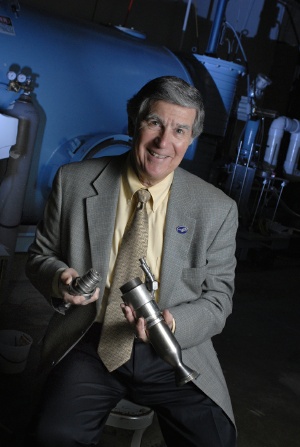
Clark Hawk, director of the Propulsion Research Center at The University of Alabama in Huntsville (UAHuntsville) has seen most of the advances that have taken place in rocket propulsion. He has spent 50 years conducting research in the field.


Dr.

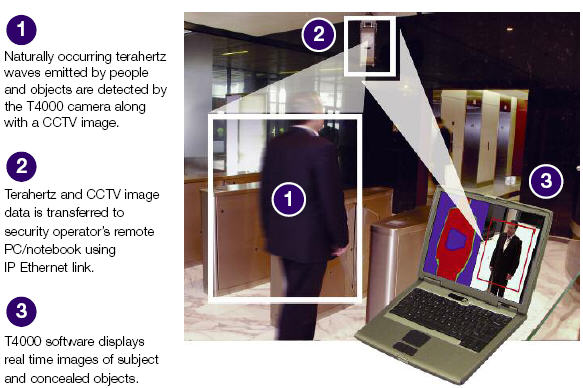
An interesting security imaging technology that can 'see' explosives, liquids, narcotics, weapons, plastics and ceramics hidden under clothing from 25 meters away is due to be unveiled at the Home Office Scientific Development Branch (HOSDB) Exhibition next week.

When you think 'green' in March, maybe you think of leprechauns or four-leaf clovers. Or maybe you think about Al Gore and hybrid vehicles clogging up the HOV lanes during rush hour.

But let's not forget the original 'green' mindset, say nutrition, experts, and it involves diet.

Here’s a sampling of some green foods UT Southwestern dietitians recommend for March which, along with being a chance to drink green beer, is also National Nutrition Month (no, the green beer does not count as nutrition):

Researchers at Johns Hopkins have discovered that two clinically different inherited syndromes are in fact variations of the same disorder. The team suggests that at least for this class of disorders, the total number and “strength” of genetic alterations an individual carries throughout the genome can generate a range of symptoms wide enough to appear like different conditions.

“We’re finally beginning to blur the boundaries encompassing some of these diseases by showing that they share the same molecular underpinnings,” says Nicholas Katsanis, Ph.D., an associate professor of ophthalmology at the McKusick-Nathans Institute of Genetic Medicine at Hopkins. “This is important progress for several reasons. First, knowing what’s going on molecularly and being able to integrate rarer conditions under common mechanisms allows us to potentially help more people at once. Second, clinicians can finally begin to offer more accurate diagnoses based on what really matters: the state of affairs at the cellular/biochemical level. In time, this will empower genetic counseling and much improved patient management.”

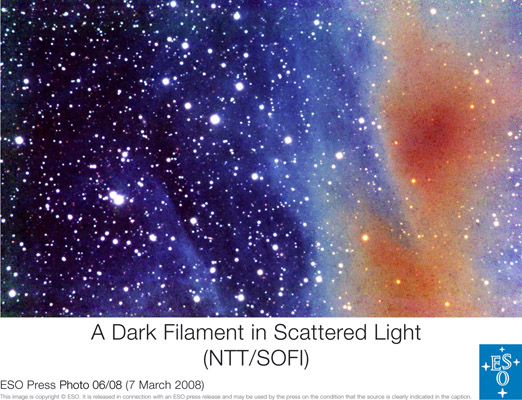
Astronomers using ESO's New Technology Telescope have measured the distribution of mass inside a dark filament in a molecular cloud with an amazing level of detail and to great depth, based on a new method that looks at the scattered near-infrared light or 'cloudshine.'

Dark clouds are feebly illuminated by nearby stars. This light is scattered by the dust contained in the clouds, an effect dubbed 'cloudshine' by Harvard astronomers Alyssa Goodman and Jonathan Foster. This effect is well known to sky lovers, as they create in visible light wonderful pieces of art called 'reflection nebulae'. The Chameleon I complex nebula is one beautiful example.

The vast expanses between stars are permeated with giant complexes of cold gas and dust opaque to visible light.

