


SYDNEY, Australia, February 15 /PRNewswire/ -- In the news release, "Scholarships for Indigenous Australians: Education is the Key" issued on 15 Feb 2008 04:22 GMT, by Mary MacKillop Foundation Australia over PR Newswire, we are advised by a representative of the company that four additional paragraphs should be included in the beginning of the release. Complete, corrected release follows:

February 13 was a momentous day in Australia as the Prime Minister formally apologised to members of the Indigenous stolen generation. He did this on behalf of the current Australian government and nation apologising for the policy of previous Australian Governments of forcibly removing Indigenous children from their parents.

MELBOURNE, Australia, February 15 /PRNewswire/ --

In a landmark study electronically published today in the American Journal of Respiratory and Critical Care Medicine, a blood test for detecting TB infection, QuantiFERON(R)-TB Gold (QFT(TM)), has been shown to be six times more accurate than the conventional tuberculin skin test (TST) at predicting which tuberculosis (TB)-exposed individuals will go on to develop TB disease. This study has important implications for the worldwide effort to eradicate TB, as accurately indentifying TB-infected individuals allows health authorities to treat them before they develop disease, and the greater accuracy of the new test makes this more efficient as well as cheaper and safer.

SYDNEY, Australia, February 15 /PRNewswire/ --

Dr Janelle Trees, a descendant of the Daingadi clan, is the first indigenous student to graduate with Honours at the University of Sydney's medical school through the graduate entry program. A sole parent, Dr Trees believes one of the most important effects of the scholarship has been an insight into the long-learned 'poverty mentality.' "I have been able to show that it is possible to study medicine when you come from different circumstances," she said.

PRINCETON, New Jersey, February 14 /PRNewswire/ --

Pharmasset, Inc. (Nasdaq: VRUS), a clinical stage pharmaceutical company committed to discovering, developing and commercializing novel drugs to treat viral infections, reported unaudited financial results for the first fiscal quarter of 2008 ended December 31, 2007. Pharmasset reported a net loss attributable to common stockholders of US$12.2 million, or (US$0.57) per share for the first fiscal quarter of 2008, as compared to net income attributable to common stockholders of US$3.6 million, or US$0.33 per diluted share for the same period in fiscal 2007.

SAN MATEO, California, February 14 /PRNewswire/ --

- Record 2007 Revenue of US$108.5M, up 62% year-over-year

- Record Q4 2007 Revenue of US$31.7M, up 13% quarter-over-quarter

- Record Q4 2007 Cash Flow from Operations of US$3.7M

- Record Q4 2007 Unique Log-ins of 930,000

NetSuite Inc. (NYSE: N), a leading vendor of on-demand, integrated business management application suites that include Accounting / Enterprise Resource Planning (ERP), Customer Relationship Management (CRM) and Ecommerce software for small and medium-sized businesses and divisions of large companies, today announced operating results for its fourth quarter and fiscal year ended December 31, 2007.

(Logo: http://www.newscom.com/cgi-bin/prnh/20021024/SFTH024LOGO)

LONDON, February 14 /PRNewswire/ --

The 13 members of the Organization of Petroleum Exporting Countries (OPEC) pumped an average 32.25 million (m) barrels per day (b/d) of crude oil in January, or a 220,000 b/d increase from December's rate of 32.03 million b/d, a Platts (http://www.platts.com/) survey of OPEC and oil industry officials showed February 14.

The biggest single increase came from Saudi Arabia, which boosted volumes to 9.2 million b/d in January from 9.02 million b/d in December. The UAE boosted production to 2.59 million b/d from 2.5 million b/d in December after a field maintenance program reduced output to 2.15 million b/d in November. Other smaller increases came from Angola, Iran and Kuwait.

Researchers from the University of Chicago have discovered that many of the genetic variations that have enabled human populations to tolerate colder climates may also affect their susceptibility to metabolic syndrome, a cluster of related abnormalities that include obesity, elevated cholesterol levels, heart disease, and diabetes.

Scientists have long noted that humans inhabiting colder regions were bulkier and had relatively shorter arms and legs. In the 1950s, researchers found correlations between colder climates and increased body mass index (BMI), a measure of body fat, based on height and weight. Now scientists have found a strong correlation between climate and several of the genetic variations that appear to influence the risk of metabolic syndrome, consistent with the idea that these variants played a crucial role in adaptations to the cold. Also, some genes associated with cold tolerance have a protective effect against the disease, while others increase disease risk.

Researchers have provided the first global analysis of human proteins interacting with proteins of viruses and other pathogens. The network of interactions, described in an article published February 15 in the open-access journal PLoS Pathogens, reveals possible key intervention points for the future development of therapeutics against infectious diseases.

“Infectious diseases result in millions of deaths each year,” said co-author Matt Dyer. “Although much effort has been directed towards the study of how infection by a pathogen causes disease in humans, only recently have large data sets for protein interactions become publicly available.”

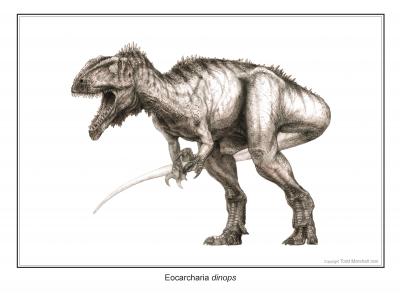
Two new 110 million-year-old dinosaurs unearthed in the Sahara Desert highlight the unusual meat-eaters that prowled southern continents during the Cretaceous Period. Named Kryptops and Eocarcharia in a paper appearing this month in the scientific journal Acta Palaeontologica Polonica, the fossils were discovered in 2000 on an expedition led by University of Chicago paleontologist Paul Sereno.

Sereno and co-author paleontologist Stephen Brusatte of the University of Bristol say the new fossils provide a glimpse of an earlier stage in the evolution of the bizarre meat-eaters of Gondwana, the southern landmass. “T-rex has become such a fixture of Cretaceous lore, most people don’t realize that no tyrannosaur ever set foot on a southern continent,” said Sereno.

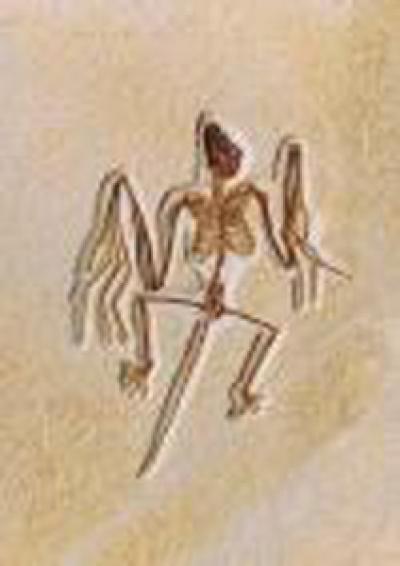
Nothing would seem to be stranger than bats flying without their special radar. They would be the Keystone Cops of zoology. But the discovery of a remarkably well-preserved fossil representing the most primitive bat species known to date demonstrates that the animals evolved the ability to fly before they could echolocate.

The new species, named Onychonycteris finneyi, was unearthed in 2003 in southwestern Wyoming and is described in a study in the Feb. 14 issue of the journal Nature, on which University of Michigan paleontologist Gregg Gunnell is a coauthor along with researchers from the American Museum of Natural History (AMNH) in New York, the Royal Ontario Museum in Canada and the Senckenberg Research Institute in Germany.

