



SAN FRANCISCO, January 22 /PRNewswire/ --

- Speed in Reaching First Clinical Milestone Validates Approach

Synosia Therapeutics today announced the successful completion of its first clinical trial, a proof-of-concept study that evaluated new therapeutic options for SYN-111 (rufinamide), a sodium channel blocker. Rufinamide was discovered and developed by Novartis and is currently marketed by Eisai in Europe as a drug to treat a form of epilepsy. This first trial was completed in less than seven months from design to final dosing and less than a year after the rights to rufinamide in mood disorders were obtained from Novartis in an exclusive licensing agreement.

The stereotype that couples in same-sex relationships are not as committed as their heterosexual counterparts and are therefore not as psychologically healthy is disputed by two studies featured in the January issue of Developmental Psychology.

Results showed that same-sex relationships were similar to those of opposite-sex couples in many ways. All had positive views of their relationships but those in the more committed relationships (gay and straight) resolved conflict better than the heterosexual dating couples.

A new study published in CANCER found that cigarette smoking and alcohol consumption do increase ovarian cancer risk while caffeine may lower the risk, particularly in women not using hormones.

Various studies have assessed the potential link between modifiable factors such as smoking or caffeine and alcohol intake and have generated conflicting results. To help clarify these associations, Dr. Shelley S. Tworoger, of Harvard Medical School and the Harvard School of Public Health, and colleagues examined ongoing questionnaire data from the Brigham and Women’s Hospital-based Nurses’ Health Study, which includes 121,701 US female registered nurses. The Nurses’ Health Study cohort was established in 1976, when women aged 30-35 completed and returned initial questionnaires.

AUSTIN, Texas, January 22 /PRNewswire/ --

- Grocer Encourages Use of Reusable Shopping Bags, Declaring Today 'Bring Your Own Bag Day'; Celebrates by Giving Away Over 50,000 Reusable Bags to Customers Companywide

Whole Foods Market, the world's leading natural and organic foods supermarket, announced today it will end the use of disposable plastic grocery bags at the checkouts in all of its 270 stores in the U.S., Canada and the U.K. with the goal to be plastic bag-free by Earth Day, April 22, 2008.

(Photo: http://www.newscom.com/cgi-bin/prnh/20080122/LATU058)

The World Wide Web offered a way to use computers to bring people together but the ".com" era turned it into a cash machine and it became a way to do advertising and push information out to people. Web 2.0 took that back with user-generated content and social communities that gave birth to YouTube, Facebook and ScientificBlogging.com.

Could the foundation of Web 3.0 be something as minor as user-generated networks?

WIP is a project in Europe funded by the EC and in partnership with companies like Siemens. It is basically an all-wireless mobile internet architecture using cross-layer design, transparent mobility and, most importantly to the creators, self-organization.

“When the internet first emerged, it assumed devices would be fixed in place and linked by wires,” remarks Marcelo Dias de Amorim, a researcher with the WIP project. “But that’s no longer true. A large number of devices are mobile and equipped with wireless communication capabilities.”

A number of the architecture aspects in the WWW were created to solve discreet problems that arose as time went on and popularity grew. WIP wants to reinventing the internet and its underlying methods with new technology.

But will people want it?

If you want to know how the Oscar celebrations will stack up, our very own Garth Sundem wrote the definitive Oscartronic equation last year. Bonus: Oscar fashion by the numbers is here as well.

But what if you just want to figure out who will get a nomination? You'll have to settle for Harvard and UCLA then.

The environmental damage caused by rich nations disproportionately impacts poor nations and costs them more than their combined foreign debt, according to a first-ever global accounting of the dollar costs of countries' ecological footprints.

The study, led by former University of California, Berkeley, research fellow Thara Srinivasan, assessed the impacts of agricultural intensification and expansion, deforestation, overfishing, loss of mangrove swamps and forests, ozone depletion and climate change during a 40-year period, from 1961 to 2000.

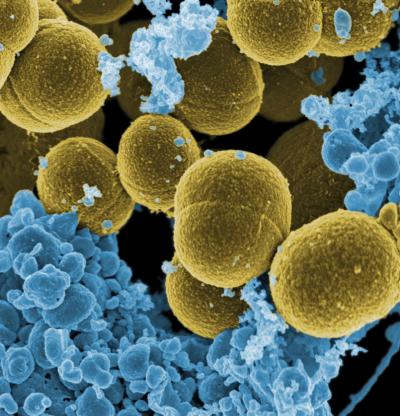
Community-associated methicillin-resistant Staphylococcus aureus (CA-MRSA) infections are caused primarily by a single strain—USA300—of an evolving bacterium that has spread with “extraordinary transmissibility” throughout the United States during the past five years, according to a new study led by National Institutes of Health (NIH) scientists.

CA-MRSA, an emerging public health concern, typically causes readily treatable soft-tissue infections such as boils, but also can lead to life-threatening conditions that are difficult to treat.

The study, from the National Institute of Allergy and Infectious Diseases (NIAID) of NIH, resolves debate about the molecular evolution of CA-MRSA in the United States.

Denizens of oceans, lakes and even wet soil, diatoms are unicellular algae that encase themselves in intricately patterned, glass-like shells. Curiously, these tiny phytoplankton could be harboring the next big breakthrough in computer chips.

Diatoms build their hard cell walls by laying down submicron-sized lines of silica, a compound related to the key material of the semiconductor industry—silicon. “If we can genetically control that process, we would have a whole new way of performing the nanofabrication used to make computer chips,” says Michael Sussman, a University of Wisconsin-Madison biochemistry professor and director of the UW-Madison’s Biotechnology Center.

Climate scientists are teaming up with economics experts to improve forecasting models and assess more accurately the economic as well as environmental impact of rising atmospheric carbon dioxide levels.

Although there is broad consensus that there will be a significant rise in average global temperature, there is great uncertainty over the extent of the change and the implications for different regions.

To provide a sound basis for major policy decisions and to ensure that politicians and the public get accurate information, the climate modelling community has turned to some of the statistical tools that could improve their modelling of climate change and have been developed for econometric problems which have some of the same features.

