




Computer and behavioral scientists at the University at Buffalo say they are working on a system to compute a numerical score that determines the likelihood that someone is about to commit a terrorist act. Their technology will track faces, voices and other biometrics against scientifically tested behavioral indicators to provide that numerical score for an individual.

“The goal is to identify the perpetrator in a security setting before he or she has the chance to carry out the attack,” said Venu Govindaraju, Ph.D., professor of computer science and engineering at the University at Buffalo School of Engineering and Applied Sciences. Govindaraju is co-principal investigator on the project with Mark G.

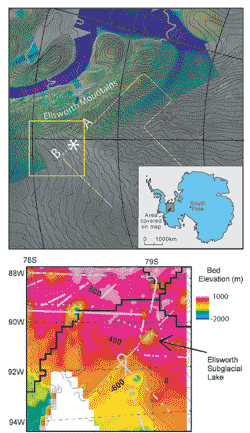
Why don't we know more about Lake Ellsworth? Because it's a frozen lake. Buried under two miles of ice. In Antarctica.

But Northumbria glaciologist Dr John Woodward, together with experts from the British Antarctic Survey and Edinburgh University, will spend five months working in sub zero conditions to unlock some of its secrets and discover what life may exist there.

More than 150 subglacial lakes have been identified in Antarctica, cut off from the outside world by thick caps of ice for tens or even hundreds of thousands of years. Any life forms will have had to adapt to complete darkness, very few nutrients, crushing water pressures and isolation from the atmosphere.


Lake Ellsworth.

Most people who have tried to install new computer software are happy to know that a common set of default options is available. For many, they will work fine and customization is only required in a few instances, which leads to less technical support, frustration and downtime.

Can that same computer software model work in health care?

In an opinion article in the September 28 issue of the New England Journal of Medicine, lead author Scott D. Halpern, M.D., a fellow in the division of Pulmonary, Allergy and Critical Care Medicine in the University of Pennsylvania Health System, and colleagues, argue that these concepts applied by marketers should also be used by the medical community to benefit patients.

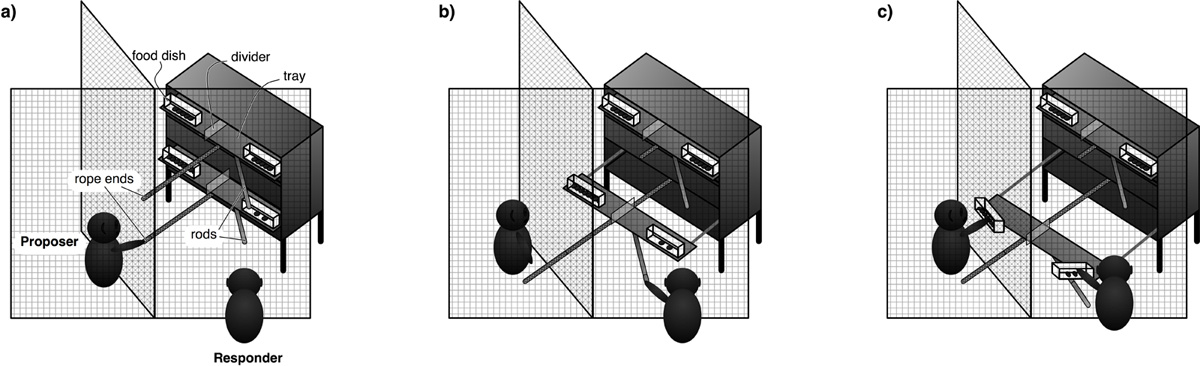
New research from the Max Planck Institute of Evolutionary Anthropology in Leipzig shows that, unlike humans, chimpanzees do not show a willingness to make fair offers and reject unfair ones. The research, conducted by Keith Jensen, Josep Call and Michael Tomasello, used a modification of one of the most widely used and accepted economic tools, the ultimatum game.

In the ultimatum game - developed by Werner Güth, now at the Max Planck Institute for Economics in Jena - one person, the proposer, is given money by an experimenter. That proposer can then divide the "mana from heaven" with a second person, the responder. The responder is not powerless - if he accepts the division, both people take home the offered amounts. But if he rejects it, both get nothing.

That question may be answered as scientists study the recently mapped genetic makeup of a fungus that spawns the worst cereal grains disease known and also can produce toxins potentially fatal to people and livestock.

The fungus, which is especially destructive to wheat and barley, has resulted in an estimated $10 billion in damage to U.S. crops over the past 10 years. The scientists who sequenced the fungus' genes said that the genome will help them discover what makes this particular pathogen so harmful, what triggers the process that spreads the fungus and why various fungi attack specific plants.

University of Utah scientists discovered a strange method of reproduction in primitive plants named cycads: The plants heat up and emit a toxic odor to drive pollen-covered insects out of male cycad cones, and then use a milder odor to draw the bugs into female cones so the plants are pollinated.

The unusual form of sexual reproduction used by some species of cycads – primeval plants known as “living fossils” – may represent an intermediate step in the evolution of plant pollination, the researchers say.

Thousands of new kinds of marine microbes have been discovered at two deep-sea hydrothermal vents off the Oregon coast by scientists at the MBL (Marine Biological Laboratory) and University of Washington’s Joint Institute for the Study of Atmosphere and Ocean. Their findings, published in the October 5 issue of the journal Science, are the result of the most comprehensive, comparative study to date of deep-sea microbial communities that are responsible for cycling carbon, nitrogen, and sulfur to help keep Earth habitable.

Using a new analytical technique called “454 tag sequencing,” the scientists surveyed one million DNA sequences of bacteria and archaea, two of the three major domains of life.

A human embryonic stem cell is reined in – prevented from giving up its unique characteristics of self-renewal and pluripotency – by the presence of a protein modification that stifles any genes that would prematurely instruct the cell to develop into heart or other specialized tissue. But, thanks to the simultaneous presence of different protein modifications, stem cells are primed and poised, ready to develop into specialized body tissue, Singapore scientists report.

The molecules central to this balancing act, H3K4me3 and H3K27me3, are among the so-called epigenetic modifications that influence the activity patterns of genes in both human embryonic stem (ES) cells and mature human adult cells.

Quantum dots have great promise as light-emitting materials, because the wavelength, or color, of light that the quantum dots give off can be very widely tuned simply by changing the size of the nanoparticles. If a single dot is observed under a microscope, it can be seen to randomly switch between bright and dark states. This flickering, or blinking, behavior has been widely studied, and it has been found that a single dot can blink off for times that can vary between microseconds and several minutes. The causes of the blinking, though, remain the subject of intense study.

In order to learn more about the origins of quantum dot blinking, researchers from the U.S.

two closely related bird species, the collared flycatcher and the pied flycatcher, can reproduce with each other, but the females are more strongly attracted to a male of their own species. This has been shown by an international research team directed by Anna Qvarnström at Uppsala University in today’s Net edition of Science. They demonstrate that the gene for this sexual preference is found on the sex chromosome that is inherited from the father and that only females have a copy of. The discovery sheds new light on how new species are formed.

The formation of new species takes millions of years. It often happens when a population (group of individuals) is divided and separated geographically and then adapts to disparate environments over thousands of generations.

