






Riders in the Tour de France are not only tremendous competitors, they are huge eaters, collectively polishing off enough food to feed a small village – more than 20 million calories – just to stay in the race, according to a fitness and nutrition researcher.

“That’s about the same as 72,000 cheeseburgers,” said Conrad Earnest, Ph.D., of the Pennington Biomedical Research Center.

“The riders have been in the saddle for more than 80 hours at full tilt,” Earnest said, “Each day, they put out more energy than it takes to run a marathon. So the 20-stage tour is like 20 marathons in a row, and to gain the necessary energy, each rider needs to eat the equivalent of 25 cheeseburgers a day to keep from losing too much weight, which ultimately hurts performance.”

Antipsychotic drugs are approved mainly for treating schizophrenia and bipolar disorder, but they are also used for many other purposes. One of the most controversial is reducing disruptive behavior among elderly people with dementia.

In the last few years, the FDA has required drug labels to carry warnings regarding this still-common practice, and studies continue to raise questions about its risks and benefits.

Concern about this issue is not new.

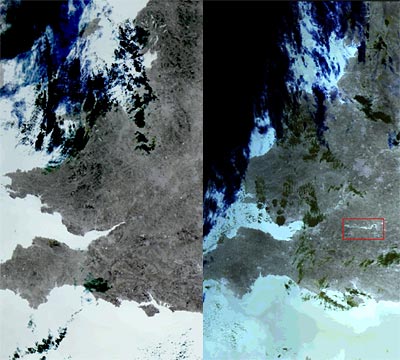
Highlighting the extreme weather conditions hitting Europe, space sensors aboard ESA’s Envisat satellite have detected the worst floodwaters to hit Britain for 60 years and deadly fires raging through southern Europe.

Heavy rains caused the River Thames to burst its banks on Wednesday, forcing the evacuation of hundreds of homes in Britain’s university city of Oxford. The flooding across England and Wales has left tens of thousands without electricity and water.

The Environment Agency still has three severe flood warnings in place – two on the Thames around Oxford and one on the Ock River near Oxfordshire. In areas where flooding is beginning to recede, sanitation officials are warning of health risks posed by stagnant waters.

An artificial big toe attached to the foot of an ancient Egyptian mummy could prove to be the world's earliest functional prosthetic body part, say scientists. If true, the toe will predate what is currently considered to be the earliest known practical prosthesis - Roman Capua Leg from 300BC, made from bronze - by several hundred years. The leg was held at the Royal College of Surgeons in London but was destroyed by Luftwaffe bombs during the Second World War.

Research at The University of Manchester is hoping to prove that the wood and leather artefact in the Cairo Museum not only looked the part but also helped its owner walk 'like an Egyptian'.


The prosthetic toe in the British Museum.

One of the greatest medical mysteries of our time has taken a leap forward in medical understanding with new study results announced by Dr. Daniel D. Rubens of Children’s Hospital and Regional Medical Center in Seattle.

Rubens’ study found all babies in a Rhode Island study group who died of Sudden Infant Death Syndrome (SIDS) universally shared the same distinctive difference in their newborn hearing test results for the right inner ear, when compared to infants who did not have SIDS.

This is the first time doctors might be able to identify newborns at risk for SIDS by a simple, affordable and routine hearing test administered shortly after birth.

An international team of scientists, including several at The Johns Hopkins University, has detected a hidden magnetic “quantum order” that extends over chains of nearly 100 atoms in a material that is otherwise magnetically disordered.

The findings, which are published online today (July 26) in the journal Science, may have implications for the design of devices and materials for quantum information processing, including large-scale quantum computers capable of tackling problems exponentially faster than can conventional computers.

The team’s results are important because they demonstrate that the magnetic moments (the measure of the strength of a magnetic source) of a large number of atoms can band together to form quantum states much like those of a very large molecule.

Scientists from two European-funded groups - EuroStemCell (European Consortium for Stem Cell Research) and ESTOOLS - are working together to call for a relaxation of current laws, particularly in Germany and Italy, in the hope that their European counterparts are able to collaborate on international projects without fear of legal reprisal.

Currently, stem cell legislation differs across Europe. Projects that are perfectly legal in Sweden and the UK could result in a three-year prison sentence in Germany. Researchers from countries with very restrictive legislation might also become liable by taking on coordinating positions in other European institutions.

Researchers in an ongoing U.S.-Cuban archaeological expedition, co-led by The University of Alabama, are attempting to learn more about the native people Christopher Columbus encountered on his first voyage to the New World.

UA’s department of anthropology and the Central-Eastern Department of Archaeology of the science ministry in Cuba are partnering in the effort, funded by the National Geographic Society and focused on a former large native village, El Chorro de Maita, in eastern Cuba.

“This season, the team is mapping the site and determining the size and location of residential areas within it,” said Dr. Jim Knight, professor of anthropology at UA who set up the project and is advising it.

Two drugs commonly prescribed to treat diabetes double the risk of heart failure, according to new research by the University of East Anglia (UEA).

Rosiglitazone (Avandia) and Pioglitazone (Actos) are recommended by the National Institute of Clinical Excellence (NICE) for the treatment of Type II Diabetes. Prescriptions for the drugs, known as thiazolidinediones, have doubled over the last three years and they were taken by more than 1.5 million people in England last year.

The new research was undertaken by Dr Yoon Loke, a clinical pharmacologist at UEA’s School of Medicine, Health Policy and Practice, working with colleagues at Wake Forest University in the US. The results are published in the August edition of the journal Diabetes Care.

In the hot springs of Yellowstone National Park, a team of researchers have discovered a new genus and species of chlorophyll-producing bacterium that transforms light into chemical energy. The discovery is described in a paper written by Don Bryant of Penn State University and David M. Ward of Montana State University.

Yellowstone National Park is a tourist's wonderland because of its wildlife, mountains, geysers and hot springs. But the park is also a scientific reservoir that harbors what may be the world's largest diversity of thermophilic (heat-loving) microorganisms.

