






A method for making instant steam, without the need for electricity, promises to be useful for tackling antibiotic resistant ‘superbugs’ like MRSA and C. difficile, as well as removing chewing gum from pavements and powering environmentally friendly cars.

"The value of instant steam lies in creating truly portable steam that can be generated intermittently on demand," says Dave Wardle, business development director at Oxford Catalysts.

Plant scientists have known for some time that genes from the maternal plant control seed development, but they have not known quite how.

Scientists at the University of Oxford have paved the way for bigger and better quality maize crops by identifying the genetic processes that determine seed development.

Working in collaboration with researchers in Germany and France, Professor Hugh Dickinson's team found that only the maternal copy of a key gene responsible for delivering nutrients is active. The copy derived from the paternal plant is switched off.

Stem cells are generally assigned to one of two categories: embryonic or adult. Some researchers say that may be an oversimplification and a new University of Michigan study states that stem cells in the developing fetus are distinct from both embryonic and adult stem cells.

Researchers note that fetal blood-forming stem cells in umbilical cord blood behave differently than adult blood-forming stem cells after transplantation into patients, which would mean that fetal stem cells comprise a separate class.

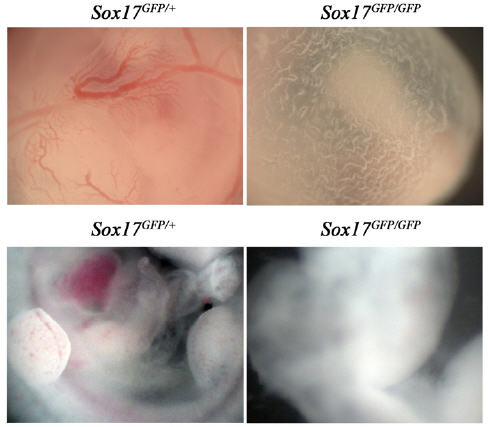
A University of Michigan team has identified the first known gene, Sox17, required for the maintenance of blood-forming stem cells in fetal mice, but not in adult mice.

Drinking malt liquor may put young adults at increased risk for alcohol problems and use of illicit drugs, particularly marijuana, according to a new study of malt liquor drinkers and marijuana use by scientists at the University at Buffalo’s Research Institute on Addictions (RIA).

“In our study of young adults who regularly drink malt liquor,” reports lead researcher R. Lorraine Collins, senior research scientist at RIA, “we found that malt liquor use is significantly related to reports of alcohol problems, problems specific to the use of malt liquor and to marijuana use above and beyond typical alcohol use.”

A recent UN study, Livestock's Long Shadow, basically says you can help the environment more by driving than walking.

The capacity to resist peer pressure in early adolescence may depend on the strength of connections between certain areas of the brain, according to a study carried out by University of Nottingham researchers.

New findings suggest that enhanced connections across brain regions involved in decision-making may underlie an individual’s ability to resist the influence of peers.

The study suggests that brain regions which regulate different aspects of behaviour are more interconnected in children with high resistance to peer influence.

Penguin guano in the Antarctic is adding to organic pollutant problems there, according to a report to be featured in a Royal Society of Chemistry publication.

Adrian Covaci at the University of Antwerp, Belgium, and colleagues found unexpectedly high levels of organic pollutants in the soil around a colony of non-migratory Adelie penguins in the Antarctic.

Concerns about organic pollutant levels in the Antarctic have led to intensive studies into how they reach this remote region, said Covaci. The pollutants originate from man-made sources such as organochlorine pesticides and brominated flame retardants, he explained. The routes through which they normally travel are air and ocean currents.

The University of Bradford has unveiled a new ‘Ethical Tissue’ bank to provide UK biomedical researchers access to a wider range of human tissue and tissue products. The bank will operate on a not-for-profit basis and will provide access to human tissue and tissue products such as viable cells, cell fractions and arrays.

Leeds and Bradford Hospital Trusts, who currently provide tissue to the bank, work with patients and their families to provide information about the supply of tissue for research purposes and manage the consent procedures which underpin the bank’s high ethical standards. It is planned that this relationship will be extended to hospital trusts around the UK.

The project is possible through links with NHS Trusts, the NHS Blood and Transplant Tissue Services, transplant co-ordinators and other collaborators, who understand the importance of human tissue in biomedical research and are committed to supporting the activities of the University’s research tissue bank.

Cellulose is not digestible by humans, that's why it's considered dietary fiber. Plants produce it to use as their cell walls and to provide rigidity to their structure. Along with lignin and hemicellulose, cellulose makes up a large amount of the biomass produced by plants.

Some animals, ruminants and termites for example, can break down cellulose with the aid of bacteria that live in their digestive tract but most vertebrates derive little nutrition from it.

Penn State researchers now say careful pairing of bacteria can create a fuel cell that consumes cellulose and produces electricity.

Riders in the Tour de France are not only tremendous competitors, they are huge eaters, collectively polishing off enough food to feed a small village – more than 20 million calories – just to stay in the race, according to a fitness and nutrition researcher.

“That’s about the same as 72,000 cheeseburgers,” said Conrad Earnest, Ph.D., of the Pennington Biomedical Research Center.

“The riders have been in the saddle for more than 80 hours at full tilt,” Earnest said, “Each day, they put out more energy than it takes to run a marathon. So the 20-stage tour is like 20 marathons in a row, and to gain the necessary energy, each rider needs to eat the equivalent of 25 cheeseburgers a day to keep from losing too much weight, which ultimately hurts performance.”

