



A generation of children born with HIV are now coming of age and reaching sexual maturity. Girls in this group who are sexually active are experiencing a higher number than expected of cervical abnormalities, a new study finds.

Researchers monitored the rate of first-time pregnancies, genital health and Pap test results of 638 girls, ages13 and over, who became infected with HIV around the time of birth. Nearly 50 percent of the girls had abnormal cervical cells.

Ten genetic variants associated with type 2 diabetes, a disease which impacts more than 170 million people worldwide, have been identified or confirmed by a U.S.-Finnish team led by scientists at the University of Michigan School of Public Health.

The discoveries could lead to the development of new drugs for diabetes, permit more effective targeting of drug and behavioral therapies, and help scientists and physicians better predict who will develop diabetes, said Michael Boehnke, the Richard G. Cornell Collegiate Professor of Biostatistics at the U-M School of Public Health.

Engineers at Washington University in St.

Scientists at The University of Nottingham have been awarded over £366,000 to help unravel the mystery of a stomach bug which causes gastric ulcers and cancer. Their research could lead to the development of a vaccine for those most at risk.

Studies of the enzyme CTP synthetase in the parasite Trypanosoma brucei have brought researchers at Umeå University in Sweden closer to a cure for African sleeping sickness. Their findings are now being published in the April issue of The Journal of Biological Chemistry.

Since the parasite constantly changes its surface, it can avoid the immune defense of humans and invade the central nervous system, which leads to personality disturbances, sleep disruptions, and ultimately death. For patients affected by a severe T brucei infection in the central nervous system, there are no medicines that can treat both subspecies without incurring extremely serious side effects.

Nanotechnology is the ability to measure, see, manipulate and manufacture things usually between 1 and 100 nanometers. A nanometer is one billionth of a meter; a human hair is roughly 100,000 nanometers wide. More than $30 billion in products incorporating nanotechnology were sold globally in 2005. By 2014, Lux Research estimates this figure will grow to $2.6 trillion.

As products made with nanometer-scale materials and devices spread to more industries and markets, there is a growing opportunity and responsibility to leverage nanotechnology to reduce pollution, conserve resources and, ultimately, build a "clean" economy, advises a new report from the Project on Emerging Nanotechnologies.

An electrical circuit that should carry enough power to produce the long-sought goal of controlled high-yield nuclear fusion and, equally important, do it every 10 seconds, has undergone extensive preliminary experiments and computer simulations at Sandia National Laboratories' Z machine facility.

Z, when it fires, is already the largest producer of X-rays on Earth and has been used to produce fusion neutrons. But rapid bursts are necessary for future generating plants to produce electrical power from sea water.

Consumers may claim they don't like diet soda because of the taste of artificial sweeteners, but Shelly Schmidt, a University of Illinois professor of food chemistry, thinks people are also influenced by a subtle difference called "mouth-feel." Think body, fullness, thickness; regular soda contains high-fructose corn syrup, diet soda doesn't.

What makes these scientists think mouth-feel is the culprit? For one thing, artificial sweeteners have been greatly improved and extensively studied. "Taste profiles for artificial sweeteners now closely match the one for sucrose, which humans describe as the perfect sweetness," Lee said.

Think you can come up with the best playlist for astronauts in the International Space Station? ESA wants to hear from you.

Everyone has a list of favorite tunes but what if you were suddenly transported 400 km above the Earth? What music would you take with you for entertainment as you floated around the world 16 times a day?

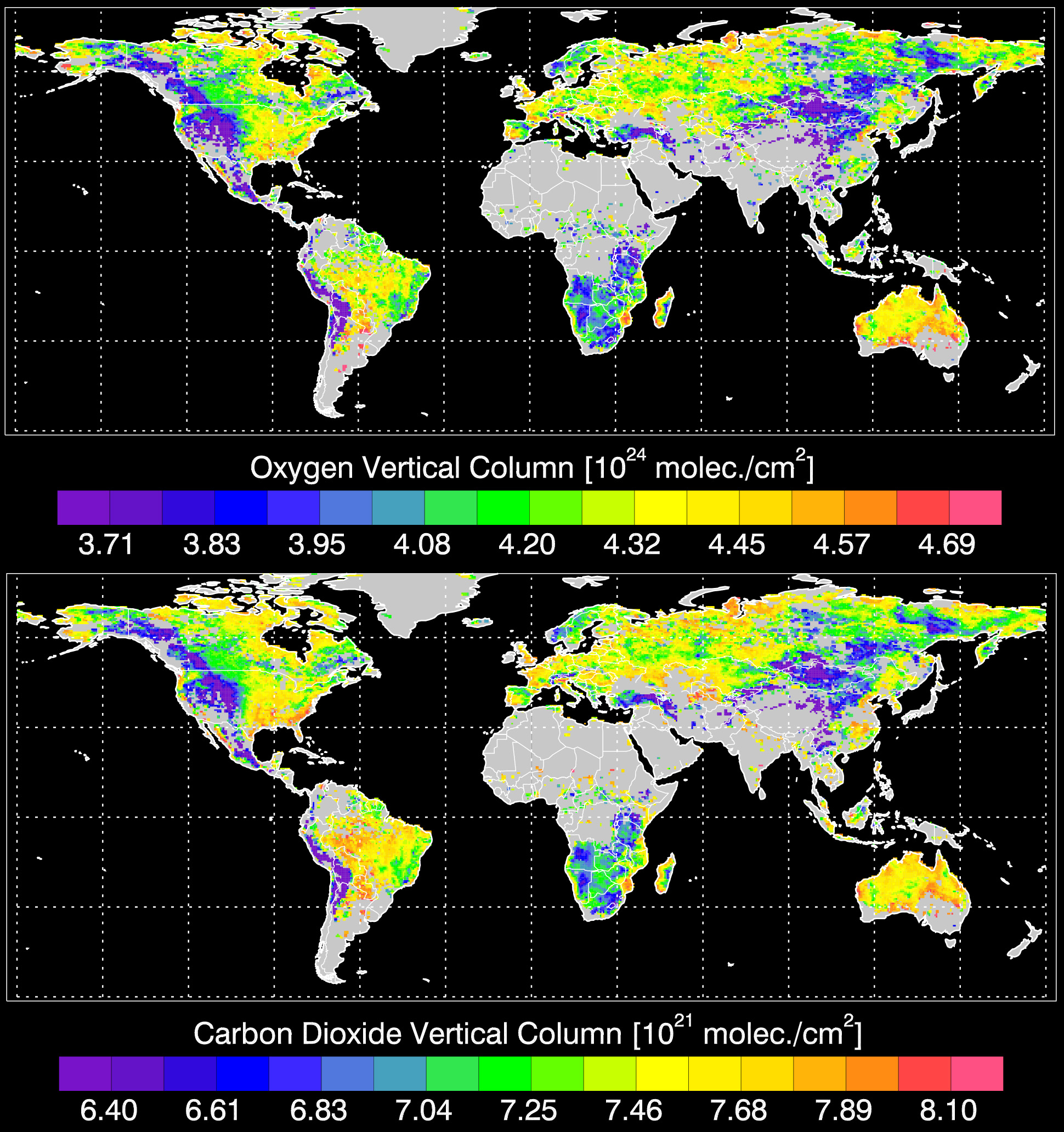
The total number of carbon atoms on Earth is fixed – they are exchanged between the ocean, atmosphere, land and biosphere. The fact that human activities are pumping extra carbon dioxide into the atmosphere, by fossil fuel burning and deforestation, is well known.

Because of this, atmospheric carbon dioxide concentrations are higher today than they have been over the last half-million years or so. Scientists are now using satellite instruments to locate sinks and sources of CO2 in the ocean and land. Across land and sea, our world's plant life uses the process called photosynthesis to convert incoming sunlight into chemical energy. Plants accumulate carbon dioxide during photosynthesis and store it in their tissues, making them carbon sinks.

