



Science topics in culture, be they vaccines, GMOs or global warming, may seem to be about science but they are more about politics, including identity politics, and sometimes about economics. 

Nonetheless, only one of those topics is hot in academia - ironically, the reason for that is also political. An impartial analysis of Congressional testimonies shows that, politics or not, most of the experts that the Republican majority requests to speak during hearings support the consensus on climate change - which means resistance to taking action is not because they are against science, it is just economics. 

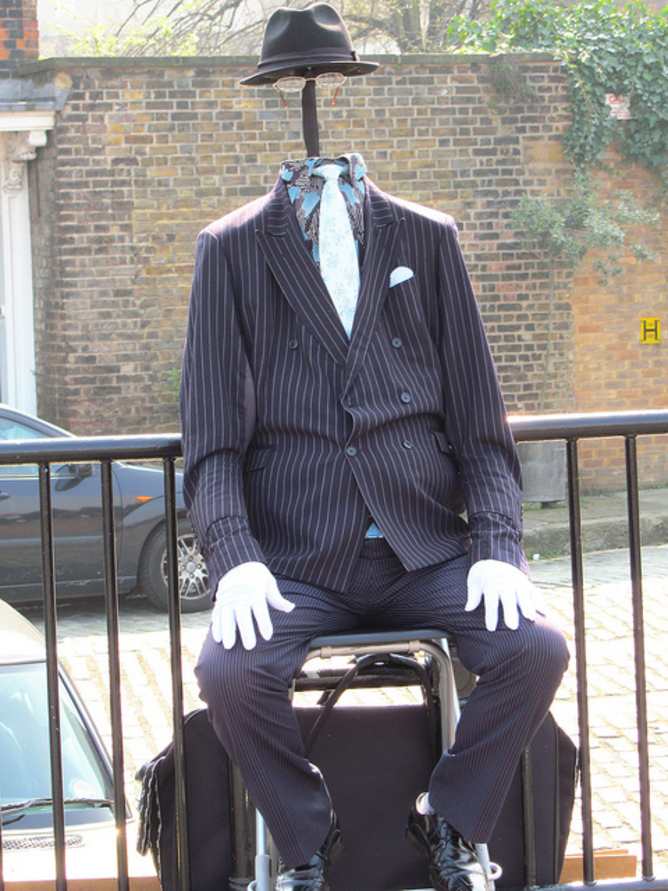
Recent advances with so-called meta-materials have shown that a practical invisibility cloak might one day be possible. But a new study has approached the scenario from the other direction, asking what it would feel like to be invisible. The answer, it turns out, is it would make us feel more confident.

In 2012 the US saw a resurgence of pertussis (whooping cough) cases. the highest since 1955. Like in engineering, the reason a small increase in anti-science beliefs can lead to a big change in the number of cases comes down to degrees of freedom and the math of networks.

Human DNA accumulates damage over time and older bodies can't repair it as well as younger, leading to the obvious conclusion that damage builds up over time and leads to an irreversible dormant state known as senescence.

Cellular senescence is believed to be responsible for some of the telltale signs of aging, such as weakened bones, less resilient skin and slow-downs in organ function. DNA damage also seems to play a role in conditions called progerias, which cause premature aging. Progeria patients have mutations in genes responsible for DNA damage repair. Now researchers from the University of Pennsylvania have pinpointed a molecular link between DNA damage, cellular senescence and premature aging. 

A proof-of-concept study in mice showed it is possible to prevent transmission of mitochondrial disease to children without resorting to controversial cytoplasmic transfer - "three-parent" IVF.

Mitochondria are known as the powerhouse of the cell because they generate most of the cell's supply of energy. Each cell in the body contains anywhere from 1,000 to 100,000 copies of mitochondrial DNA, which is exclusively transmitted through maternal inheritance. In most patients with mitochondrial disease, mutated and normal mitochondrial DNA molecules are mixed together in cells.

The likelihood of being bitten by mosquitoes could be linked to our genes, according to a recent study. Previous papers have suggested that human attractiveness to insects is based on differences in body odor or diet but there has been no clear and consistent dietary explanation. 

Increasingly, the public distrusts science and medicine. Much of the reason has been due to lawsuits, some of it has been due to strange beliefs among wealthy elites in well-defined parts of the United States. Due to popularized concerns about the safety of medicine, the approval cycle and the cost is longer than ever - billions of dollars and a dozen or more years unless a disease like Ebola gets into corporate media headlines.

We've long been fascinated by but it has been fictional. Now a team of researchers has created a perceptual illusion of having an invisible body. You won't just 'feel' invisible like no one notices you in a crowd, you can actually feel invisible.

The history of literature features many well-known narrations of invisibility and its effect on the human mind, such as the myth of Gyges' ring in Plato's dialogue The Republic and the science fiction novel The Invisible Man by H.G. Wells.

Recent advances in materials science have shown that invisibility cloaking real world objects might soon be possible in the visible light spectrum. How might invisibility affect our brain and body perception?

Higher elevations around the world may be warming much faster than previously thought, according to a paper which reviewed elevation-dependent warming mechanisms such as loss of snow and ice, increased latent heat release at high altitudes, low-elevation aerosol pollutants that increase the difference in warming rates between low and high elevations, plus other factors that enhance warming with elevation in different regions, and in different seasons. 

Rapid treatment with a new anti-inflammatory called
C5aR
could have a major impact on recovery from spinal cord injury.

University of Queensland School of Biomedical Sciences researchers Dr. Marc Ruitenberg and Ph.D. student Faith Brennan said they made the discovery during laboratory trials with an experimental drug. Brennan said that excessive inflammation caused additional damage in spinal cord injuries and hindered recovery.

