








It’s all very well choosing not to eat genetically modified (GM) food, or even banning it entirely, but what if you then rear your cows on GM soya? Can you really maintain a consistent moral objection?

The Calbuco volcano, a 2,000 meter peak in southern Chile, sent a column of ash about 15 kilometers skywards twice on the night of April 22 and early the following morning. 

As the risk of deadly flows of ash and hot air was immediate, a 20 kilometer radius evacuation zone was declared.

The event was spectacularly visible from Puerto Montt, a city of nearly 200,000 inhabitants, only 30 km away. It seems to have begun within barely five hours of warning signs being first detected by local seismometers.

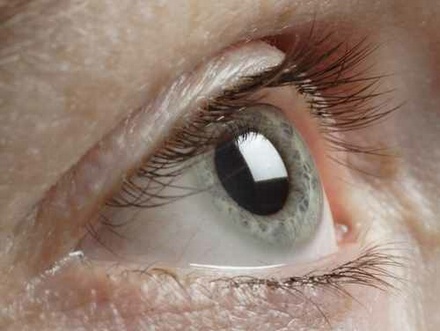
Researchers have solved a genetic mystery that has afflicted three unrelated families, and possibly others, for generations: The genetic basis for a variety of congenital eye malformations, including the complete absence of eyes. 

We can complain about the cost of American health care but that is the price for doctors caring too much. While in Holland doctors can just unilaterally make the decision to let a patient die, in the United States doctors will continue to recommend tests even when recommendations are that they should be done half as often.

Renewable electricity has nearly trebled under this government.

said Ed Davey, Liberal Democrat energy and climate change minister, during an environment debate held by the Daily Politics show.

Amid the climate of mistrust about claims made by politicians that tends to accompany election campaigns, it is reassuring to report that the evidence supports the minister’s statement.

Major depression comes with an unexpected metabolic signature, according to new findings.

Authors in search of genes that increase depression risk analyzed thousands of women. those with recurrent major depression and healthy controls, and found that many of the women with depression also had experienced adversity in childhood, including sexual abuse. 

The researchers noticed something rather unusual in the DNA. The samples taken from women with a history of stress-related depression contained more mitochondrial DNA than other samples.

"Our most notable finding is that the amount of mitochondrial DNA changes in response to stress," says Professor Jonathan Flint of the University of Oxford.

More than 100 drugs have been approved to treat cancer but predicting which ones will help a particular patient hasn't really been possible.

A new device may change that. It is an implantable device, about the size of the grain of rice, and can carry small doses of up to 30 different drugs. After implanting it in a tumor and letting the drugs diffuse into the tissue, researchers can measure how effectively each one kills the patient's cancer cells. Such a device could eliminate much of the guesswork now involved in choosing cancer treatments, says Oliver Jonas, a postdoc at MIT's Koch Institute for Integrative Cancer Research and lead author of the paper in Science Translational Medicine.

Columbia University and seven other schools make up the prestigious Ivy League. But, sometimes things change and standards drop. It may be time to create a new group of schools, the Poison Ivy League, and perhaps Columbia should be its first member. 

Today's opinion piece in USA today is entitled "Columbia medical faculty: What do we do about Dr. Oz?" has a title that ends with a question mark. And well it should. 

Everyone discusses ways to reduce carbon dioxide levels in the atmosphere (or not) but less considered is that there is a massive storehouse of carbon that has the potential to significantly alter the climate change picture. 

Ancient carbon, locked away in Arctic permafrost for thousands of years, could transformed into carbon dioxide and released into the atmosphere by warmth. 

The first malaria vaccine candidate (RTS,S/AS01) to reach phase 3 clinical testing is partially effective against clinical disease in young African children up to 4 years after vaccination, according to final trial data published in The Lancet.

