



At the Edge you can find a rather interesting discussion between Lee Smolin and Leonard Susskind, involving all the stuff I try to demystify often.
They fought via email, then agreed to each write a final letter on the edge. And today you can read the final judgment right here at the source from somebody who is little prejudiced by his own hidden agenda, which is by the way one of the main charges that Susskind
Disappointed that our solar system mnemonic "My Very Educated Mother Just Served Us Nine Pizzas" became "Mean Very Evil Men Just Shortened Up Nature" at the International Astronomical Union meeting which demoted Pluto as a planet?
You're not alone but Mike Brown, the astronomer who ignited that spark, is unapologetic, and has even written a book on it, "How I Killed Pluto and Why It Had it Coming", where he discusses the origins of his quest, which resulted in Eris and led to the elimination of Pluto as a planet due to a rather ridiculous, arbitrary of definition of planet specifically designed to exclude Pluto instead of being, you know, science.
It seems like many autism-related sites have ads on them for our kids, promising all sorts of results. How do we evaluate the claims of these products and prevent ourselves from (1) wasting precious financial resources, and (2) putting our precious children in harm's way? There are some key things that one can look for that indicate woo and pseudoscience.
We don't have to be experts in a field; we just have to know how to evaluate claims and evidence.
Astronomers using two decades of observations from many telescopes around the world have discovered an unusual star system which looks like, and may even once have behaved like, a game of snooker. Or billiards, depending on which side of the pond you are on.
They looked at a binary star system called NN Serpentis, which is 1670 light years away from Earth. NN Serpentis is actually a binary star system consisting of two stars, a red dwarf and a white dwarf, which orbit each other in an incredibly close, tight orbit. By lucky chance Earth sits in the same plane as this binary star system, so we can we can see the larger red dwarf eclipse the white dwarf every 3 hours and 7 minutes.
Researchers conducting genome-wide association studies say they have discovered 30 new genes determine the age of sexual maturation in women - and many of those genes also act on body weight regulation or biological pathways related to fat metabolism.
Menarche, the onset of first menstruation in girls, indicates the attainment of reproductive capacity and is a widely used marker of pubertal timing. Age of menarche varies widely and is highly dependent on nutritional status and early menarche is associated with many adverse health outcomes later in life, including breast cancer, endometrial cancer, obesity, type 2 diabetes and cardiovascular disease, as well as shorter adult stature.
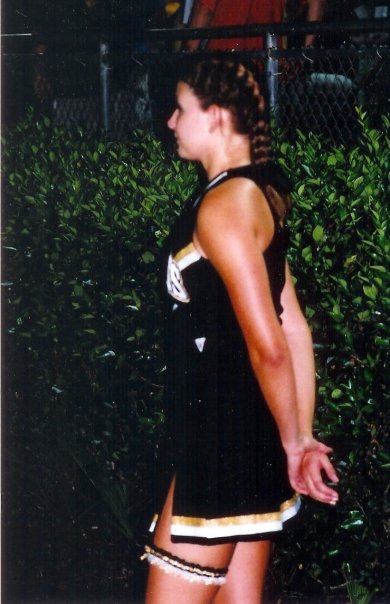
A few weeks ago, The Science Cheerleaders grabbed headlines with their appearance at the USA Science and Engineering Festival, where they cheered for citizen science and science literacy, as well as served to provide a new kind of role model for young girls, showing them they can be both cheerleaders AND scientists.
Following this public appearance, were two very strong reactions. One was overwhelmingly positive. The other was overwhelmingly negative and critical—and a lot of it came from scientists and science bloggers.
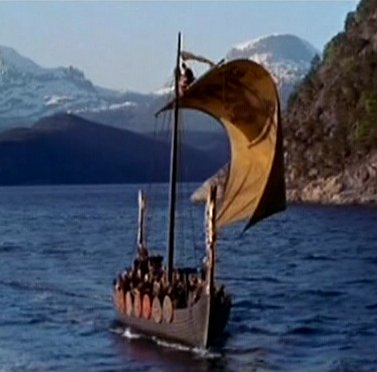
The Vikings did not use charts and instruments to navigate the open seas. Having developed skills in coastal navigation they extended those skills to pelagic navigation, or 'island-hopping'. Using the sun as a reference to determine where south lies, the Vikings could sail a reasonably accurate course. If the wind was steady, the wind itself could be used as an aid to direction if the sun was hidden by heavy cloud. It was only when wind and sun both failed the navigator that he was likely to miss his mark.
A Viking ship sailing on a beam reach. Screenshot from The Vikings, 1958.
They start bad but they improve with time. I cannot say I like Pope Benedikt XVI yet, but I have the feeling that he is getting better as he ages, pretty much like Pope Johannes Paul II, Karol Woytila. Woytila started his adventure as a Pope by playing the head of state, flying overseas to shake hands with dictators, spelling pages over pages of reactionary speeches -and then he improved. He become, so to speak, more human: a strange feat for a man whose mandate was to impersonate the link between Man and God.
Godwin's Law says, "As an online discussion grows longer, the probability of a comparison involving Nazis or Hitler approaches 1." Since I started with the comparison, we can hopefully move forward :-)
The reason I think the analogy is apt is that calling a truth claim "woo" is the least interesting choice the claimant could make. If a claim is meritless, it should be easy to dismantle. Further, it is important to dismantle it in as air-tight and a logical manner as possible so that those who would debunk the dangerous meme have artillery to do so and don't need to reinvent the argument from scratch.
Isn't dividing the world into disciplines the antithesis of Science 2.0? My preference would be no categories, but at the least, couldn't we have a Field called "Multidisciplinary" or "Science 2.0"?
If you grew up like me you were brought up in a culture based on a dualist metaphysics, one that asserts that there is an objective reality outside of ourselves (whatever “we” are) and that we know about it indirectly through our senses and conscious reasoning. This is the basis of the Western traditions of science, liberal arts and symbolic systems (such as mathematics and human language). Essentially anything that can be studied is part of this metaphysics. Observation and rationality may never lead to complete knowing, though everyone agrees we can continually refine our knowledge and thereby at least asymptotically approach enlightenment.
How are actors able to absorb a TV or film script, hundreds of verses of Shakespeare’s iambic pentameter, or the bitchy, street-smart, exquisitely calibrated machine-gun dialogue of a contemporary playwright like David Mamet without blowing it when the eyes of an audience are upon them?
For more than two decades, a pair of husband-and-wife researchers in Indiana — psychologist Helga Noice and actor/director/cognitive-researcher Tony Noice — tried to answer that question. Steve Silberman has the story on PLoS Blogs.
The researchers note that trees in urban areas in recent years have shown an increasing number of cracks, bumps, discolorations and various forms of tissue necrosis but no cause has been identified, so they sought to examine if it was more than biological factors like pests or disease.
Here a short outtake of a depressing but interesting piece “The Shadow Scholar: The man who writes your students' papers tells his story” on outsourcing of thesis etc. writing that undermines our at points plainly ridiculous education systems further. This has been already commented on in other blogs, but I would like to stress a different aspect here. Yes, there is much to say about evaluation versus education, about the way teachers cannot pursue cheaters even if they clearly identified them, and so on. I claim however that one of the main culprits is the way we let language be used in general. Just read this:
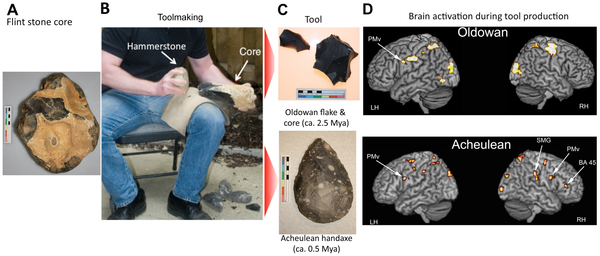
Progressing from crude stone tools to elegant hand axes was a technological leap, but that required the slow, complex process of evolution, says a new study that seeks to explain why it took almost two million years to move from razor-sharp stones to a hand-held stone axe.
Researchers have had different theories about why it took early humans more than 2 million years to develop stone axes. Some have suggested that early humans may have had underdeveloped motor skills or abilities, while others have suggested that it took human brains this time to develop more complex thoughts, in order to dream up better tool designs or think about better manufacturing techniques.
The eye is not just a lens that takes pictures and converts them into electrical signals, it is the first part of an elaborate system that leads to "seeing". As with all vertebrates, nerve cells in the human eye separate an image into different image channels once it has been projected onto the retina and pre-sorted information is then transmitted to the brain as parallel image sequences.
Two anchors on WGN were rewarded for their patience in trying to show a bridge implosion live by...missing it. After 5 minutes of trying to kill time, they segued to the studio to talk about the weather. And as soon as they did, the bridge went.
Watch them eat their papers in frustration. No one likes to miss a bridge implosion.
A really interesting piece of news comes from the CERN laboratory today. The CMS experiment has detected a handful of Z boson decays in events featuring the collision between heavy ions, accelerated to energies of hundreds of GeV per nucleon.
Homeland Security Secretary Janet Napolitano is to the Obama administration what Dick Cheney was to G.W. Bush or Robert Rubin was to Clinton - it's better she not be allowed to speak.
Yet speak she does. Again and again. And it will only get worse. In response to outrage over the dilemma fliers face over state-sponsored sexual harassment or questionable scanners, she said "if people want to travel by some other means," they have that right.
She realizes, as most culturally neutral people knew, that nutrition is a shockingly inexact science and that the human body may react to a strict vegan style for one person but moralizing and posturing that therefore everyone else is unethical if they aren't vegan is not an evidence-based claim, it is simply one of good fortune that they don't get sick.
She isn't going all Texas barbecue about it, just eating a small bit of fish or an egg each day to achieve a little more balance than she had before, but says both her spirits and her physical health are better.

