Banner
Here's Where Your Backyard Was 300 Million Years Ago

We may use terms like "grounded" and terra firma to mean stability and consistency but geology...

Convergent Evolution Cheat Sheet Now 120 Million Years Old

One tenet of natural selection is a random walk of genes but nature may be more predictable than...

Synchrotron Could Shed Light On Exotic Dark Photons

There are many hypothetical particles proposed to explain dark matter and one idea to explore how...

The Pain Scale Is Broken But This May Fix It

Chronic pain is reported by over 20 percent of the global population but there is no scientific...

User picture.
News StaffRSS Feed of this column.

News Releases From All Over The World, Right To You... Read More »

Blogroll

Genetic variation is important in a healthy population and recombination, or crossing-over, which occurs when sperm and egg cells are formed and segments of each chromosome pair are interchanged, is a vital part of maintaining genetic variation.

Honeybees take it to a whole other level and a new study finds that the extreme recombination rates found in this species - 20X higher than humans, higher than measured in any other animal  - seem to be crucial for their survival.

Every day, thousands of people need donated blood but blood transfusions require that the blood type of the donor match that of the recipient., unless it is blood without A- or B-type antigens, such as type O, that can be given to all of those in need. Mismatched blood with A or B antigens could provoke an immune reaction and even cause death. 

For that reason, Type O is often in short supply, but science may soon have a solution. Stephen G. Withers and colleagues write in Journal of the American Chemical Society of an efficient way to transform A and B blood into a neutral type O that can be given to any patient. 

Scientists have mapped the human genes triggered by the phytonutrients in soy, revealing the complex role the legume plays in both preventing and advancing breast cancer.

New genetic testing of Iñupiat people currently living in Alaska's North Slope has determined the migration patterns and ancestral pool of the people who populated the North American Arctic over the last 5,000 years and found that all mitochondrial DNA haplogroups previously found in the ancient remains of Neo- and Paleo-Eskimos and living Inuit peoples from across the North American Arctic were found within the people living in North Slope villages.

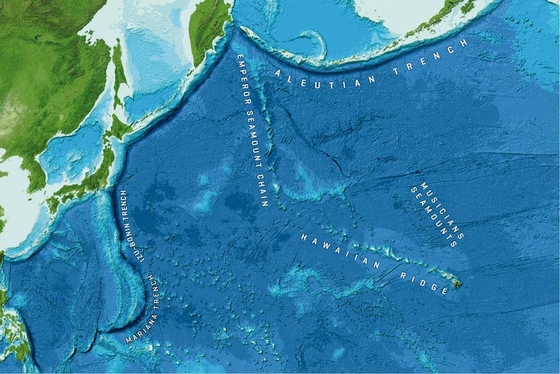
Some of the ocean's underwater volcanoes did not erupt from hot spots in the Earth's mantle but instead formed from cracks or fractures in the oceanic crust, which would help explain the spectacular bend in the famous underwater range known as the Hawaiian-Emperor seamount chain, where the bottom half kinks at a sixty degree angle to the east of its top half. 

It has long been accepted that as the Earth's plates move over fixed hot spots in its underlying mantle, resulting eruptions create chains of now extinct underwater volcanoes or 'seamounts'.

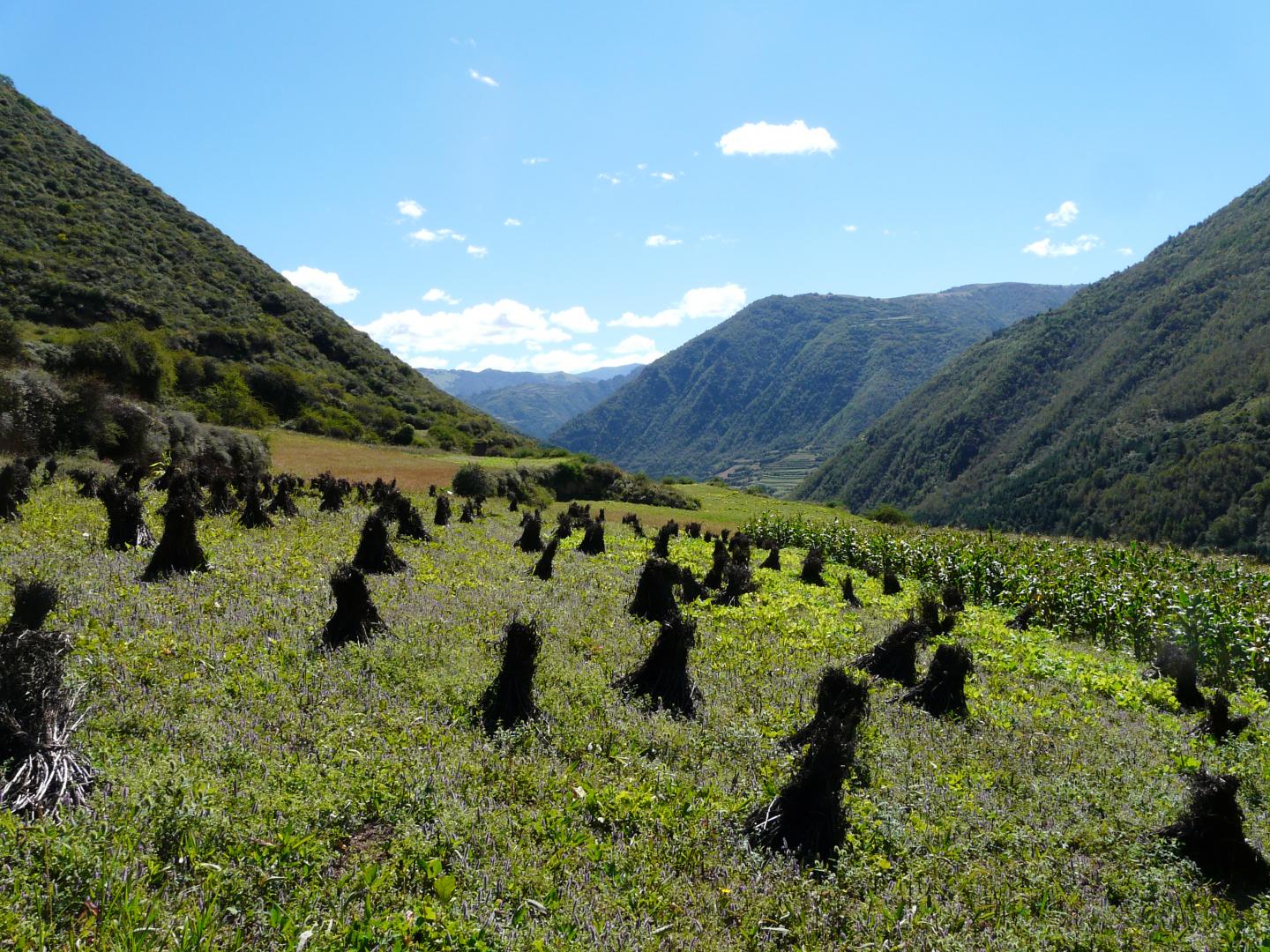
Climate change may have been be responsible for the abrupt collapse of civilization on the fringes of the Tibetan Plateau around 2,000 B.C. - but it wasn't the modern political connotation of climate change, with man-made carbon dioxide causing warming, it was global cooling.