Banner
Here's Where Your Backyard Was 300 Million Years Ago

We may use terms like "grounded" and terra firma to mean stability and consistency but geology...

Convergent Evolution Cheat Sheet Now 120 Million Years Old

One tenet of natural selection is a random walk of genes but nature may be more predictable than...

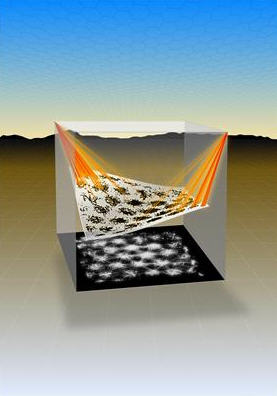
Synchrotron Could Shed Light On Exotic Dark Photons

There are many hypothetical particles proposed to explain dark matter and one idea to explore how...

The Pain Scale Is Broken But This May Fix It

Chronic pain is reported by over 20 percent of the global population but there is no scientific...

User picture.
News StaffRSS Feed of this column.

News Releases From All Over The World, Right To You... Read More »

Blogroll

A new study links a well-known cell communication pathway called Notch to one of the most common -- but overall still rare -- brain tumors found in children.

Researchers have uncovered a pathway that's key for protecting healthy tissue from overly active immune responses. The findings, which are described in an upcoming issue of the Journal of the American Society of Nephrology, may help clinicians provide better treatments for patients with a variety of autoimmune diseases.

During inflammatory responses due to infection, trauma, or cancer, the body's immune system becomes highly activated in an attempt to fend off invading organisms, foreign bodies, or tumor cells. Excessive immune activation, however, often results in collateral damage to surrounding healthy tissues. Even worse, uncontrolled immune responses can lead to the development of self-destructive autoimmune diseases.

The brain’s GPS wouldn't be much value if its maps of our surroundings that were not calibrated to the real world - grounded in reality.

But they are, and a new study shows how this is done.

The way that the brain’s internal maps are linked and anchored to the external world has been a mystery for a decade, ever since 2014 Nobel Laureates May-Britt and Edvard Moser discovered grid cells, the key reference system of our brain’s spatial navigation system. Now, researchers at the Mosers’ Kavli Institute for Systems Neuroscience believe they have solved this mystery. 

Most people don't realize it, but the majority of stars in our galaxy arrive in pairs. These fraternal twins tend to be somewhat equal partners when it comes to mass, but in a quest to find mismatched star pairs called extreme mass-ratio binaries, astronomers have discovered a new class of binary stars: One star is fully formed while the other is still in its infancy.

Osteoporosis is the most common type of bone disease, it is characterized by bones becoming so weak and brittle a simple cough can cause a fracture.  About half of all women over the age of 50 are at risk. 

It is preventable but for those who have it, existing treatments for this pathological bone loss mean inhibiting osteoclasts (bone-destroying cells) to limit bone degradation - but by doing so, they also prevent bone formation since it is stimulated by the presence of these very same osteoclast cells.
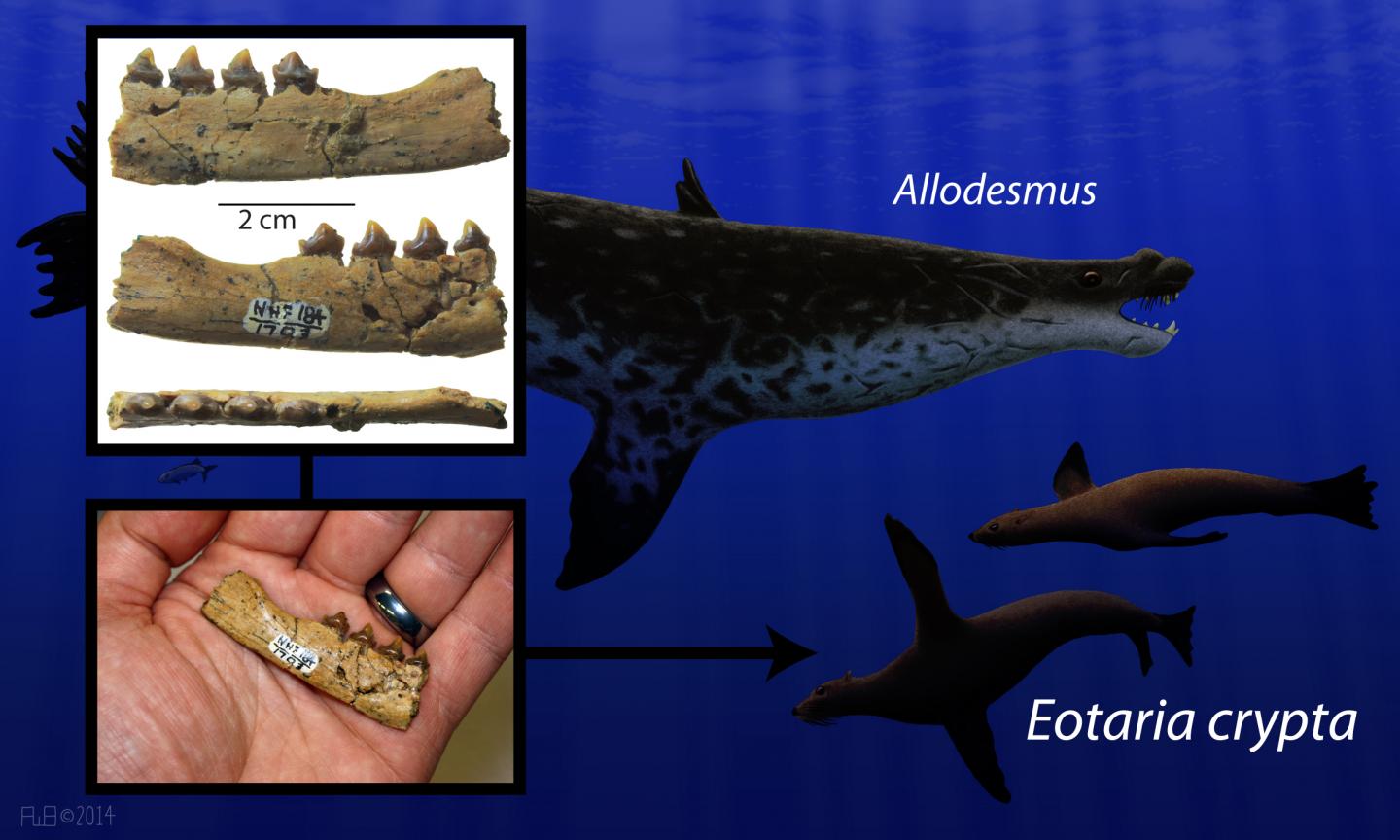
A fossil discovery has provided a missing link that helps to resolve a more than 5-million-year gap in fur seal and sea lion evolutionary history.

This new genus and species of fur seal has been called Eotaria crypta. Eotaria means 'dawn sea lion'. The species was tiny, with adults being only slightly larger than a sea otter and around the size of a juvenile New Zealand fur seal, according to University of Otago graduate student Robert Boessenecker, who found the fossil while looking through the John D. Cooper Archaeological and Paleontological Center.