Banner
Here's Where Your Backyard Was 300 Million Years Ago

We may use terms like "grounded" and terra firma to mean stability and consistency but geology...

Convergent Evolution Cheat Sheet Now 120 Million Years Old

One tenet of natural selection is a random walk of genes but nature may be more predictable than...

Synchrotron Could Shed Light On Exotic Dark Photons

There are many hypothetical particles proposed to explain dark matter and one idea to explore how...

The Pain Scale Is Broken But This May Fix It

Chronic pain is reported by over 20 percent of the global population but there is no scientific...

User picture.
News StaffRSS Feed of this column.

News Releases From All Over The World, Right To You... Read More »

Blogroll
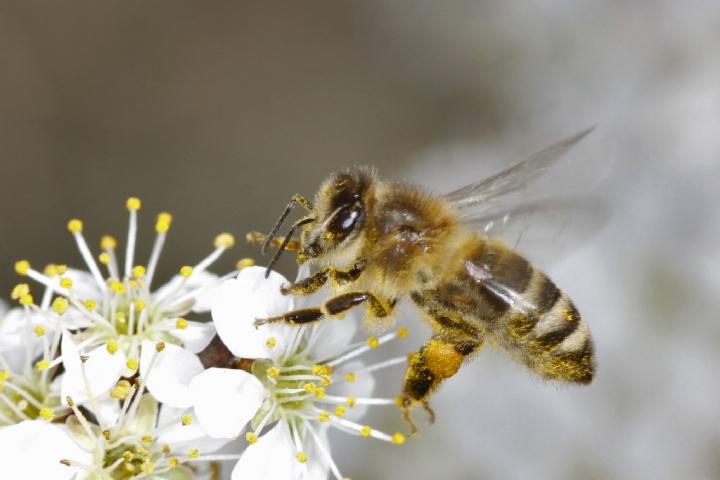
A few years ago, another colony collapse occurred. Though it has happened more times than recorded history has been able to log, the concern was that new pesticides, which replaced the old pesticides blamed for the last colony collapse, might be the cause.

Since then, bees have rebounded nicely. The collapse was limited to one geography, rather than everywhere the newer pesticides - neonicotinoids - were used, so researchers have been scrambling to find out why it happened and therefore make it predictable. 

A new study says it could just be stress - young bees are sometimes pressured to grow up too fast. 


Credit: QMUL
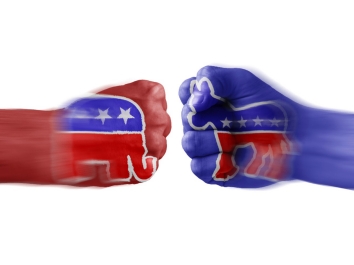
What happens when people in one political party in America are presented with science that doesn't align with their political views? The same thing that happens in the other party. They rationalize why it isn't valid science.

Despite claims by liberals that they hold some special acceptance of science - the same thing conservatives claimed until the 2000s - a new study has found it isn't the case when the science issue is political. It's no secret that conservatives are less likely to accept evolution and climate change science, science media has talked about it for over a decade. Yet science media doesn't note that anti-agriculture, anti-medicine and anti-energy views correspond to liberal voting, even though the public recognizes it. 
Harvesting sunlight is old technology for plants but it's a level of efficiency in solar energy we would love to be within a billion years of - artificial photosynthesis is needed if we want to go beyond the energy density of things like combustion engines. 
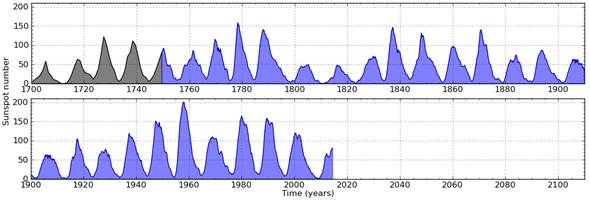
Some people believe we are in a new Enlightenment, with science making food plentiful and likely to make energy cheap enough to be unnoticeable in the next few decades as well. We share one other thing in common with the 18th century - solar activity.

Scientists have been counting sunspots with small telescopes since 1610 so it was quickly learned that the Sun’s activity increases every eleven years, according to the interval in the growth of the number of darker and colder spots in comparison with the rest of its surface. The more spots that appear, the more luminous the surrounding areas are, and our star shines brighter. 

Personal information taken from social media, blogs, page views and so on are used to detect disease outbreaks, however, does this violate our privacy and trust if people do not consent to it?

Magicians have delighted audiences for centuries with magic tricks. What is little known is that they subtly influence decisions. A master like Apollo Robbins can even tell you what he is going to do and you still won't know he is doing it.

Yet there has been little systematic study of the psychological factors that make magic tricks work. A team of Canadian researchers has combined magic and psychology to demonstrate how certain contextual factors can sway the decisions people make, even though they may feel that they are choosing freely.