Researchers have revealed that genetically modified Camelina plants produce omega-3 fish oils suitable for feeding Atlantic salmon. The new GMO plants can produce up to 20% of eicosapentaenoic acid (EPA), one of the two omega-3 LC PUFA conferring health benefits.
Consumption of omega-3 fish oils, specifically long-chain polyunsaturated fatty acids (omega-3 LC-PUFA), through eating oily fish like salmon and mackerel, has been linked with improved cardiovascular health and cognitive development. The primary dietary sources of these fatty acids are wild or farmed fish.
Researchers have mapped the physical structure of the nuclear landscape to better understand changes in genomic interactions occurring in cell senescence and aging.
Their findings have allowed them to reconcile the contradictory observations of two current models of aging: cellular senescence of connective tissue cells called fibroblasts and cellular models of an accelerated aging syndrome.
Risky sexual behaviors such as casual sex, lack of condom use and a high number of sexual partners have been linked to poor health outcomes, including obviously an increased incidence of sexually transmitted infections, in the effects part of the psychological sex equation, but what causes that risky behavior?
The Universe began about 13.8 billion years ago and evolved from an extremely hot, dense and uniform state to the rich and complex cosmos of galaxies, stars and planets we see today. The key source of information about that history is the Cosmic Microwave Background - CMB - the legacy of light emitted only 380 000 years after the Big Bang.
Astronomers have been searching searching for a particular signature of cosmic ‘inflation’ – a very brief accelerated expansion that, according to current theory, the Universe experienced when it was only the tiniest fraction of a second old. This signature would be seeded by gravitational waves, tiny perturbations in the fabric of space-time, that astronomers believe would have been generated during the inflationary phase.
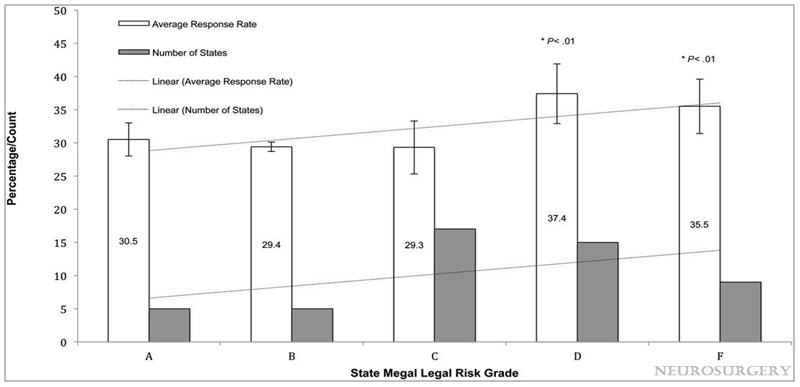
Much of the public think malpractice insurance is a big cost of health care and so they rightly think that if there were reasonable checks on lawsuit judgments health care would be affordable without government intervention.
There is no rest for a baby's brain - not even in sleep. While infants sleep they are reprocessing what they have learned. Working with researchers from the University of Tübingen, scientists from the Max Planck Institute for Human Cognitive and Brain Sciences in Leipzig have discovered that babies of the age from 9 to 16 months remember the names of objects better if they had a short nap. And only after sleeping can they transfer learned names to similar new objects. The infant brain thus forms general categories during sleep, converting experience into knowledge.


 Here's Where Your Backyard Was 300 Million Years Ago
 Convergent Evolution Cheat Sheet Now 120 Million Years Old
 Synchrotron Could Shed Light On Exotic Dark Photons
 The Pain Scale Is Broken But This May Fix It