Banner
Here's Where Your Backyard Was 300 Million Years Ago

We may use terms like "grounded" and terra firma to mean stability and consistency but geology...

Convergent Evolution Cheat Sheet Now 120 Million Years Old

One tenet of natural selection is a random walk of genes but nature may be more predictable than...

Synchrotron Could Shed Light On Exotic Dark Photons

There are many hypothetical particles proposed to explain dark matter and one idea to explore how...

The Pain Scale Is Broken But This May Fix It

Chronic pain is reported by over 20 percent of the global population but there is no scientific...

User picture.
News StaffRSS Feed of this column.

News Releases From All Over The World, Right To You... Read More »

Blogroll

According to some papers, human echolocation is another "sense," working in tandem with hearing and touch to deliver information to people with visual impairment.

A new paper adds evidence for the vision-like qualities of echolocation in blind echolocators - by wrongly judging how heavy objects of different sizes felt.

The experiment, conducted by psychologist Gavin Buckingham of Heriot-Watt University in Scotland and colleagues at the Brain and Mind Institute at Western University in Canada, demonstrated that echolocators experience a "size-weight illusion" when they use their echolocation to get a sense of how big objects are, in just the same way as sighted people do when using their normal vision.

The "Basel-Gasfabrik" Celtic settlement, at the present day site of Novartis, was inhabited around 100 B.C. and is one of the most significant Celtic sites in Central Europe.

A team recently examined samples from the backfill of 2000 year-old storage and cellar pits from the Iron Age and found the durable eggs of intestinal parasites like roundworms (Ascaris sp.), whipworms, (Trichuris sp.) and liver flukes (Fasciola sp.).

Women frequently experience more severe allergic reactions than men but it has been unclear why. Yet that disparity is more reason why gender balance in studies and trials makes sense.

Anaphylaxis is an allergic reaction triggered by food, medication or insect stings and bites. Immune cells, particularly mast cells, release enzymes that cause tissues to swell and blood vessels to widen. As a result, skin may flush or develop a rash, and in extreme cases, breathing difficulties, shock or heart attack may occur. Clinical studies have shown that women tend to experience anaphylaxis more frequently than men, but why this difference exists is unclear.

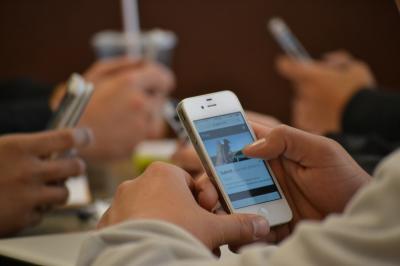
When people spend time interacting with their smartphones, it is changing the way their thumbs and brains work together, according to a report in Current Biology.

More touchscreen use in the recent past translates directly into greater brain activity when the thumbs and other fingertips are touched, the study found. And smartphones have become a good way to explore the everyday plasticity of the human brain.

Not only are people suddenly using their fingertips, and especially their thumbs, in a new way, but many are doing it an awful lot, day after day. Our phones are also keeping track of our digital histories to provide a readymade source of data on those behaviors. 

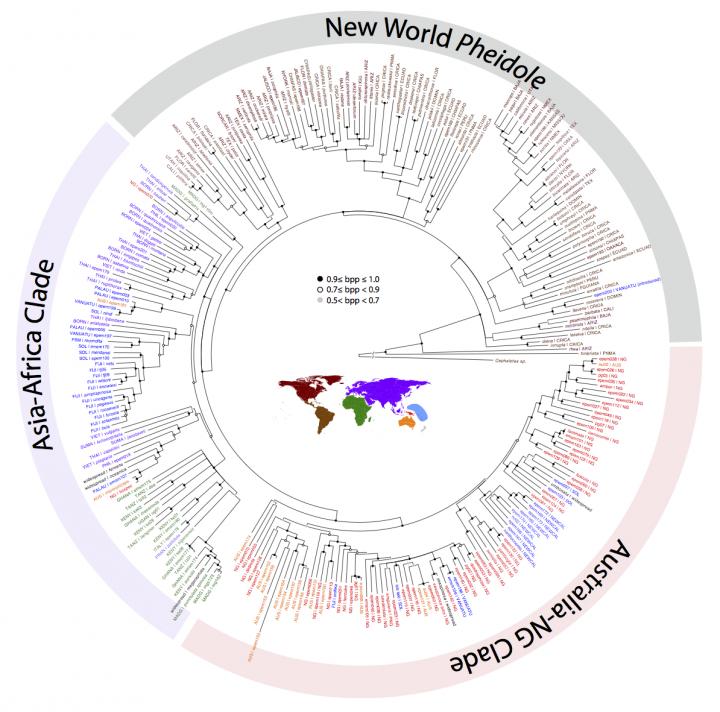
10 percent of the world's ants are close relatives, belong to just one genus out of 323. That genus is  called Pheidole. Pheidole fill niches in ecosystems ranging from rainforests to deserts.  

Do doctors make too much money? It depends on who you ask. The public perception is that doctors now overcharge for services to account for the cost of government paperwork while government routinely picks a fee they will pay based on what doctors charge. And the government pays less for Medicaid than Medicare. What expanded dramatically under the Affordable Care Act? Medicaid.