Banner
Here's Where Your Backyard Was 300 Million Years Ago

We may use terms like "grounded" and terra firma to mean stability and consistency but geology...

Convergent Evolution Cheat Sheet Now 120 Million Years Old

One tenet of natural selection is a random walk of genes but nature may be more predictable than...

Synchrotron Could Shed Light On Exotic Dark Photons

There are many hypothetical particles proposed to explain dark matter and one idea to explore how...

The Pain Scale Is Broken But This May Fix It

Chronic pain is reported by over 20 percent of the global population but there is no scientific...

User picture.
News StaffRSS Feed of this column.

News Releases From All Over The World, Right To You... Read More »

Blogroll
A serious epidemic of poliomyelitis that struck the Republic of the Congo in 2010 has been identified as a vaccine-resistant strain of polio.

The epidemic affected 445 people in the city of Pointe-Noire, the economic capital of the country, killing almost half of them. The researchers fear the emergence of other strains against which vaccines would have little effect.
Like coffee but your liberal guilt won't let you enjoy it if the energy to heat the water might have come from natural gas or nuclear energy?

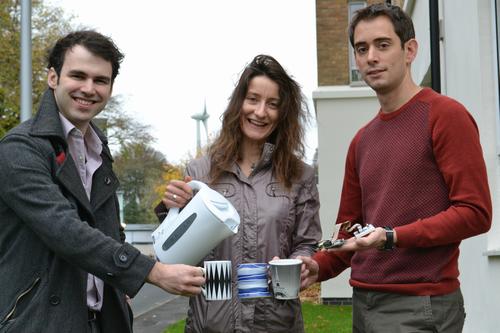
There may be hope for the future. Researchers at Lancaster University have used a Raspberry Pi to determine the optimum time for a cup of tea in terms of impact on the environment - it only allows a kettle to boil when the University’s wind turbine is producing electricity. Windy Brew is the brainchild of Dr. Will Simm, Dr. Peter Newman, Dr. Maria Angela Ferrario and Dr. Stephen Forshaw.

It envisions a future where man does not reshape nature, but where we are hostage to it. 


A team of scholars say genetic markers that may help in identifying individuals who could benefit from the alcoholism treatment drug acamprosate - patients carrying these genetic variants have longer periods of abstinence during the first three months of acamprosate treatment.

It's common sense that if you have ne mess and add another mess, you have created an even bigger mess.

But in arcane statistics, economics and social science, a bigger mess can lead to more order - a concept known as antifragility. 

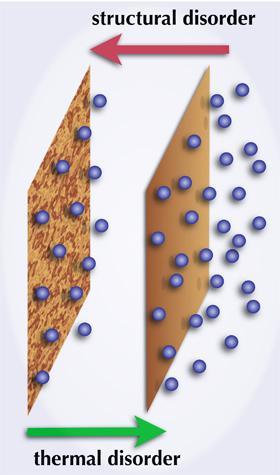
In a paper published in The Journal of Chemical Physics, researchers found a counterintuitive interplay between two different types of disorder. One is thermodynamic disorder, or entropy. The other is the structural disorder—defects in an idealized system that can change its properties.

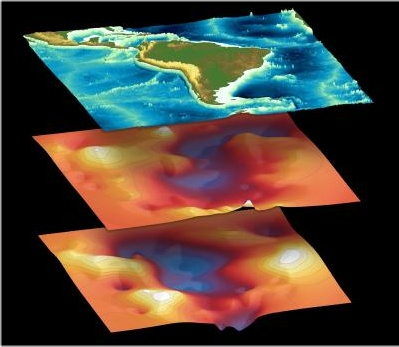
Tectonic plates, which make up the outer layer of the earth, are rigid. It is giant layers of rock, after all. But that is a bit of a simplification. They are not rigid and don't fit together as nicely as we imagine, according to a new paper in Geology by Corné Kreemer, an associate professor at the University of Nevada, Reno, and his colleague Richard Gordon of Rice University, which quantifies deformation of the Pacific plate and challenges the central approximation of the plate tectonic paradigm that plates are rigid. 

There are a number of government-funded campaigns to promote more participation in Science, Technology, Engineering and Math (STEM) fields, with the promise that a PhD means basic discovery and improving the human condition.

Yet what is left out of expensive marketing efforts is that there are now 6 PhDs for every job in academia - just because more people want to work at a university does not mean the government will increase funding to pay for it.  Instead of selling STEM careers to students, the National Science Foundation would be doing a greater service by showing students that academia is a lot like the corporate world - you will have to compete to get ahead, otherwise you will be trapped in a low-end job in a lab forever.